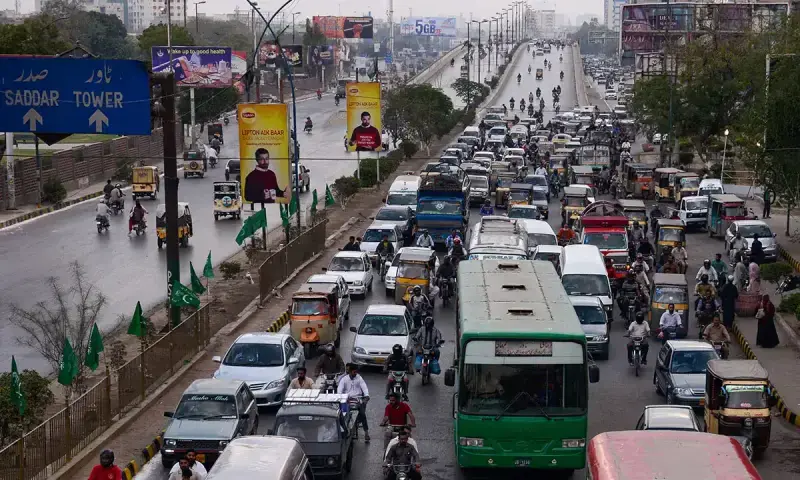

As many as 29,609 tickets have been issued for traffic rule violations since the newly implemented e-ticketing system was inaugurated in Karachi, according to data from the police.
Sindh Chief Minister inaugurated the Traffic Regulation and Citation System (TRACS), commonly known as the e-ticketing system, at the Central Police Office (CPO) last week.
He explained that the new system replaces the outdated manual ticketing process with a fully automated e-ticketing mechanism, utilising advanced AI-integrated CCTV cameras to detect violations such as speeding, red-light jumping, and helmet non-compliance.
Of the 29,609 tickets issued, 17,639 of them were issued to drivers not wearing a seatbelt, while 6,362 were issued to motorcyclists not wearing helmets, the data shows. Another 1,967 tickets were issued for speeding, while 1,655 were issued for running through red lights.
Meanwhile, 943 tickets were issued for using mobile phones while operating a vehicle and 298 were handed out for having tinted windows and glass. For parking in a ‘no-parking’ zone, 165 tickets were issued, while 162 were issued to motorists using the wrong side of the road; 44 tickets were handed to people going the wrong way on a one-way street.
Additionally, 152 motorists were ticketed for having passengers on the roof of their vehicle, and 91 others were caught violating stop lines. An additional 65 tickets were handed out due to lane line violations, with 44 tickets issued to vehicles carrying an improper load and 37 for being overloaded.
No tickets were issued for having “fancy number plates”, sudden lane changes or expired tax.
In June, the Sindh government decided that e-challans for traffic violations would be delivered to vehicle owners’ registered home addresses. Vehicles with unpaid fines would not be allowed to be sold or transferred.
The decision came amid Karachi witnessing a surge in traffic accidents, particularly involving dumpers and water tankers, that killed nearly 500 people and injured 4,879 in 2024, according to hospital data.
The spate of deadly incidents triggered protests over citizens’ deaths, prompting the provincial government to ban heavy vehicles during daytime hours and require them to obtain fitness certificates.






 American Dollar Exchange Rate