Family drama captivates audiences as 13-day cultural celebration blends tradition, talent and social reflection
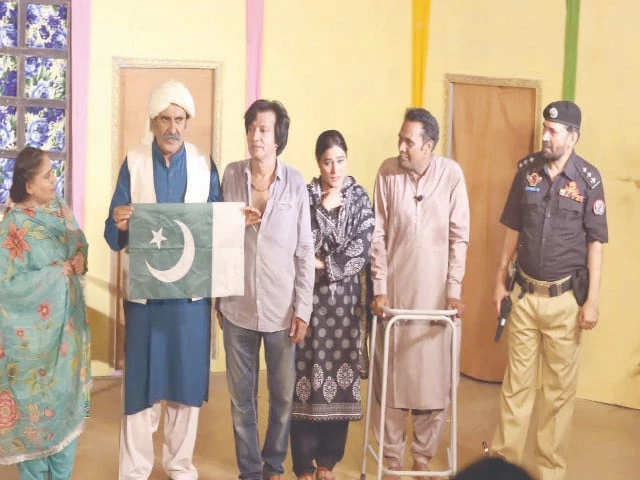
The Hyderabad Theatre Festival continued with great enthusiasm at the Sindh Museum’s Mumtaz Mirza Auditorium as the Urdu play ‘Chiragh Jal Utha’ lit up the stage on the festival’s seventh day, earning thunderous applause from a packed audience.
Written by Imran Mughal and directed by Akram Naveed, the family drama stood out for its gripping performances and unique direction. Naveed’s style, marked by smooth dialogue delivery and well-orchestrated staging, elevated the drama and gave it a distinctive quality.
The cast included Rizwan Mirza, Irfan Butt, Kamran Khan, Anwar Lahori, Khalid Imran, Nasir Khan Buneri, Shiraz Memon, Tariq Akash, Sidra Sheikh, Sehr Parveen, Shabbir Murad, and veteran actor Rafiq Ehsani, whose powerful portrayals left a lasting impression on spectators.
The play’s vibrant depiction of the celebration of ‘Marka-e-Haq’ added colour and energy, captivating the audience and underscoring the cultural depth of the production. Spectators remarked that ‘Chiragh Jal Utha’ glowed beyond the stage.
The performances left an imprint on the viewers’ hearts and serving as a beautiful fusion of tradition and family storytelling. Many theatre-goers stressed that such plays not only entertain but also keep alive the connection between people, literature, and performing arts.
The Hyderabad Theatre Festival 2025, jointly organised by the Arts Council of Pakistan, Karachi (ACP), and the Sindh Culture Department, has been staged with vigour and spirit. Running for 13 days until October 8, the festival has become a major attraction in the city.
The event was inaugurated with festivity at the Sindh Museum, formally opened by ACP President Mohammad Ahmed Shah and Hyderabad Deputy Commissioner Zainul Abideen Memon.
The opening ceremony was attended by Director General Culture Habibullah Memon, Arts Council Governing Body member Syed Amjad Hussain Shah, Lok Virsa Committee Chairman Dr Ayub Shaikh, organiser Rafiq Isani, artists, and a large gathering of citizens.
On the occasion, ACP President Ahmed Shah described Hyderabad as the “heartbeat of Sindh” and recalled its legacy as a melting pot where Urdu, Sindhi, Balochi, and Punjabi communities once lived in harmony.
The festival’s opening play ‘Hosho’ set the tone for the days to follow, with audiences treated to daily performances in both Urdu and Sindhi. Over 150 artistes are taking part in the event, presenting a diverse repertoire.
It includes ‘Zindagi Ke Rang Hazar’, directed by Ramesh Kumar, ‘Tujh Pe Qurban Meri Jaan’, directed by Ishaq Raju, ‘Qaidi Jazba’, directed by Aqeel Qureshi, ‘Muft Mein Mehnga’, directed by Saleem Guddu, ‘Roshni’, directed by Israr Laghari, ‘Watayo Faqeer’, directed by Rafiq Isani, ‘Samaj Kahan Bahar’, directed by Shahbaz Baloch, ‘Aandhiyon Mein Charagh’, directed by Khalid Imran, and ‘Siaran Mein Ak Charyo’, directed by Kazbano Asif.
Each play is being staged at the Mumtaz Mirza Auditorium with free admission, encouraging families to attend and share in the experience. One of the productions that drew particular attention was ‘Muft Mein Mehnga’ [Even Free is Expensive], directed by Saleem Guddu.
A sharp social satire, the play explored the everyday struggles of citizens facing rising inflation, blending humour with hard truths. Karachi’s celebrated duo Zakir Mastana and Shahni Azeem led the cast with charm, while seasoned actors Shabbir Murad, Afshan Memon, and Talib Mughal delivered strong supporting performances. The audience responded with both laughter and reflection, acknowledging the play’s timely relevance.
Other productions such as the Sindhi play ‘Zindagi Ke Rang Hazar’ and the Urdu drama ‘Tujh Pe Jaan Qurban’ also drew enthusiastic applause, reinforcing the festival’s reputation for balancing entertainment with social commentary.
Distinguished guests, including Director of Sindh Museum Hyderabad Zulfiqar Ali Panhwar, poet and writer Professor Mirza Saleem Baig, and members of the Nawabshah Arts Council, attended various performances, further highlighting the festival’s cultural importance.
 American Dollar Exchange Rate