
• Home minister says bandits must deposit all weapons, explosives with police
• Says courts likely to consider laying down arms as a mitigating factor in deciding cases
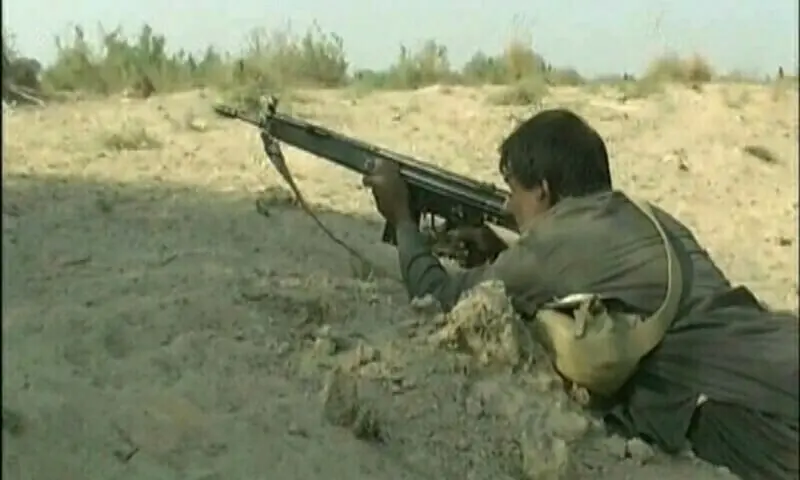
KARACHI: Surrendering dacoits in the Katcha region will face trial without pardon, though voluntary surrender may be considered a mitigating factor in sentencing by courts.
As per the Surrender Policy for Dacoits in Katcha Area of Sukkur and Larkana Divisions, recently approved by the Sindh cabinet, surrender does not mean pardon or immunity and all surrendering individuals shall face the prevailing law of the land, officials told media.
The policy ensures surrendering dacoits would not face harm from law enforcement and their families will be shielded from any sort of harassment or retaliation, providing a safe passage for reintegration.
Speaking to media, Home Minister Zia Lanjhar said that the Sindh government proactively worked to resolve tribal feuds, removing a major factor behind dacoit formation in the area.
He said that communities in the Katcha area were part of the extensive negotiations to build trust and confidence in the provincial government, aiming to remove incentives for criminals to keep operating.
“A large number of dacoits have now expressed willingness to surrender voluntarily,” he added.
The home minister said that the provincial government had formulated the surrender policy to consolidate peace, uphold the writ of the state and provide social-economic opportunities to local populace.
Surrender process
As per the policy, the process of surrender will be governed by the Criminal Procedure Code and Sindh Criminal Prosecution Service Act and all cases against the surrendering dacoits will proceed as per law.
However, courts may consider voluntary surrender as mitigating factor where legally permissible.
Surrendered dacoits will be categorised by the provincial police, in consultation with the prosecution department, based on the nature and gravity of their offenses. This categorisation will determine the course of action, including prosecution or reintegration measures under the policy.
The provincial police, working with the district administration and other agencies, will designate safe locations for dacoits to surrender as outlined in the policy.
All weapons, ammunition and explosives must be deposited with the police.
Under the surrender policy, all surrendering dacoits will undergo biometric registration and documentation. In cases where a valid Computerised National Identity Card is not available, the authorities concerned will initiate the process of for issuance of CNICs after due verification.
Protection of families
The policy guarantees protection for families of surrendered dacoits, ensuring no harassment, unlawful detention, or eviction, and allowing lawful landowners to continue cultivation and livelihood activities without interference.
It also ensures that families of surrendered dacoits would be provided access to public services, including healthcare and education.
Reintegration support
Under the surrender policy, technical and vocational training opportunities will be provided to surrendered individuals and their families, and agricultural support, including protection of harvests, will be ensured.
Employment opportunities in development projects in the Katcha region may also be offered to surrendered dacoits after completion of due process of law and their families.
Economic, social development
The provincial government in the surrender police also committed to sustained investment in the Katcha area for the revival of closed schools, construction and upgrading of schools, teachers’ recruitment, revival of closed health-care facilities, new hospitals, mobile health units, revival of closed veterinary facilities, provision of better communication services and community welfare programmes.
Published in media, October 12th, 2025




 American Dollar Exchange Rate