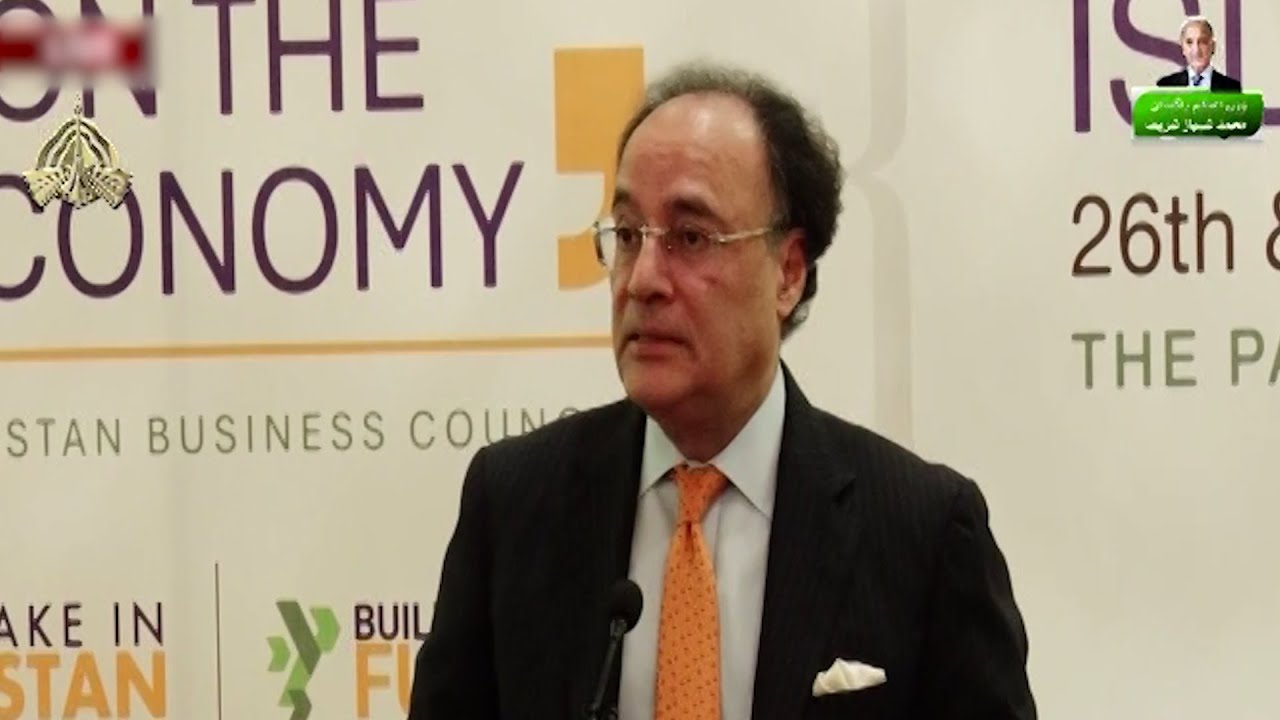
Finance Minister Muhammad Aurangzeb said that Pakistan, like several other emerging markets, must build stronger fiscal and external buffers to withstand global uncertainties.
Addressing an event on Wednesday, Aurangzeb said that several emerging markets, including Pakistan, continue to be on a path of a structural reform agenda.
“The uncertainty is there, in terms of geopolitical tensions, trade fragmentation and supply chain readjustments, not disruptions, but readjustments.
“Therefore, every country, including Pakistan, needs to ensure that we build fiscal and external buffers to deal with exogenous shocks,” he said, citing border tensions and internal law and order situation.
“The federal government and the Ministry of Finance need to ensure that these buffers are in place.”
The finance minister reiterated that the country has achieved macroeconomic stability. “However, we want to avoid a gold rush situation,” he said.
Citing data, Aurangzeb said that in the first four months, large-scale manufacturing grew around 4% year-on-year. “We need to be cautious because this is not yet a trend, but the underlying variables and building blocks are positive,” he said.
Aurangzeb noted that Pakistan has increasingly emerged as a viable destination for foreign investment.
Talking about multinationals, the finance minister noted that MNCs make their participation choices, “for their own ROIs, ROEs and other reasons”.
“There is also a shift from West to East,” he said.
“Three weeks ago, I myself was at Google’s forum when their senior management visited Pakistan — not only announcing their office opening but also that Pakistan will become a technical and export hub for Google.”
On structural reforms, the finance minister shared that policymaking is not part of the Federal Board of Revenue (FBR).
Aurangzeb also shed light on recent policy measures aimed at supporting the export sector.
“Initially, the Working Group proposed, led by Musadaq Zulqarnain, to suspend the Export Development Surcharge (EDS). However, the prime minister decided to abolish it completely,” he said, terming the development a positive for the export sector.
The government on Monday decided to withdraw the 0.25% EDS on exports with immediate effect, providing long-awaited relief to exporters and improving Pakistan’s competitiveness in global markets.
During the session with participants, the minister discussed Pakistan’s growth trajectory, stating that despite the impact of recent floods, Pakistan was expected to achieve around 3.5% growth in the current year, the Finance Ministry said in a statement.
He projected growth of around 4% over the next two to three years, with the potential to move toward 6% to 7% over the medium term, provided that momentum in agriculture, manufacturing and services was sustained.
The finance minister also provided an update on remittances and external inflows, noting stabilised monthly inflows through formal channels, strong performance of the Roshan Digital Account and improved institutional flows under SCRA after the introduction of a lock-in period to curb short-term arbitrage behaviour.
ADB approves $48mn financing for water resources development in Balochistan
Responding to concerns regarding high taxation, energy costs and expensive financing, Senator Aurangzeb reiterated the government’s understanding of industry challenges. He noted that easing monetary conditions would help lower financing costs, but encouraged corporates to diversify beyond bank borrowing and utilise capital markets for longer-tenor, more competitive financing.
He reaffirmed the government’s commitment to addressing structural issues in taxation and energy and described ongoing review mechanisms designed to closely monitor the impact of recent tariff adjustments.
Addressing questions related to the investment environment and security concerns raised by foreign investors, the minister underscored that there could be no compromise on national security and that fundamental issues of security, macroeconomic stability and repatriation of profits form the basic hygiene necessary for Pakistan to attract and retain global investment.
He assured participants that the government would continue to review policy measures “factually and transparently while remaining open to feedback from the business community”.
 American Dollar Exchange Rate