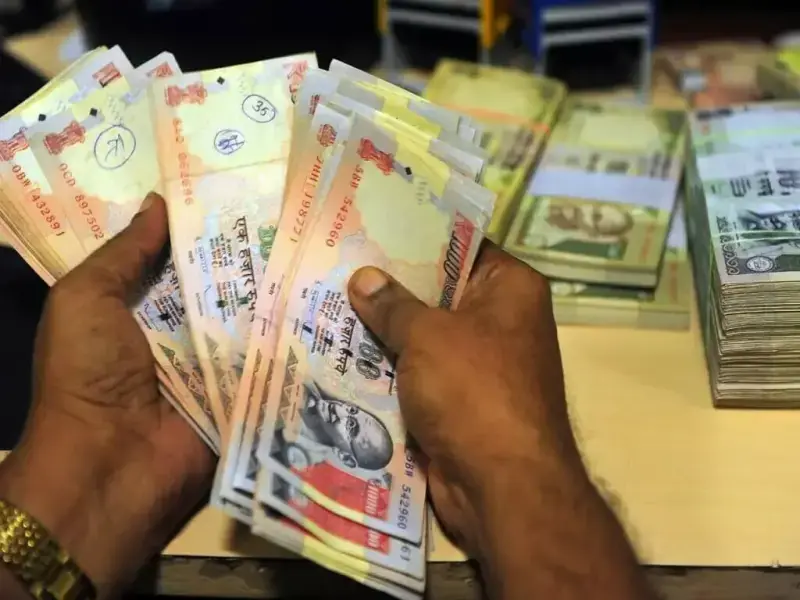
MUMBAI: The Indian rupee fell to a record low on Tuesday, extending losses sparked by the absence of a trade deal between India and the United States, which has dented trade and portfolio inflows.
The currency touched 89.9475 against the U.S. dollar before ending at 89.87, down nearly 0.4% on the day and logging its fifth consecutive daily fall. Shortly after the local spot market closed, the rupee weakened to 90 per U.S. dollar on the inter-bank order matching system before trimming losses.
The South Asian currency has stayed under pressure despite strong economic growth in India in the quarter through September, underscoring the strains on the country’s external sector.
Analysts expect the rupee to face more weakness but say the Reserve Bank of India’s market interventions, like Tuesday’s, should help keep volatility in check.
“Since the current stance of (INR) weakness continues, we have been advising exporters to just sell (USD) on cash/spot basis and keep minimum hedges,” said Anil Bhansali, head of treasury at Finrex Treasury Advisors.
“Importers have been advised to buy all dips (on USD/INR),” he added. The splintered behaviour has also manifested in market activity as importers rush to lap up dollars while exporters hesitate, adding pressure on the rupee.
In November, importers booked forward hedges worth nearly $31 billion, up 11% compared to the average between 2020-24 while exporter activity declined about 5% to about $21 billion compared to the same benchmark.
Dollar-rupee forward premiums also surged on Tuesday, reflecting the rising cost of hedging against rupee weakness as the currency nears the 90 per U.S. dollar mark. The 1-month forward premium rose to over 19 paisa, the highest since May while the 1-year implied yield climbed 7 basis points to 2.33%.
Elsewhere, global FX markets were largely subdued with Asian currencies and the dollar index hovering sideways as investors held on to wagers that the U.S. Federal Reserve will cut rates this month.
 American Dollar Exchange Rate