As Pakistan looks to scale up renewable energy, two critical bottlenecks, including the viability of local panel manufacturing and the structural limitations facing utility-scale projects, threaten to slow the country’s solar transition, says LONGi, one of the world’s largest solar panel manufacturers.
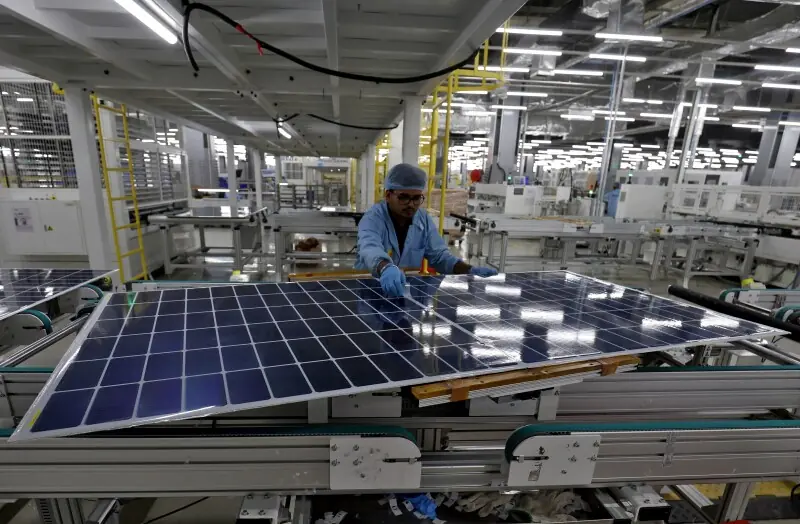
Local assembly [of solar panels] is currently not viable,” said LONGi’s Head of Pakistan & Afghanistan Osman Mohammad Maud, in an exclusive interview to BR Research.
He said that panels produced domestically are primarily for local use and cannot be exported competitively.
“Production costs, labour, and quality assurance increase final costs by about 30%, while quality may be slightly lower.
“Until government policies create a strong business case, including incentives for quality and competitiveness, large-scale investment in local manufacturing remains challenging for global players,” he said.
At the same time, the country’s push for utility-scale solar parks has run into its own structural headwinds, noted Osman.
“Utility-scale projects face significant land use and transmission challenges,” he said.
“Large plants require thousands of acres, which is difficult in an agriculture-focused country,” Osman noted.
“Additionally, transmission lines often remain underutilised, raising overall project costs. Investors must account for the mismatch between power plant efficiency and transmission viability, which remains one of the biggest obstacles to scaling up utility-scale solar.”
This dual challenge—an uncompetitive local manufacturing ecosystem and infrastructure bottlenecks for utility-scale projects—raises concerns about Pakistan’s ability to expand its solar footprint.
However, despite these obstacles, there has been a growing shift towards alternative energy sources in Pakistan, especially solar, which has become increasingly popular among residential and commercial sectors.
According to Policy Research Institute for Equitable Development (PRIED), an independent think tank, Pakistan is experiencing unprecedented solarisation of its energy sector, with solar photovoltaic (PV) panels of 33 gigawatts capacity having already been installed across the country.
This rising trend has left decision-makers grappling with its implications for the national grid and energy sector, as electricity consumption remains stagnant.
Nonetheless, several projects have been initiated to exploit this relatively cheaper energy source.
 American Dollar Exchange Rate