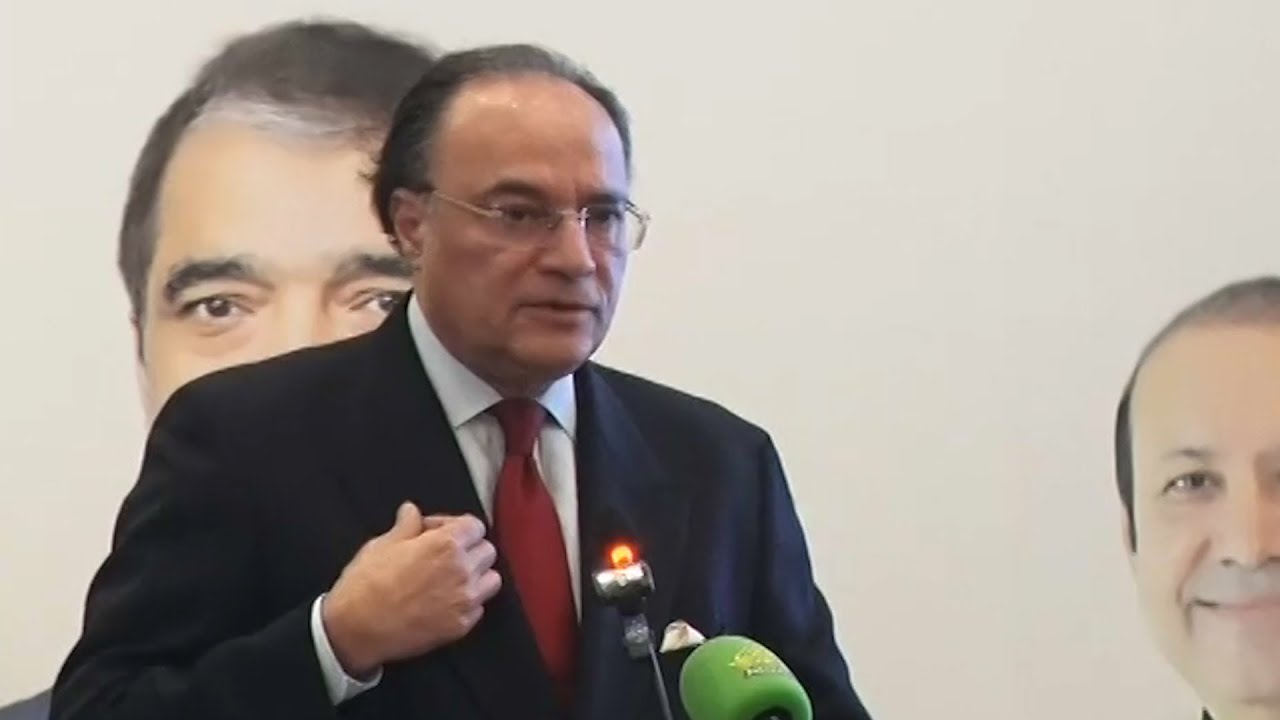
Addressing concerns over “new” International Monetary Fund (IMF) conditionalities, Finance Minister Muhammad Aurangzeb has clarified that the measures being implemented under the Fund programme are not fresh demands but the operationalisation of reforms already approved through legislation.
In an event on Saturday, Aurangzeb said that steps such as the public disclosure of civil servants’ assets are an extension of standards applied to parliamentarians.
“If the assets of parliamentarians are made public, why not those of the civil service?”
“The first step was to design this and get the legislation passed. That legislation has been enacted. Now the IMF has said that, in line with the legislation, these assets should be made public. That is not an additional conditionality, but a continuation,” he said.
The IMF imposed 11 new structural benchmarks (SBs) on Pakistan, including developing and publishing a comprehensive medium-term (3 to 5 years) tax reform strategy, asset declarations for high-level federal civil servants, and an action plan to mitigate corruption vulnerabilities in identified departments.
The finance minister noted that Pakistan’s rice exports have decreased this year, as India has returned to the international market, which has lowered prices. “That is why we are seeing a reduction in the rice exports.”
He said that the government has decided to shut down PASSCO, despite pushback. “We are in the process of creating an SPV, which will take the process forward.”
He said that Pakistan’s tax-to-GDP ratio has increased to 10.3%.
“The government acknowledges that the formal sector and the salaried class are disproportionately burdened,” he said.
The finance minister reiterated that the private sector “has to lead the country”.
He said that the country’s large-scale sector has increased by 4% in the ongoing fiscal year.
Aurangzeb noted that the service sector has performed well. “The IT sector exports are expected to cross $4 billion this year. Whereas, remittance inflows are expected to cross $41-42 billion.”
Talking about PIA privatisation, Aurangzeb shared that the two conglomerates participating in the bidding process, “are the largest groups in Pakistan, which is a positive development”.
“Different groups have come together and said we will take it forward together. I am optimistic that we can take it through the finishing line on December 23”
PIA’s bidding process scheduled for December 23 would be broadcast live on national television.
The government failed in the first attempt to privatise the PIA last year after receiving a single offer, well below the asking price of more than $300 million.
Blue World City consortium refused to match the minimum expectation of the Privatisation Commission of Rs85.03 billion and stuck to its original offer of Rs10 billion for a 60% stake in the PIA, ending the bidding process of the national flag carrier’s privatisation.
The finance minister noted that 20-25 million Pakistanis, especially youth, were involved in crypto trading.
“We are also moving towards the new economy. Yesterday, we issued NOCs to two crypto exchanges”.
The Ministry of Finance on Friday signed a Memorandum of Understanding (MoU) with Binance Investments Co., Ltd, one of the world’s leading blockchain and digital asset technology companies, marking a step toward leveraging emerging financial technologies to strengthen capital markets and enhance global investor access.
 American Dollar Exchange Rate