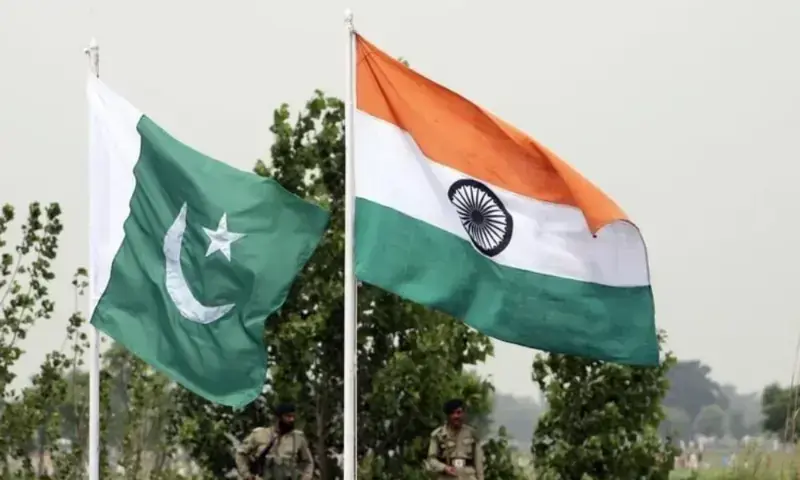
United Nation (UN) experts have expressed concerns that India‘s “unlawful use of force“ on Pakistan’s territory in response to the April 22 Pahalgam attack in occupied Kashmir appears to have “violated the rights to life and security of person”, it emerged on Friday.
This observation by UN special rapporteurs was made in a report dated October 16, which was made public on December 15. The report outlined India‘s military response to the Pahalgam attack, as well as New Delhi’s decision to hold the Indus Waters Treaty (IWT) in “abeyance” following the incident.
The five UN experts who compiled the report also observed that New Delhi’s actions that “may be taken to disrupt the flow of water to Pakistan under the Indus Waters Treaty” appeared to risk violating the rights to work and livelihood, an adequate standard of living — including the rights to water and food — a clean, healthy and sustainable environment and development.
The attack on tourists in occupied Kashmir’s Pahalgam on April 22 resulted in the death of 26 people. While New Delhi blamed Islamabad for the attack without evidence, Pakistan denied involvement, with the foreign ministry questioning the credibility of India’s account of the events and saying it was “replete with fabrications”.
A day after the attack, India decided to immediately hold the IWT in “abeyance”. For its part, Pakistan termed any attempt to suspend its water share under the treaty an “act of war”, noting the treaty had no provision for unilateral suspension.
Under the 1960 Indus Waters Treaty, three rivers that flow westwards — Indus, Chenab and Jhelum — were awarded to Pakistan, with India getting three eastern-flowing rivers of the Indus Basin.
Roughly two weeks after the Pahalgam incident, India launched a series of strikes in the early hours of May 7 across Pakistan, an act which led to the worst between the old foes in decades. Both sides used fighter jets, missiles, artillery and drones during the four-day conflict, killing dozens of people, before agreeing to a ceasefire.
The UN experts noted in the October report that while India maintained it had exercised its “right to respond and preempt, as well as deter … cross-border attacks” by lauching strikes in Pakistan, New Delhi “did not notify the UN Security Council that its operation was in the exercise to of the right to self-defence under article 51 of the United Nations Charter, under the procedures required by that article“.
“We are concerned that India has not disclosed credible evidence that the militants who committed the Pahalgam attack were sent to attack India by the Government of Pakistan,” the UN experts said.
Deputy Prime Minister and Foreign Minister Ishaq Dar also mentioned the findings of the report with regard to the IWT when addressing the diplomatic corps in Islamabad on Friday.
More to follow
 American Dollar Exchange Rate