By Imran Malik
Some visits are planned. Others happen because life intervenes.
My recent visit to Samaa TV was the latter. A friend’s personal loss in Islamabad brought us together for Fateha, and that moment unexpectedly led me back to Ghalib Road, to a place I once called home. This was my first visit to Samaa TV since leaving the organization in 2011, and what I encountered was not nostalgia alone, but transformation.
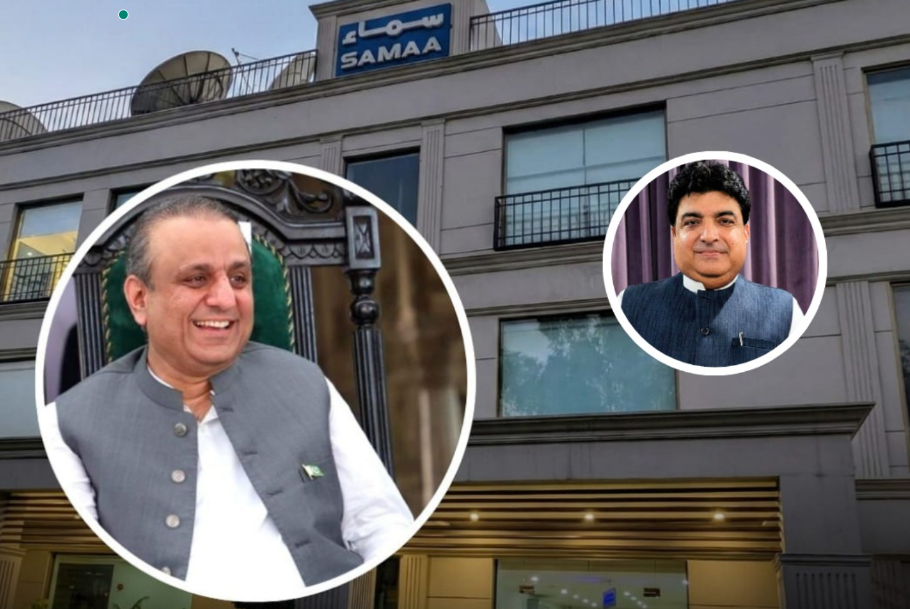
Back then, we admired Samaa for its creativity and editorial courage. This time, walking into the newly designed premises, it was impossible not to acknowledge the larger vision shaping the channel today, a vision clearly aligned with the leadership of Chairman Aleem Khan.
When Samaa’s head office shifted to Lahore, many in the industry heard stories of internal chaos and operational disorder during the Chaudhry era. Those narratives lingered for quite some time. What was evident during this visit, however, is that a thorough clean-up has taken place. Systems appear restored, roles clarified, and discipline reintroduced. The organization today feels far removed from the confusion once associated with that transition period.
We arrived a little early and were warmly received by the ever-energetic Usman Ghani, who generously gave us a detailed tour of all departments. From the moment you enter, the environment feels different, organized, vibrant, and purpose-driven. What was once a chaotic parking area during the WorldCall days is now a clean, landscaped space with managed parking, setting the tone before you even step inside.
Inside, the change is even more striking. The reception reflects professionalism, the corridors speak of order, and the entire building feels like a modern media ecosystem rather than just a newsroom. The studios, in particular, stand out. At one time, Dunya TV was considered the benchmark for state-of-the-art studios. Today, after seeing Samaa’s facilities, it is fair to say that Samaa once again ranks among the best tech-driven broadcast studios in the country.
I had also heard a great deal about Samaa’s digital wing, particularly its aggressive growth and audience pull. Unfortunately, the digital head was not available that day, so I could not visit what many now refer to as Samaa’s digital empire. The much-talked-about Punjabi podcast, currently one of the channel’s most impactful digital products, will have to wait for a future visit.
The visit also turned into a reunion. Meeting old friend Hashim, now directing a major show, was a reminder of how talent grows within institutions. Brief but pleasant encounters with Wasay Chaudhry and my longtime friend Iftikhar Thakur added warmth to the day, complete with laughter, conversation, and a group photo that captured the moment.
During the walk-through, I noticed a room bearing the nameplate of Nadeem Malik, Anchor. It prompted a broader reflection on newsroom culture. Anchors are at their strongest when fully focused on editorial output and audience engagement. Administrative responsibilities, when placed on anchors, often create unnecessary stress and dilute creative energy. Experience has shown that such dual roles not only burden the anchor but can also impact programme performance and ratings. Strong management works best when administration and editorial responsibilities are clearly separated.
One detail that genuinely impressed me was Samaa’s staff mess. No clutter, no lingering food smells, no disorder, just a clean, well-managed space. Learning that meals are provided free for all employees was a pleasant surprise and a strong signal of employee-focused management. It is a small detail, but one that speaks volumes about organizational culture.
Although I couldn’t meet some colleagues from the technical team, the overall discipline and cleanliness of the office stood out. The professionalism of the Admin and HR leadership, headed by Shyma Amjad, was evident throughout.
A meeting with the News Director for News and Programming, Rashid Mahmood, a calm, articulate, and visionary news professional, further reinforced the sense that editorial leadership at Samaa is firmly back on track.
As the sun began to set, the lush green Samaa premises took on an almost magnetic calm. Standing there, surrounded by familiar faces and a renewed environment, one thought was unavoidable: this transformation did not happen by accident.
It reflects intent, aesthetics, and leadership.
Samaa TV today feels like an organization rediscovering its confidence, modern in outlook, disciplined in execution, and ambitious in direction. If this momentum continues, it would not be an exaggeration to say that Samaa is quietly, but decisively, reclaiming its place among Pakistan’s leading news channels.
With the new Samaa management aligned to the Chairman’s clear vision, the network is unmistakably on a path toward ‘Making Samaa great again.’
 American Dollar Exchange Rate