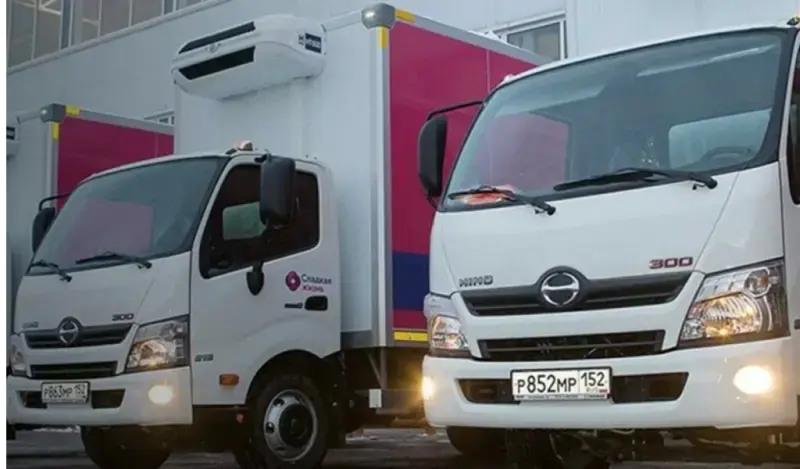
The Competition Commission of Pakistan (CCP) has approved two interconnected merger transactions that form part of a broader global restructuring involving Toyota Motor Corporation, Daimler Truck AG, Hino Motors Limited, and Mitsubishi Fuso Truck and Bus Corporation (MFTBC), said a press release on Thursday.
According to the CCP, the transactions collectively represent a single integrated restructuring aimed at consolidating and jointly managing the commercial vehicle operations of Hino and MFTBC under a newly created holding structure.
Under the arrangement, Toyota Motor Corporation, through its subsidiary Hino Motors Limited, has acquired full ownership of Mitsubishi Fuso Truck and Bus Corporation.
Simultaneously, Daimler Truck AG has taken an interest in a newly incorporated holding company, AIB Limited, through which Hino and MFTBC will be jointly owned and managed.
READ MORE: Hino, Mitsubishi Fuso to merge under new deal
The Commission assessed both transactions for their potential impact on competition in Pakistan, particularly in the manufacturing and distribution of buses and trucks.
While some overlap was identified between the commercial vehicle operations of Hino and MFTBC, the CCP concluded that the restructuring does not create or strengthen a dominant position in the relevant markets.
It noted that Pakistan’s commercial vehicle sector remains competitive, with several established players continuing to operate in the market.
In reviewing Daimler Truck AG’s acquisition of an interest in the holding company, the CCP observed that Daimler Truck AG no longer has any independent commercial vehicle operations in Pakistan.
READ MORE: Toyota Industries to accept Toyota group offer, Kyodo says
Its only relevant interest, MFTBC, had already been acquired by Toyota as part of the restructuring. The transaction was therefore deemed competitively neutral, with no impact on market competition in Pakistan.
Based on its assessment, the CCP concluded that the two interconnected transactions, when viewed together as part of a single global restructuring, do not raise any competition concerns. Both were approved under the Competition Act, 2010 and the Competition Merger Control Regulations, 2016.
 American Dollar Exchange Rate