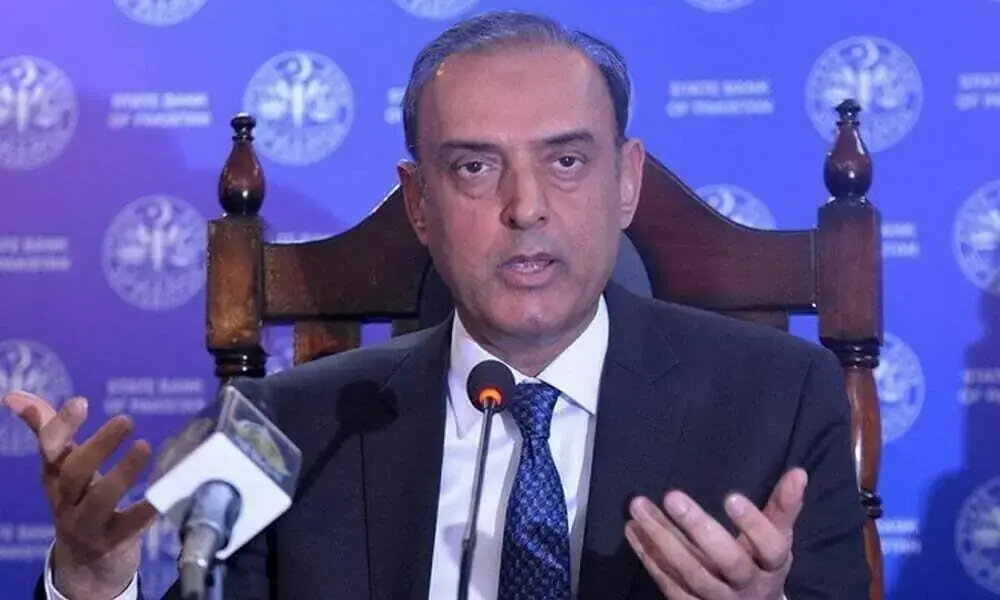

State Bank of Pakistan (SBP) Governor Jameel Ahmad on Thursday said the country’s economy was projected to grow between 3.75% and 4.75% in FY26, signalling a gradual recovery amid improving macroeconomic indicators.
The central bank chief’s remarks came during the Agricultural Credit Advisory Committee (ACAC) meeting held to review the performance of agricultural loans.
SBP chief reiterated that Pakistan had regained macroeconomic stability and was moving towards sustainable growth.
GDP growth in the first quarter of FY26 was 3.7%; the full-year estimate is 3.75 to 4.75%, according to SBP chief. Meanwhile, general inflation decreased to 5.8% in January 2026.
A record amount of Rs2.58 trillion in agricultural loans was disbursed in FY25, an increase of 16% year-on-year, said Ahmad.
Meanwhile, agri loans worth Rs1,412 billion were disbursed in the first half of FY26, whereas the number of borrowers increased to 2.97 million, he added.
Governor SBP emphasised the use of the Zarkhez-e scheme to increase access to agricultural loans.
The SBP ACAC considered the promotion of electronic warehouse reset financing to increase post-harvest liquidity. Electronic warehouse reset financing aims to reduce forced sales of crops and strengthen agricultural market linkages.
The governor underscored that agriculture remained critical for improving farm productivity, supporting rural livelihoods, and ensuring food security.
He emphasised the need to strengthen agricultural financial intermediation to support value addition, market linkages, and sustainable growth in the sector.
To accelerate borrower expansion, particularly among small farmers in the underserved and unserved areas, Jameel urged banks to fully leverage SBP’s initiatives, including the Risk Coverage Scheme for Small Farmers and Underserved Areas and Zarkheze, SBP’s flagship digital platform for agricultural lending.
The ACAC reviewed progress under Zarkheze, which represents a major step towards the digital transformation of agricultural credit delivery in Pakistan.
Earlier, Jameel, in a written response to Reuters, said that financial conditions had eased significantly following a cumulative 1,150-basis-point cut in the policy rate since June 2024, and that the full impact was still feeding through.
This, he said, was supporting growth while preserving price and economic stability.
The central bank last month held its benchmark rate at 10.5%, defying expectations for a cut. The divergence with the IMF comes at a delicate moment for Pakistan, which is emerging from a balance-of-payments crisis under a $7 billion IMF programme.








 American Dollar Exchange Rate