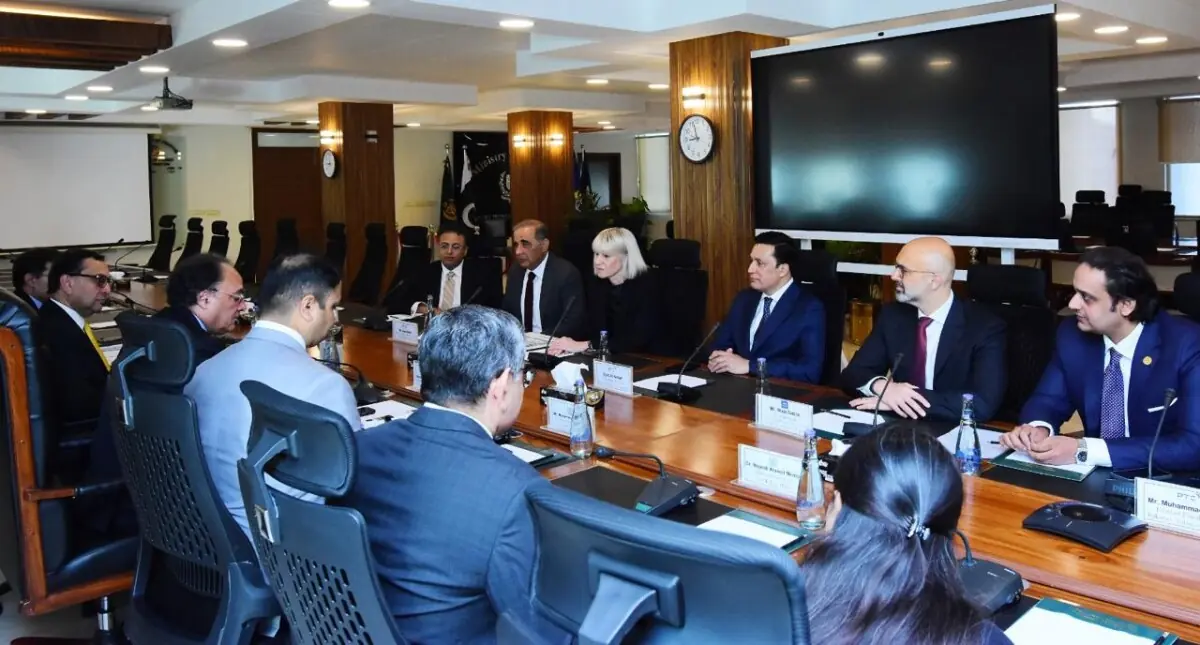

Pakistan government made record seizures of illicit cigarettes during the current year, with coordinated operations involving customs, inland revenue, provincial authorities, and dedicated enforcement units to curb the trade of both finished products and raw materials, according to Finance Minister Muhammad Aurangzeb.
Aurangzeb passed these remarks in a meeting on Thursday with a delegation of British American Tobacco (BAT) led by Ms Pascale Meulemeester, Regional Director, Asia Pacific, Middle East & Africa, along with senior executive members of BAT and Pakistan Tobacco Company (PTC).
Also read: Rs415 billion in losses raise alarms over tobacco enforcement
“The delegation was briefed on ongoing enforcement actions against illicit cigarette manufacturing and smuggling. It was shared that record seizures have been made during the current year, with coordinated operations involving customs, inland revenue, provincial authorities, and dedicated enforcement units to curb the illegal trade of both finished products and raw materials,” the Finance Division said in a statement.
During the meeting, the finance minister also underscored that Pakistan’s ongoing structural reform agenda was aimed at breaking the historical boom-and-bust cycles through fiscal discipline, broadening of the tax base, and strengthened enforcement and compliance.
He emphasised that fiscal sustainability required equitable taxation, improved compliance across all sectors, and decisive action to curb leakages and illicit activities.
Highlighting progress on tax administration reforms, he noted, “the government’s tax transformation, anchored in reforms to people, processes, and technology, has strengthened enforcement mechanisms through AI-led CRM systems, AI-led production monitoring, and track-and-trace initiatives”.
The finance minister shared that enhanced enforcement across sectors including sugar, cement, tobacco, textiles, and beverages had resulted in “measurable improvements in compliance and revenue collection”.
The delegation emphasised that policy predictability and a stable excise regime would support formal sector growth, strengthen revenue generation, and enable long-term investment planning.
Also read: No tax stamps on 81.01pc of cigarette brands available at retail outlets, says a survey
It also highlighted export opportunities, particularly in the Kingdom of Saudi Arabia and other international markets, and underscored the importance of competitive crop pricing and regulatory alignment to enable Pakistan to expand its footprint in global tobacco exports.
Aurangzeb noted that sectoral reviews were underway to assess policy measures and address anomalies where required, while ensuring alignment with broader fiscal objectives.
He reiterated that revenue mobilisation remained critical for fiscal stability. “However, the government remains open to constructive engagement to ensure policies are effective and sustainable.”






 American Dollar Exchange Rate