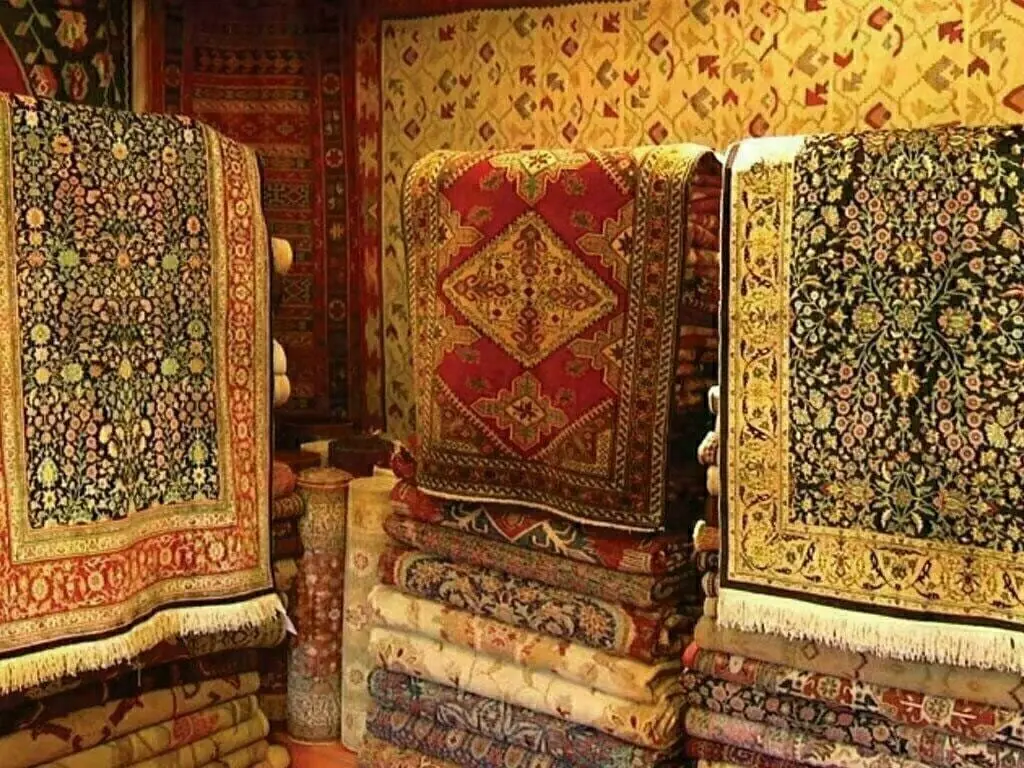
The Pakistan Carpet Manufacturers and Exporters Association (PCMEA) highlighted serious operational challenges confronting the carpet export sector, particularly disruptions in the supply of essential intermediates required for production.
These supply constraints, PCMEA noted, are hampering exporters’ ability to meet international orders on time, increasing the risk of losing valuable market share in competitive global markets.
The development came during a meeting between Federal Minister for Commerce Jam Kamal Khan with representatives of PCMEA to review the challenges confronting Pakistan’s hand-knotted carpet export sector, a traditional powerhouse of craftsmanship, employment, and foreign exchange earnings, and discuss immediate facilitation measures, read a statement.
The PCMEA delegation, led by Patron-in-Chief Abdul Latif Malik and Senior Vice Chairman Usman Ashraf, highlighted disruptions in the supply of essential intermediates required for carpet production, which are adversely affecting exporters’ ability to honour international commitments, risking loss of market share and exports. The delegation sought urgent government intervention to resolve operational bottlenecks.
Minister Jam Kamal reaffirmed that promoting value-added exports such as hand-knotted carpets remains a key priority of the Ministry of Commerce.
He emphasised the sector’s significant contribution to employment generation, women’s empowerment, and preservation of traditional craftsmanship. He assured the delegation of proactive support to address supply constraints and facilitate exporters, particularly micro, small and medium enterprises (MSMEs) operating in the sector.
The minister also called for institutionalising planning through structured secretariats under sectoral councils, with clearly defined mandates and time-bound deliverables. He stressed that such councils must evolve into operational platforms aligned with Pakistan’s broader economic and development frameworks to ensure long-term planning and accountability.
Jam Kamal assured the PCMEA that their concerns would receive prompt consideration, reiterating the government’s resolve to strengthen value-added manufacturing, support MSMEs, and promote a diversified, competitive, compliant, and sustainable export economy.

The Pakistan Carpet Manufacturers and Exporters Association (PCMEA) highlighted serious operational challenges confronting the carpet export sector, particularly disruptions in the supply of essential intermediates required for production.
These supply constraints, PCMEA noted, are hampering exporters’ ability to meet international orders on time, increasing the risk of losing valuable market share in competitive global markets.
The development came during a meeting between Federal Minister for Commerce Jam Kamal Khan with representatives of PCMEA to review the challenges confronting Pakistan’s hand-knotted carpet export sector, a traditional powerhouse of craftsmanship, employment, and foreign exchange earnings, and discuss immediate facilitation measures, read a statement.
The PCMEA delegation, led by Patron-in-Chief Abdul Latif Malik and Senior Vice Chairman Usman Ashraf, highlighted disruptions in the supply of essential intermediates required for carpet production, which are adversely affecting exporters’ ability to honour international commitments, risking loss of market share and exports. The delegation sought urgent government intervention to resolve operational bottlenecks.
Minister Jam Kamal reaffirmed that promoting value-added exports such as hand-knotted carpets remains a key priority of the Ministry of Commerce.
He emphasised the sector’s significant contribution to employment generation, women’s empowerment, and preservation of traditional craftsmanship. He assured the delegation of proactive support to address supply constraints and facilitate exporters, particularly micro, small and medium enterprises (MSMEs) operating in the sector.
The minister also called for institutionalising planning through structured secretariats under sectoral councils, with clearly defined mandates and time-bound deliverables. He stressed that such councils must evolve into operational platforms aligned with Pakistan’s broader economic and development frameworks to ensure long-term planning and accountability.
Jam Kamal assured the PCMEA that their concerns would receive prompt consideration, reiterating the government’s resolve to strengthen value-added manufacturing, support MSMEs, and promote a diversified, competitive, compliant, and sustainable export economy.






 American Dollar Exchange Rate