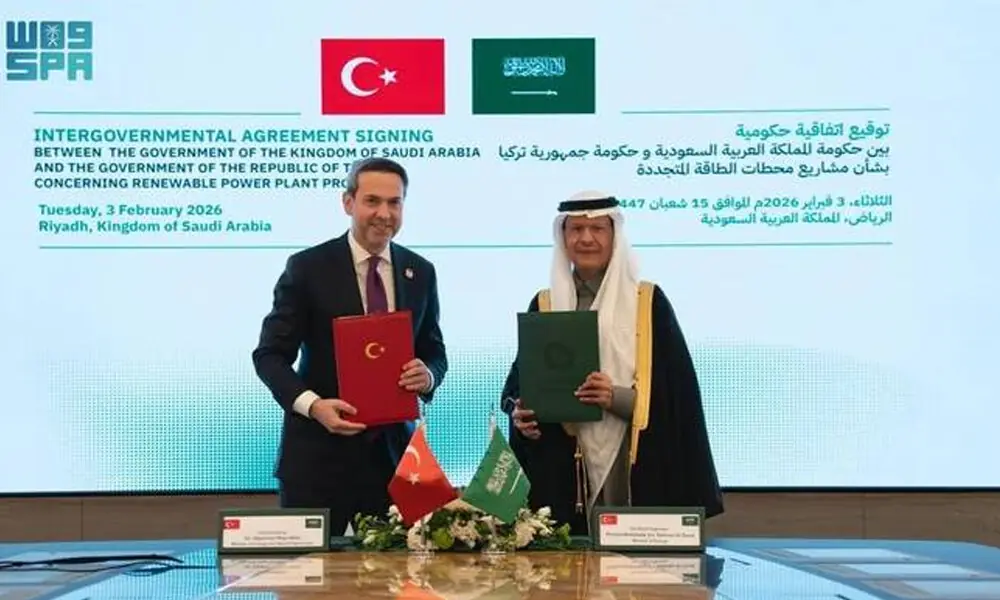
ISTANBUL: Saudi Arabia will help Turkiye build solar plants capable of powering more than two million homes, under a deal the two countries signed Friday that aims to deepen energy cooperation between the key regional players.
The signing ceremony at an Ottoman-era palace by the waters of the Bosphorus Strait in Istanbul followed a $2-billion inter-governmental energy agreement between the two countries during a landmark visit by Turkish President Recep Tayyip Erdogan to Riyadh on February 3.
Turkiye is preparing to host the United Nations’ COP31 climate summit on its Mediterranean coast later this year, with Australia leading the negotiations.
Ties between Turkiye and Saudi Arabia have steadily improved in recent years after collapsing in the wake of the killing of journalist Jamal Khashoggi by Saudi agents inside the kingdom’s consulate in Istanbul in October 2018.
Turkiye’s Erdogan visits Saudi as ties between former rivals warm
The two countries now cooperate on a range of diplomatic issues, including support for Gaza and backing Syria’s new government following the ouster of president Bashar al-Assad in 2024.
Under the agreement, Saudi firm Acwa will build two solar power plants in the provinces of Sivas and Karaman in central Turkiye, with a combined capacity of 2,000 megawatts – enough to meet the electricity needs of 2.1 million households, officials said.
Turkish energy minister Alparslan Bayraktar hailed the project as “one of the largest domestic and foreign investments ever made in our energy sector”, and said Turkiye “will also secure electricity procurement at the lowest price ever achieved in our country”.
Turkiye is undergoing an energy “revolution”, he said, adding that 62 percent of installed electricity capacity last year came from renewable sources.
“We have increased our installed capacity in solar and wind energy from almost zero to over 40,000 megawatts today. We consistently emphasise that our country has much greater potential in renewable energy,” he told a ceremony.
By 2035, Turkiye aims at increasing its installed capacity in solar and wind to 120,000 megawatts.
Ankara is also targeting net zero emissions by 2053, but 33.6 percent of its electricity came from coal last year, according to official ministry data.
In response to an AFP question about Turkiye’s dependence on coal, Bayraktar said Turkiye aims at cheaper energy and reducing reliance on energy imports.
“Coal can initially be replaced with gas, but in the medium and long term it can be substituted with nuclear” power plants, he said.
 American Dollar Exchange Rate