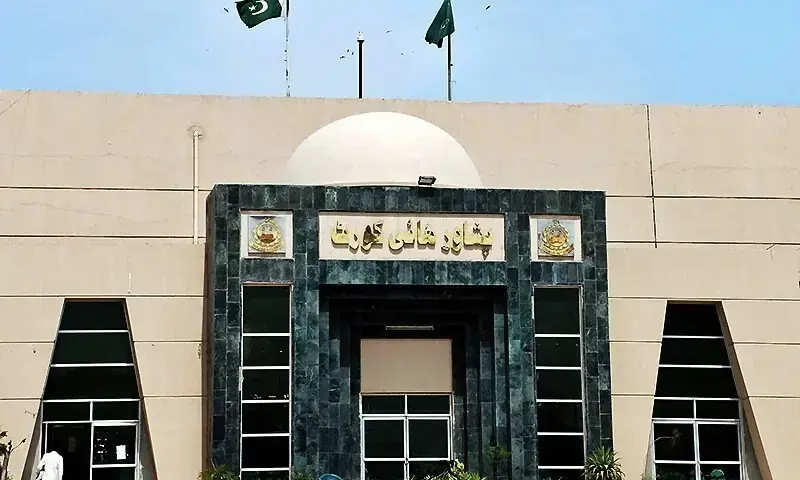
PESHAWAR: Peshawar High Court has ruled that the courts don’t have the jurisdiction to decide disputes related to power outages and that the aggrieved party should reach out to the specialised statutory forums established for the redressal of such grievances.
“It’s a well-established principle of the law that where a special statute created a specialised forum and provided a specific remedy for certain grievances, the jurisdiction of ordinary civil courts was impliedly barred. This principle, often referred to as the implied bar, dictates that a party must exhaust the remedies provided by the special statute before approaching a civil court, if at all,” Justice Wiqar Ahmad of a single-member bench declared in a detailed judgement on a “civil revision” petition.
He, however, added that the petitioners were at liberty to approach the appropriate forum i.e. National Electric Power Regulatory Authority (Nepra), for redressal of their grievances regarding power outages, in accordance with the law.
In the petition, the residents of Junglekhel area in Kohat had challenged the concurrent dismissal of their civil suit, against unscheduled outages by the Peshawar Electric Supply Company (Pesco), by a civil court and district court in Kohat on merit, as well as on grounds of jurisdiction.
Asks petitioners to approach Nepra for redressal of grievances
The counsel for petitioners argued against the illegality of unauthorised loadshedding upwards of 18 hours by the Pesco. He termed the loadshedding discriminatory, against the fundamental rights of the petitioners and amenable to the general jurisdiction of civil courts pursuant to Section 9 of the Code of Civil Procedure.
The Pesco was represented by Barrister Asadul Mulk who primarily focused on jurisdiction as the main issue in the case. He argued that under the Regulation of Generation, Transmission and Distribution of Electric Power Act, 1997, (Nepra Act) the jurisdiction of civil courts had been ousted.
In the judgement, the bench declared that the central legal question for determination was whether the Civil Court possessed the jurisdiction to adjudicate upon the petitioners’ challenge to the load shedding schedules and administrative policies of Pesco.
“The legal regime governing the power sector is defined by the Regulation of Generation, Transmission and Distribution of Electric Power Act, 1997 (Nepra Act),” it noted.
It added: “The Act establishes Nepra as the sole regulatory authority. Under Section 3 of the Act, the Federal Government is mandated to establish the Nepra, a specialised body comprising a Chairman and four members representing each Province, ensuring a high level of integrity and eminence in fields such as law, engineering and economics.”
The bench noted that the Act conferred extensive and exclusive powers upon the Authority under Section 7, specifically making it the primary arbiter for regulating electric power services and settling disputes.
It added that under Section 7(2)(h) and 7(6), the authority was tasked with settling disputes between licensees and protecting the interests of consumers through principles of transparency and impartiality.
“To operationalise the grievance redressal mandate, the National Electric Power Regulatory Authority (Complaint Handling and Dispute Resolution Procedure) Rules, 2015, (2015 Rules), were framed under Section 46 of the Act. Furthermore, Section 45 of the Act provides that these provisions have an overriding effect over any inconsistent law, reinforcing Nepra’s exclusive empowerment to determine the terms and conditions of electric power services,” it declared.
Referring to an earlier Supreme Court verdict, the bench pointed out that the apex court unequivocally held that where exclusive jurisdiction conferred upon a specialised tribunal by statute, it acted as an implied bar on the jurisdiction of civil courts.
“These precedents [superior court judgements]settle that disputes falling within the purview of Nepra’s regulatory domain, including issues related to loadshedding schedules and consumer grievances against power distribution companies, are primarily to be addressed by Nepra itself,” it said.
The bench noted that when the law provided a specific procedure for ‘Complaint Handling and Dispute Resolution’ before a specialised body (Nepra), the general jurisdiction of the Civil Court was ousted.
Published in media, March 14th, 2026
 American Dollar Exchange Rate