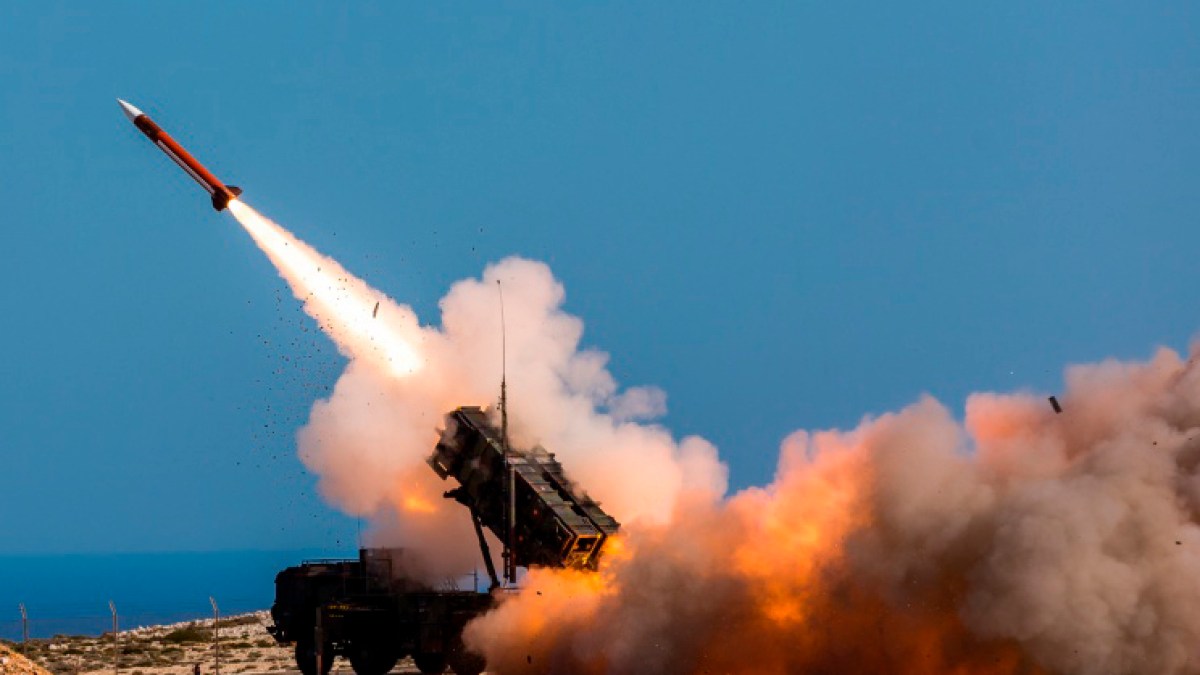
A week into office, United States President Donald Trump surprised the world and many of his policymakers by announcing his plans to create a missile defence shield, calling it the “Iron Dome for America”.
At first, the name evoked Israel’s Iron Dome air defence system, which is designed to intercept and destroy low-level targets, rockets, mortar shells and cruise missiles over a short range. It is tailored to Israel’s defence needs and size.
However, the continental United States is vast, spanning four time zones, and has an extensive coastline.
It soon became apparent that what Trump was advocating on January 27 was the creation of a “new-generation missile defence shield for the United States, against ballistic, hypersonic, advanced cruise missiles, and other next-generation aerial attacks”. Essentially, it is an updated version of former US President Ronald Reagan’s Strategic Defence Initiative, or “Star Wars” programme.
The phrase “Iron Dome” is now a synonym for “missile defence shield”.
This new multilayered defence system is envisaged as not just protecting the US but also forward-deployed troops in combat.
Reagan’s dream of a missile defence shield remained mostly that, a dream, although billions of dollars were poured into the programme.
The problems, both then and now, were that a comprehensive missile shield would be exorbitant in price, barely technically possible and impractical in reality as easily available technologies would be able to spoof or overwhelm the most up-to-date missile defence system.
The US already has an early warning and interceptor system in place, but this has limited ability and would be able to stop only the kind of attacks launched by minor nuclear powers like North Korea.
It would not be able to stop a large-scale attack by a determined and capable foe like Russia or China. Missile defence has matured rapidly as advancements in missile guidance and detection have increased dramatically over the past decade.
The analogy of “hitting a bullet with another bullet” hints at the scale of the challenges for developing a missile defence system, except missiles move at upwards of 20 times those speeds. For a missile defence shield to be viable, incoming missiles need to be swiftly detected and tracked, and all that information must be relayed to interceptor batteries. The interceptor must then be guided to the target, destroying the incoming enemy missile.
This, preferably, should be as far away from one’s territory as possible, especially when considering these missiles could very well be nuclear armed.
The US and Israel have poured billions of dollars into research, often cooperating, and the results are evident.
Missile defence – the art of the possible
In the conflicts over the skies of Ukraine and Israel, incoming missiles have been detected and destroyed with increasing frequency.
The information gained in actual combat has been invaluable to developers. A next-generation missile shield, according to the White House, would have to defend itself against “ballistic, hypersonic, advanced cruise missiles, and other next-generation aerial attacks from peer, near-peer, and rogue adversaries”.
Hypersonic missiles are designed to circumvent this and take a randomised path to their targets, making their interception that much harder. Cruise missiles, first developed as offensive first-strike weapons, fly below radar cover and arrive at their targets with little to no warning.
The challenges these types of missiles create are enormous, and stopping them would require new networks, capabilities and weapons to be effective.
Initially derided, the US Space Force, created by Trump during his first term in office and established in 2019, would be an integral part of this new missile shield along with the US Strategic and Northern commands.
Emphasis has been placed on intercepting any missile attack as early as possible, ideally in the first phase, or “boost phase”, of a missile’s flight.
Such interceptions would require a network of space-based radar systems to detect the heat plumes of missiles that have just launched.
The plan also calls for a series of space-based interceptors that could destroy missiles at this early stage.
Whether this means interceptor missiles or introducing space-based laser batteries in orbit remains to be seen.
Space-based laser technology has significantly advanced since the 1980s when such weapons were first proposed. However, it still needs more investment and miniaturisation before it becomes a viable weapons system.
What would power a laser with sufficient strength to destroy a missile from hundreds of kilometres away as its target moves at increasing speed?
Tactical, short-range laser technology has been used to intercept targets in Ukraine, but the power needed to destroy incoming missiles would be a magnitude greater. Space-based “kinetic kill” missiles could also be used to hit and essentially smash incoming missiles to bits.
All these weapons would be in orbit, covering a huge area, as they watch for missile launches and attacks.
 American Dollar Exchange Rate