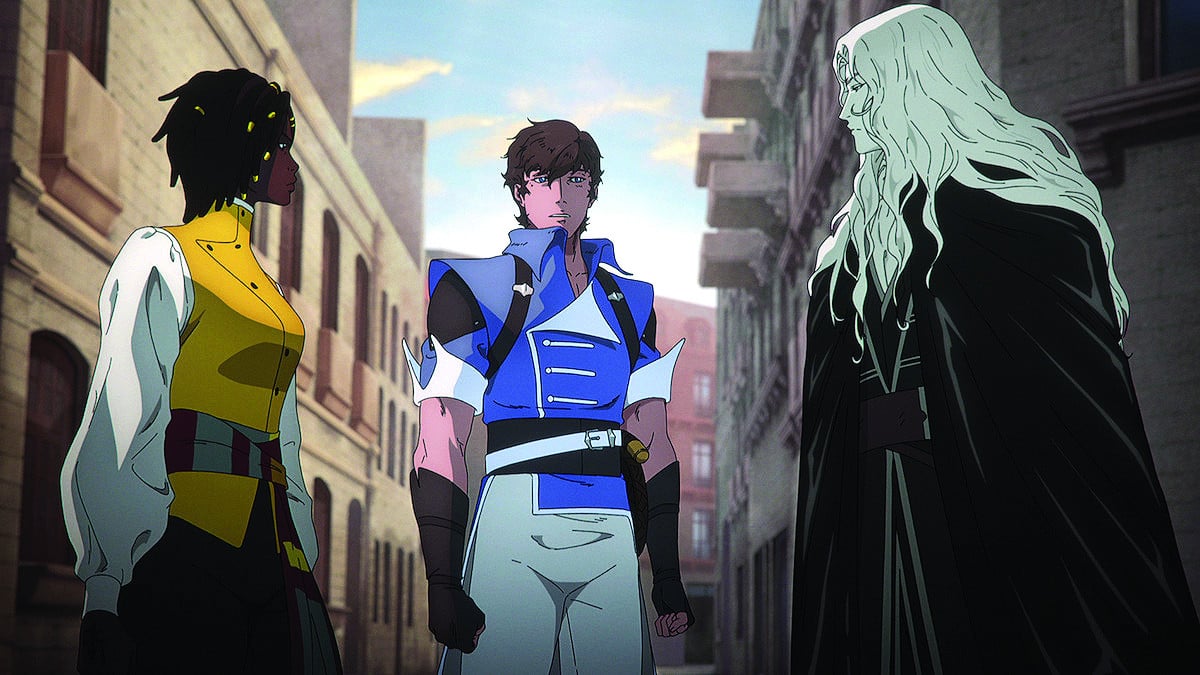
How ‘Castlevania: Nocturne’ Season 2 delivers a transformative experience

In 2017, a video game adaptation introduced us to the adventures of an unlikely trio – the sole survivor of a defamed clan, a prodigious sorceress, and the son of Dracula. What began as a death-dealing series of quests soon developed into a world of Gothic horror that was equal parts captivating as it was gruesome.
After the animated series Castlevania established its four-season legacy with Trevor, Sypha, and Alucard’s journey, Castlevania: Nocturne braved the risky possibility of expanding the world. Any spin-off series is burdened by high expectations, and Nocturne is no stranger to that. But after traversing a rocky start, the series has won a place in the hearts of longtime fans with its second season.
The art of staying focused
With most sequels, the appeal of the continuation lies where the story previously left off. For the first season, it was the ending of the original series; the Belmont name was restored to greatness with the possibility of a magical bloodline ahead. Season One of Castlevania: Nocturne delivered in that aspect, spotlighting the weapon-wielding mage, Richter Belmont, as a promising protagonist.
In a similar vein, the second season had many possible subplots to untangle. With darkness looming large and the return of a familiar face being the only source of hope for the heroes, Season Two kicks off with a wealth of stakes to confront. The fast pacing works because it is justified by narrative demands – our heroes don’t have a second to waste.
For some, this shift in pacing might be overwhelming. However, Castlevania: Nocturne treads this line carefully by keeping the surprises to a minimum. Season Two refamiliarises the audience with the same cast of characters, though with the exception of Alucard – who may be new to Nocturne yet is already a treasured character for old fans.
Nocturne plays it smart and safe by keeping its audience’s focus trained. Richter, Annette, Maria, and crew have grievous losses to deal with – there’s a sturdy foundation for the narrative. Now, the show had to build a robust plot to ensure that the story wouldn’t rush to a botched conclusion. And it did so by paying attention where attention was due, on the characters we already knew.
While some might critique the lack of new character introductions as a flaw, it isn’t difficult to view it as the contrary. A vampiric aristocracy is threatening the fabric of society and natural order; it would be unwise to wait around for more saviours to join the cause. And our heroes are more proactive than that.
Character arcs for the books
A prominent critique for Season One was that the characters felt more like caricatures of what they were meant to be. They were mere tools to spell out a point that the screenplay failed to incorporate with subtlety. However, this season is all about the individuality that its predecessor may have sidelined.
Annette is undoubtedly the soul of the story this time around. Season One watchers are familiar with her physical prowess, and if there’s one spoiler-free update you must know, it’s that she takes it to a whole different level in Season Two. From battling night creatures to opposing the season’s deadliest antagonist, Annette’s journey is nothing short of transformative.
Another character who steals the limelight this season is Maria. The optimistic, headstrong kid from last season is no longer a child to be trifled with. Season Two makes sure you know that to a harrowing extent, which unravels as gloriously as Maria’s hair does once she is exposed to evils much greater than herself.
The choice to keep Richter’s personal development to a bare minimum was a calculated one, and appropriately so. It serves the purpose it intends to: building up anticipation for a future showdown with a certain lifelong foe. Who doesn’t love a good slow burn, even outside the realms of romance?
Monstrosity never forgotten
It wouldn’t be fair to discuss the protagonists and not bring up the force that empowers their purpose to the plot. The greatest thing about the Castlevania universe has always been its commitment to eldritch horror. From crafting ghastly night creature designs to effusing a sinister atmosphere, the animators’ creative liberties are worth lauding.





 American Dollar Exchange Rate