• Advertise
  • Contact Us
  • Daily The Business
  • Privacy Policy
Friday, December 5, 2025
Daily The Business
  • Login
No Result
View All Result
DTB
No Result
View All Result
DTB

I worked in a children’s secondhand store. Here’s what you should know before donating.

February 15, 2025
in consignment, essay, Parenting, parenting-freelancer, Retail
I worked in a children's secondhand store. Here's what you should know before donating.
Share on FacebookShare on TwitterWhatsapp
  • I worked for a year at a secondhand store selling used clothing and toys.
  • We had to reject many donated items based on their condition.
  • I want people to be more mindful of what they donate instead.

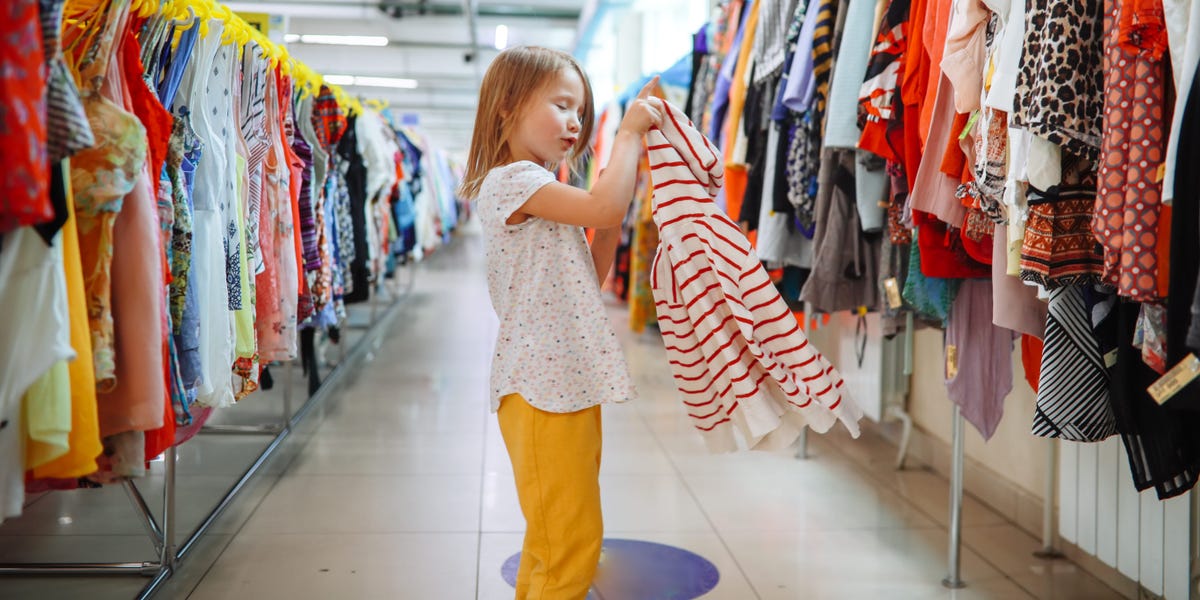
I worked at a consignment store in my final year of high school. Each shift, customers would bring bags of old clothing for us to sort through to determine if it was acceptable to sell. Being a consignment store, customers would get a percentage of the profits if their items were sold. If the items were unacceptable, we would put them aside in a bag to donate to local charities.

While working there, I must’ve sorted through hundreds of pieces of clothing, many of which we couldn’t sell. This should not be surprising, given that only about 15% of clothes donated to secondhand stores are resold or reused.

Most items I rejected had obvious imperfections: visible stains, holes, or tears, making it extremely unlikely anyone else would want to wear them. We would even receive items our store didn’t sell, such as used underwear. It was frustrating to constantly receive donations so evidently unfit to sell, making me feel as if people were just using our store to get rid of clothing they no longer wanted without thinking about where it would end up.

We had to ship rejected clothes to charities

The clothing we rejected was donated to local charities, but we didn’t track what happened to it after it left the store.

It’s likely that the clothing will get thrown out somewhere down the line, becoming part of the EPA estimate in 2018 that 11.3 million tons of textiles were sent to landfills, comprising 7.7% of all landfilled waste.

In the past decade, there’s been increasing awareness of the harms of the fast-fashion industry and the mass production of cheap, low-quality clothing, leading people to look to secondhand clothing stores as a more sustainable alternative. It can be especially appealing to parents of young children who are constantly outgrowing their clothes.

All this to say, I want people to be more mindful of what they do with their old clothing and take a good look at the items they’re giving away to ask themselves, honestly, if anyone else would want to use it.

There are other alternatives for kids’ stuff

It’s also important to consider other alternatives before donating clothing to secondhand stores. Do you have friends with younger children? Maybe they would appreciate your child’s old clothes (if it’s not in good enough condition for your friends, secondhand stores probably don’t want it either). I personally try to mend or upcycle my clothes to extend their life as much as possible. If clothing is in really bad shape, you can look into textile recycling programs in your area or repurpose them as household items such as cleaning rags.

Addressing this as individuals starts with being intentional about what we buy. Before buying clothes, reflect on whether you or your child really needs them and where they might end up once you finish them. Talk to family and friends about appropriate gifts for your child — sometimes, non-material gifts, such as experiences, can be more meaningful.

These changes may seem small, but they could make a difference in how we treat our old clothes in the long term.

  • I worked for a year at a secondhand store selling used clothing and toys.
  • We had to reject many donated items based on their condition.
  • I want people to be more mindful of what they donate instead.

I worked at a consignment store in my final year of high school. Each shift, customers would bring bags of old clothing for us to sort through to determine if it was acceptable to sell. Being a consignment store, customers would get a percentage of the profits if their items were sold. If the items were unacceptable, we would put them aside in a bag to donate to local charities.

While working there, I must’ve sorted through hundreds of pieces of clothing, many of which we couldn’t sell. This should not be surprising, given that only about 15% of clothes donated to secondhand stores are resold or reused.

Most items I rejected had obvious imperfections: visible stains, holes, or tears, making it extremely unlikely anyone else would want to wear them. We would even receive items our store didn’t sell, such as used underwear. It was frustrating to constantly receive donations so evidently unfit to sell, making me feel as if people were just using our store to get rid of clothing they no longer wanted without thinking about where it would end up.

We had to ship rejected clothes to charities

The clothing we rejected was donated to local charities, but we didn’t track what happened to it after it left the store.

It’s likely that the clothing will get thrown out somewhere down the line, becoming part of the EPA estimate in 2018 that 11.3 million tons of textiles were sent to landfills, comprising 7.7% of all landfilled waste.

In the past decade, there’s been increasing awareness of the harms of the fast-fashion industry and the mass production of cheap, low-quality clothing, leading people to look to secondhand clothing stores as a more sustainable alternative. It can be especially appealing to parents of young children who are constantly outgrowing their clothes.

All this to say, I want people to be more mindful of what they do with their old clothing and take a good look at the items they’re giving away to ask themselves, honestly, if anyone else would want to use it.

There are other alternatives for kids’ stuff

It’s also important to consider other alternatives before donating clothing to secondhand stores. Do you have friends with younger children? Maybe they would appreciate your child’s old clothes (if it’s not in good enough condition for your friends, secondhand stores probably don’t want it either). I personally try to mend or upcycle my clothes to extend their life as much as possible. If clothing is in really bad shape, you can look into textile recycling programs in your area or repurpose them as household items such as cleaning rags.

Addressing this as individuals starts with being intentional about what we buy. Before buying clothes, reflect on whether you or your child really needs them and where they might end up once you finish them. Talk to family and friends about appropriate gifts for your child — sometimes, non-material gifts, such as experiences, can be more meaningful.

These changes may seem small, but they could make a difference in how we treat our old clothes in the long term.

Tags: bagChildclotheclothingconsignment storeCustomerfriendholeitemlocal charityold clothingparentpeoplesecondhand storevisible stain
Share15Tweet10Send
Previous Post

Mr. Andrea Nucera, Managing Director of Reportage Group, Sign Landmark AED 1 Billion Agreement with RUDA in Abu Dhabi to Transform Pakistan’s Real Estate Landscape

Next Post

Twin cities jolted by 4.8 magnitude quake

Related Posts

San Francisco is taking on ultraprocessed food in a new lawsuit
lawsuit

San Francisco is taking on ultraprocessed food in a new lawsuit

December 3, 2025
Alicia Keys says a realization about her 'own triggers' shaped the way she parents
alicia-keys

Alicia Keys says a realization about her ‘own triggers’ shaped the way she parents

December 1, 2025
I'm in my 40s, single, and childless, so I moved in with my 90-year-old grandma. It isn't always easy being her caregiver.
caregiving

I’m in my 40s, single, and childless, so I moved in with my 90-year-old grandma. It isn’t always easy being her caregiver.

December 1, 2025
Black Friday shoppers are relying on Buy Now, Pay Later plans. Here's how that could backfire.
affirm-buy-now-pay-later

Black Friday shoppers are relying on Buy Now, Pay Later plans. Here’s how that could backfire.

November 30, 2025
I became a widow in my 20s. It taught me to say 'yes' more and live every day like it might be my last.
essay

I became a widow in my 20s. It taught me to say ‘yes’ more and live every day like it might be my last.

November 29, 2025
Shoppers are on pace to break Black Friday online spending records and use AI more than ever as sales hit $8.6 billion
adobe

Shoppers are on pace to break Black Friday online spending records and use AI more than ever as sales hit $8.6 billion

November 29, 2025

Popular Post

  • FRSHAR Mail

    FRSHAR Mail set to redefine secure communication, data privacy

    126 shares
    Share 50 Tweet 32
  • How to avoid buyer’s remorse when raising venture capital

    33 shares
    Share 337 Tweet 211
  • Microsoft to pay off cloud industry group to end EU antitrust complaint

    54 shares
    Share 22 Tweet 14
  • Capacity utilisation of Pakistan’s cement industry drops to lowest on record

    47 shares
    Share 19 Tweet 12
  • SingTel annual profit more than halves on $2.3bn impairment charge

    47 shares
    Share 19 Tweet 12
American Dollar Exchange Rate
  • Advertise
  • Contact Us
  • Daily The Business
  • Privacy Policy
Write us: info@dailythebusiness.com

© 2021 Daily The Business

Welcome Back!

Login to your account below

Forgotten Password?

Retrieve your password

Please enter your username or email address to reset your password.

Log In

Add New Playlist

No Result
View All Result
  • Advertise
  • Contact Us
  • Daily The Business
  • Privacy Policy

© 2021 Daily The Business

This website uses cookies. By continuing to use this website you are giving consent to cookies being used. Visit our Privacy and Cookie Policy.