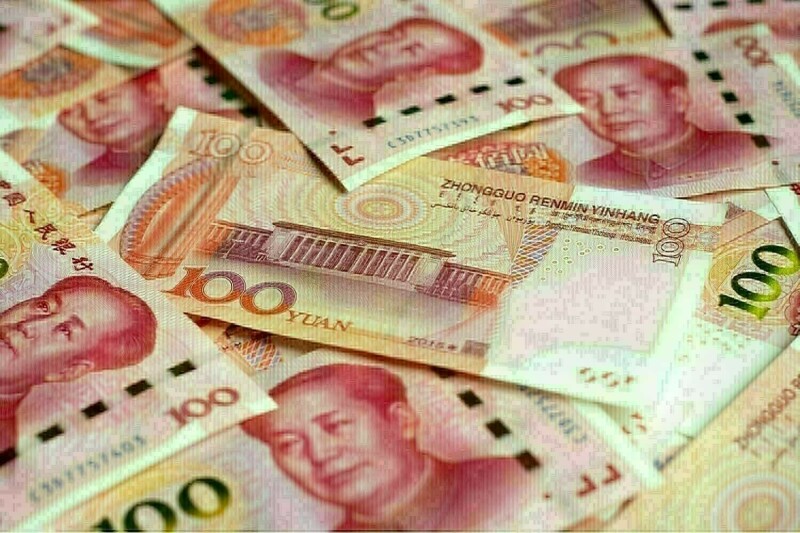
SHANGHAI: China’s yuan slipped against the dollar on Friday, as investors cautiously looked towards key tariff talks with the United States over the weekend for signs of a de-escalation of the trade dispute between the world’s two largest economies.
Officials from Beijing and Washington prepare to meet in Switzerland on Saturday for negotiations that markets hope could be the first step toward resolving the trade war disrupting the global economy.
“The talk is likely to centre on de-escalation rather than a big trade deal, with Bessent stating that current tariff rates aren’t sustainable and are equivalent to a trade embargo,” said Ju Wang, head of Greater China FX & rates strategy at BNP Paribas, referring to US Treasury Secretary Scott Bessent.
“The key question for the market is whether tariffs will eventually be reduced to 50–60% or 20–30%. In our base case, where US tariffs on China are scaled back to 50%, the yuan is likely to remain around the current level.”
As of 0330 GMT, the onshore yuan was 0.06% lower at 7.2492 per dollar, while its offshore counterpart was down 0.08% at 7.2492.
Prior to the market opening, the People’s Bank of China (PBOC) set the midpoint rate, around which the yuan is allowed to trade in a 2% band, at 7.2095 per dollar, its weakest since April 24.
China’s yuan slips as PBOC guides currency lower
The much weakened official guidance fixing followed a broad rebound in the dollar. Some currency traders say Chinese authorities using the guidance fix as a means of maintaining yuan stability in the face of intensifying trade tension with the United States.
Sources told Reuters that China’s central bank has approved foreign exchange purchases by some commercial banks to pay for gold imports under recently increased quotas.
Offshore yuan liquidity conditions in Hong Kong loosened to effectively lower the cost of shorting yuan, traders said.
The one-year tenor of CNH Hong Kong Interbank Offered Rate benchmark (CNH HIBOR), set by the city’s Treasury Markets Association (TMA), was set at 1.97242% on Friday, the lowest level since data was available.
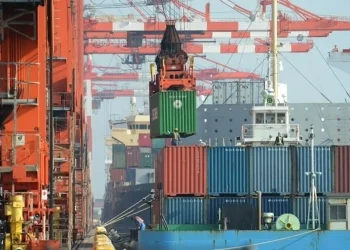
Separately, markets barely reacted to China’s April trade data, which showed exports rose faster than expected, while imports narrowed their declines, giving Beijing some relief ahead of the talks with the US this weekend.

SHANGHAI: China’s yuan slipped against the dollar on Friday, as investors cautiously looked towards key tariff talks with the United States over the weekend for signs of a de-escalation of the trade dispute between the world’s two largest economies.
Officials from Beijing and Washington prepare to meet in Switzerland on Saturday for negotiations that markets hope could be the first step toward resolving the trade war disrupting the global economy.
“The talk is likely to centre on de-escalation rather than a big trade deal, with Bessent stating that current tariff rates aren’t sustainable and are equivalent to a trade embargo,” said Ju Wang, head of Greater China FX & rates strategy at BNP Paribas, referring to US Treasury Secretary Scott Bessent.
“The key question for the market is whether tariffs will eventually be reduced to 50–60% or 20–30%. In our base case, where US tariffs on China are scaled back to 50%, the yuan is likely to remain around the current level.”
As of 0330 GMT, the onshore yuan was 0.06% lower at 7.2492 per dollar, while its offshore counterpart was down 0.08% at 7.2492.
Prior to the market opening, the People’s Bank of China (PBOC) set the midpoint rate, around which the yuan is allowed to trade in a 2% band, at 7.2095 per dollar, its weakest since April 24.
China’s yuan slips as PBOC guides currency lower
The much weakened official guidance fixing followed a broad rebound in the dollar. Some currency traders say Chinese authorities using the guidance fix as a means of maintaining yuan stability in the face of intensifying trade tension with the United States.
Sources told Reuters that China’s central bank has approved foreign exchange purchases by some commercial banks to pay for gold imports under recently increased quotas.
Offshore yuan liquidity conditions in Hong Kong loosened to effectively lower the cost of shorting yuan, traders said.
The one-year tenor of CNH Hong Kong Interbank Offered Rate benchmark (CNH HIBOR), set by the city’s Treasury Markets Association (TMA), was set at 1.97242% on Friday, the lowest level since data was available.
Separately, markets barely reacted to China’s April trade data, which showed exports rose faster than expected, while imports narrowed their declines, giving Beijing some relief ahead of the talks with the US this weekend.



 American Dollar Exchange Rate