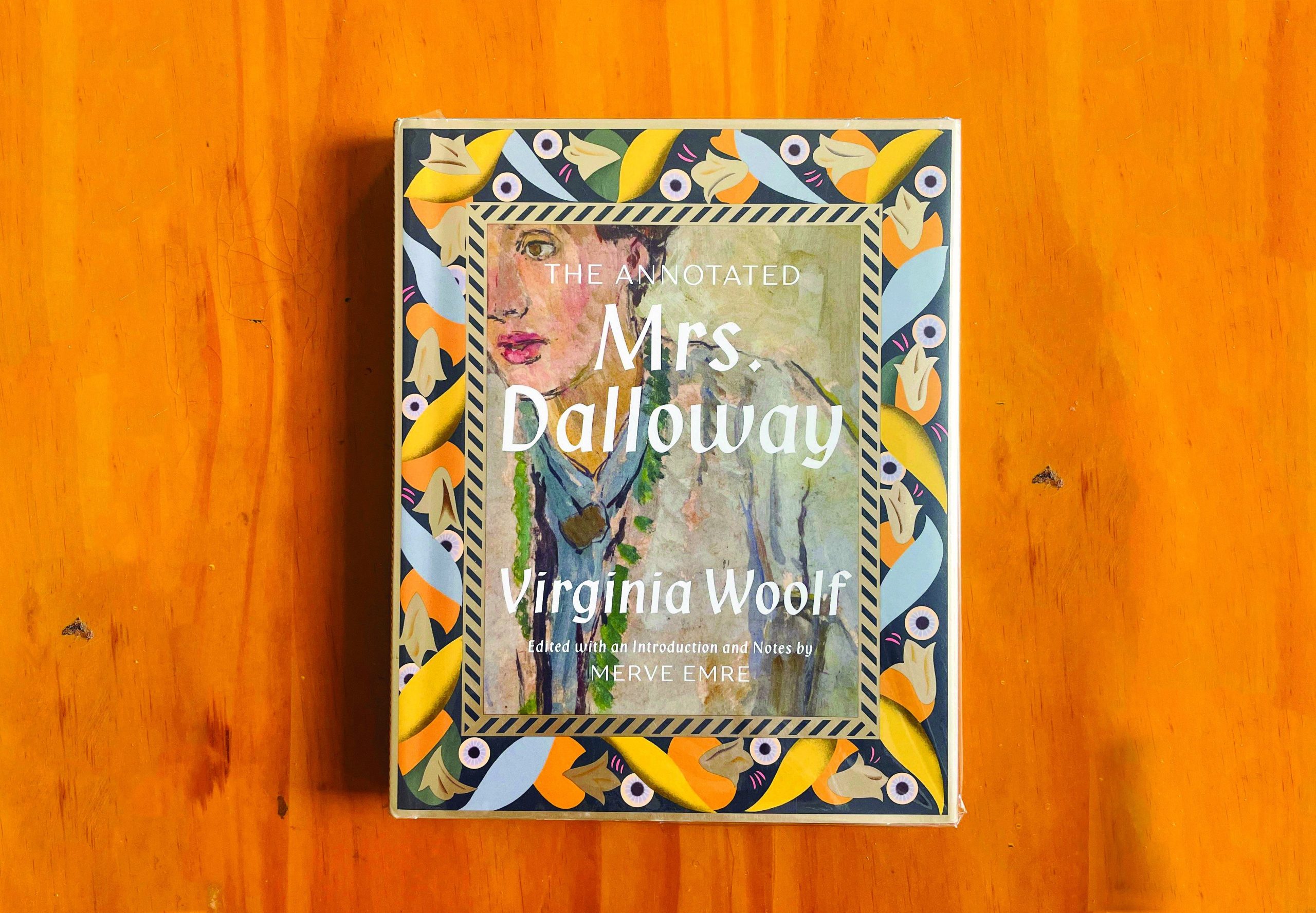
In love with Richard, Sally, Leonard and time itself
On May 14, 1925, a London flower shop became the unlikely threshold to literary history. It was the day Virginia Woolf’s Mrs. Dalloway was published, introducing readers to Clarissa Dalloway, a poised yet introspective woman preparing for an evening party. Over the course of a single day, Virginia captured a vast emotional landscape. A century on, the novel endures as a profound meditation on time, love, and the quiet performances of everyday life.
This year marks not only a century of Clarissa’s walk across London but a return to the web of feeling that pulses beneath the novel’s stream-of-consciousness style. At its heart is a triptych of love stories, Clarissa and her husband Richard, Clarissa and her childhood friend Sally Seton, Clarissa and herself, and, hovering just beyond the page, another marriage: Virginia and Leonard Woolf.
A marriage of two minds
Virginia and Leonard married in 1912. She was luminous, volatile, brilliant. He was steady, cerebral, and deeply devoted. Their marriage, like Clarissa’s, was not defined by passion alone but by an intricate choreography of companionship, caretaking, and creative cohabitation. Together they founded the Hogarth Press from their dining table in Richmond, hand-printing and publishing some of the twentieth century’s most radical writing, including Mrs. Dalloway. Leonard typed the manuscript; Virginia, with trembling hands and a mind always on the edge, reworked the sentences until they flowed like breath. It was a novel she had to write, and he ensured she could.
In Mrs. Dalloway, Virginia gave us a marriage that echoes her own: a partnership defined as much by what is unsaid as what is spoken aloud. Richard Dalloway, who cannot say “I love you” to his wife, buys her flowers instead. Clarissa, who once kissed Sally Seton in the garden at Bourton and called it the “most exquisite moment of her whole life,” now hosts parties, listens for Big Ben, and thinks of lost chances. It is a novel filled with ghost loves: those that could have been, those that almost were, those that continue in silence.
But Virginia’s genius lies in the way she resists simplifying love into a single narrative. Clarissa’s feelings for Sally, blooming in youth and buried under layers of societal constraint, never vanish. Nor do they erupt into melodrama. They shimmer, instead, in small glances, brief memories, the way Sally “squeezed the water out of a sponge” at the sink. Richard, too, is not a villain or fool. He loves Clarissa, in his quiet, English way. And she, for all her longing, acknowledges the safety and structure he provides.
What emerges is not a love triangle, but a love constellation: fragile, flickering, true. Clarissa’s party becomes the stage upon which all these tensions play out: Sally arrives late, older and changed; Richard, as ever, present but opaque; Clarissa, radiant and alone in a room full of people. It is one of literature’s most piercing explorations of married life; not its beginnings, but its weathered middle.
To love many
Outside the novel, Virginia was writing from inside her own complicated geometry of love. She had close, intimate relationships with women, most famously Vita Sackville-West, but never left Leonard. “You have been in every way all that one could be,” she wrote to him in her last letter before she committed suicide in 1941. “I don’t think two people could have been happier than we have been.” It is a line that glows with love’s strange alchemy: she loved others, but she chose him.
The centenary of Mrs. Dalloway comes at a time when we are, once again, asking what it means to love in difficult times. In an age of climate anxiety, political collapse, and collective fatigue, Clarissa’s insistence on beauty, on throwing a party, even as the world breaks, is radical. So too was Virginia’s choice to write a book not about war itself, but about the quiet traumas it leaves behind. Septimus Warren Smith, the shell-shocked veteran whose story runs parallel to Clarissa’s, is not healed by love. He is undone by a society that cannot comprehend his pain. His suicide, so carefully rendered, casts a long shadow over the Dalloways’ drawing room.
But love is not absent; it simply cannot save everything.
Still, the marriage of the Woolfs, and the parallel one in the novel, reveals something deeper: that love, even when imperfect, can be a scaffolding for art. Leonard did not always understand Virginia’s mental spirals, but he protected the space in which she could write. She, in turn, left behind some of the most luminous prose in the English language.
The prose of Mrs. Dalloway is like no other. Virginia once wrote that she wanted to “follow the atoms as they fall upon the mind in the order in which they fall.” And so she did. The novel flows without chapters, shifting seamlessly from one consciousness to another, rendering the texture of thought in motion. Virginia broke the rigid structures of Victorian fiction and created a modernism of empathy, one that allowed readers to live briefly inside many minds.
At the time of its publication, Mrs. Dalloway was met with awe and some bewilderment. Critics admired its beauty but questioned its form. Today, it is canonical. It has inspired films, reimaginings, tributes, from Michael Cunningham’s The Hours to experimental theatre adaptations. Penguin has released a centenary edition; institutions from Bloomsbury to Bombay have planned events, readings, and exhibits. Around the world, Clarissa walks again.
 American Dollar Exchange Rate