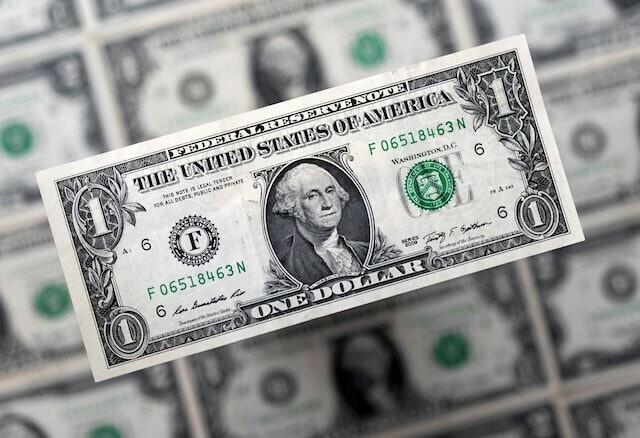

The Pakistani rupee registered gains against the US dollar, appreciating 0.1% during the opening hours of trading in the inter-bank market on Thursday.
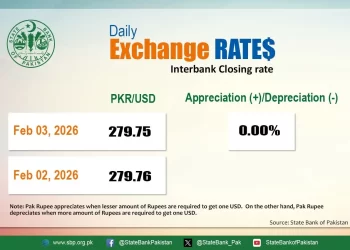
At 10am, the local currency was hovering at 281.43, a gain of Re0.29 against the greenback.
On Wednesday, the rupee closed the day at 281.72.
Internationally, the US dollar weakened on Thursday in a turbulent week headlined by a US-China tariff truce, while speculation that Washington is seeking a weaker dollar as part of some of the trade deals spurred further gains in the South Korean won.
The Asian currency was volatile again as investors weighed the news that officials from South Korea and the US met last week to discuss the dollar/won exchange rate.
That spurred speculation that Washington wanted a weaker dollar to be part of trade talks with Asian countries, although a report from Bloomberg played it down.
Still, concerns over the US administration’s dollar policy is likely to keep investors wary and underpin Asian currencies in the near term.
The won was 0.8% higher at 1,396.22 per dollar after a 0.6% rise in the previous session. The won was the worst performer among emerging Asian currencies last year, dropping 14% against the dollar but is up nearly 6% this year.
The sudden lurch in the won was reminiscent of an unprecedented two-day surge in Taiwan’s currency at the start of May, which also coincided with the end of US-Taiwan trade talks in Washington.
The dollar index, which measures the US unit against six other currencies, was 0.11% lower at 100.89, but on course for the fourth straight week of gains.
Investor focus on Thursday will be on retail sales data while they look for more details on possible trade deals after easing of tensions between the US and China.
The two countries on Monday announced a 90-day pause on most of the tariffs imposed on each other’s goods since early April, leading to a brief relief rally.
Oil prices, a key indicator of currency parity, fell over $1 during trade on Thursday on expectations of a potential US-Iran nuclear deal, while a surprise build in US crude oil inventories last week heightened investor concerns about oversupply.
Brent crude futures fell $1.49, or 2.3%, to $64.60 a barrel by 0405 GMT. US West Texas Intermediate (WTI) crude futures slid $1.46, or 2.3%, to $61.69.
Both benchmarks lost about 0.8% on Wednesday.
This is an intra-day update




 American Dollar Exchange Rate