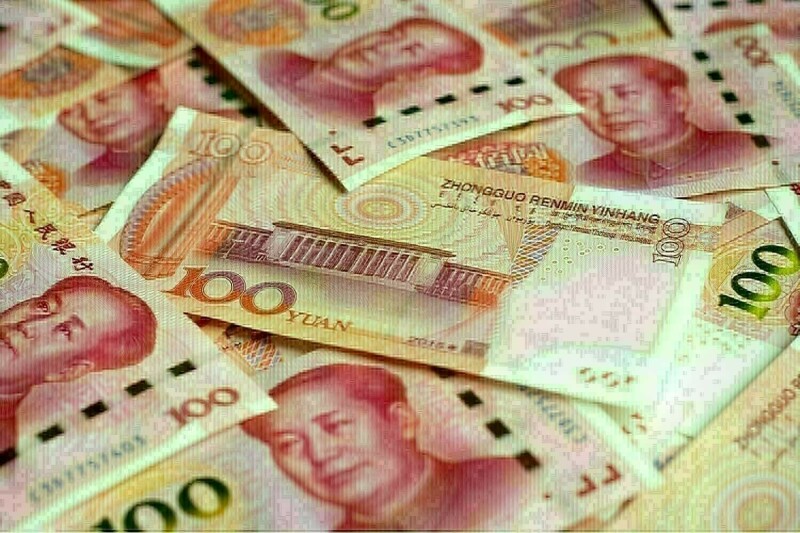

SHANGHAI: China’s yuan inched higher against the dollar and looked set for the fifth straight weekly gain on Friday, thanks largely to a weakening greenback in overseas markets on investor concerns over US fiscal challenges.
Broad dollar weakness extended after Moody’s last week downgraded its US debt ratings, turning investor attention to Washington’s $36 trillion debt pile and US President Donald Trump’s tax bill that could add trillions more to it.
The weaker dollar and rising US yields have pushed out the yield gap between China’s ultra-long 30-year government bonds , and their US counterparts to the widest on record.
The yuan, along with other non-dollar currencies, gained some support and has risen about 1% in both onshore and offshore markets this month.
As of 0356 GMT, the onshore yuan was 0.06% higher at 7.2015 per dollar, while its offshore counterpart was up about 0.08% in Asian trade to 7.1994.
If the onshore yuan maintains its current level, it would have gained 0.12% to the dollar for the week to book the fifth consecutive weekly rise.
However, gains were limited as buying interest in cheaper greenback rose around the psychologically important 7.2 per dollar level from both corporate clients and major state-owned banks, multiple traders said.
Some overseas-listed Chinese companies usually have higher foreign exchange demand between May and August to make dividend payments to their offshore shareholders. Meanwhile, state bank dollar buying was widely interpreted as an attempt to slow the yuan’s gains.
China’s yuan holds steady near one-week high on weak dollar
Some market participants believe a too-strong Chinese currency could hurt the vast export sector at a time of huge uncertainty around Sino-US trade relations still persisted.
“While we remain cautious about the prospects of a comprehensive China-US trade agreement following the 90-day truce, we are increasingly confident in the Chinese economy’s resilience amid ongoing trade uncertainty, particularly as both sides have ruled out a full-scale decoupling,” said Serena Zhou, senior China economist at Mizuho Securities.
That refers to the 90-day tariff truce agreed by Washington and Beijing earlier this month to pause their trade war and roll back a majority of the duties levied on each other’s goods since April.
Prior to the market opening, the People’s Bank of China (PBOC) set the midpoint rate, around which the yuan is allowed to trade in a 2% band, at 7.1919 per dollar and 232 pips firmer than a Reuters’ estimate of 7.2151.
Zhu Haibin, chief China economist at J.P. Morgan, said yuan’s depreciation pressure has eased as tariff risks fell.
“How much the yuan will go next actually depends largely on China’s exporters,” Zhu said.
China’s broad foreign exchange reserves did not rise much in 2024, when the trade surplus grew close to $1 trillion. It “means that many exporters chose to keep the dollars.
In the case of a weaker US dollar, how much positions will be adjusted will have a relatively large impact on the strength of the yuan,“ he said.
J.P. Morgan expects the yuan to swing between 7.2 and 7.3 per dollar in the next six to 12 months.








 American Dollar Exchange Rate