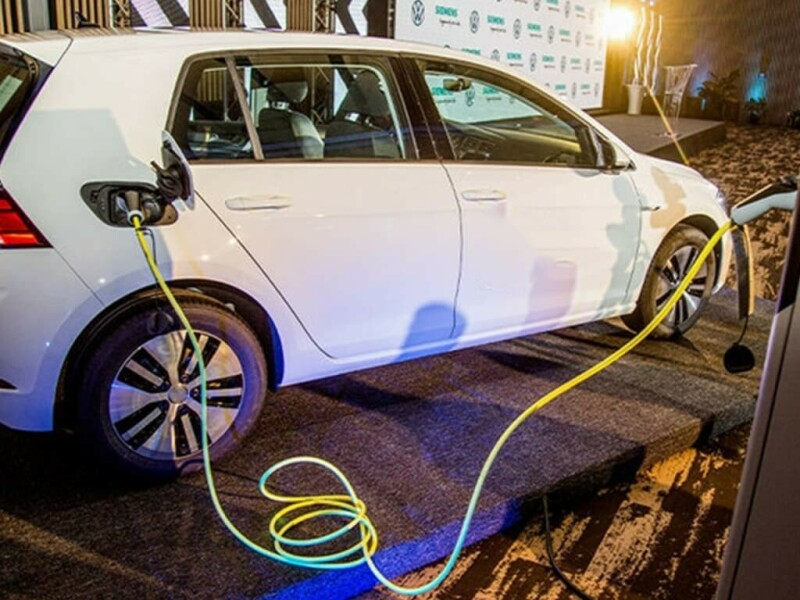
The federal government has officially launched the National Electric Vehicle (NEV) Policy 2025-30, the Ministry of Industries and Production said on Thursday.
Speaking at the launch, Special Assistant to the Prime Minister on Industries and Production Haroon Akhtar Khan called the policy a “historic and transformative step” in Pakistan’s journey towards industrial, environmental, and energy reforms.
Haroon Akhtar Khan stated that the new EV policy is aligned with the Prime Minister’s vision of promoting clean, sustainable, and affordable transportation while encouraging local industry and protecting the environment.
He emphasised that the transport sector is a major contributor to carbon emissions in Pakistan, and reform in this area is imperative.
National Electric Vehicle policy expected in one month
He said that one of the major targets under the policy is to ensure that 30% of all new vehicles sold in Pakistan by 2030 are electric.
This transition is projected to save 2.07 billion litres of fuel annually, amounting to nearly USD 1 billion in foreign exchange savings.
Additionally, the policy is expected to reduce carbon emissions by 4.5 million tons and cut healthcare-related costs by USD 405 million per year.
Akhtar announced that an initial subsidy of Rs. 9 billion has been allocated for the fiscal year 2025-26, under which 116,053 electric bikes and 3,171 electric rickshaws will be facilitated.
Importantly, 25% of this subsidy is reserved for women to provide them with safe, affordable, and eco-friendly mobility.
He said a fully digital platform has also been introduced to ensure transparent online application, verification, and disbursement of subsidies.
Furthermore, the policy outlines the installation of 40 new EV charging stations on motorways, with an average distance of 105 kilometres between them.
Electric Vehicle policy to be announced by end of November: Tanveer
The policy also includes the introduction of battery swapping systems, vehicle-to-grid (V2G) schemes, and mandatory integration of EV charging points in new building codes to facilitate wider adoption in urban areas.
To encourage local manufacturing, incentives are being provided to domestic producers. Currently, over 90% of parts for two- and three-wheelers are already manufactured locally.
The government will also introduce special support packages for small and medium enterprises (SMEs) to further boost localisation. The AIDEP tariff facility will continue until 2026 and be phased out gradually by 2030.
The Special Assistant noted that the policy was developed through consultations with over 60 experts, institutions, and industry stakeholders, guided by a steering committee under the Ministry of Industries and Production since September 2024.
The steering committee will hold monthly and quarterly review meetings, while the Auditor General of Pakistan will conduct a performance audit every six months.
He stressed that the NEV Policy 2025-30 is not only an environmental revolution but also a foundation for industrial growth, local employment, energy efficiency, and technological self-reliance in Pakistan.
He expressed hope that federal and provincial governments, the private sector, and citizens will work together to realise this vision of a clean, modern, and sustainable transport system.
Akhtar stated that the policy is a decisive move toward clean energy, sustainable transportation, and industrial development. It presents a comprehensive and results-driven strategy that aims to lead Pakistan toward a cleaner and more resilient future.
He also highlighted that locally produced goods are 30-40% cheaper than imported alternatives. In the two-wheeler segment alone, more than 90% of parts are now produced locally.
Given Pakistan’s vulnerability to climate change, the EV policy will significantly contribute to achieving global carbon reduction targets.
The policy is expected to yield savings of approximately Rs. 800 billion over the next 24-25 years through reduced fuel imports, the use of cheap electricity, and revenue from carbon credits.
Charging vehicles with electricity will also reduce capacity payments from Rs174 billion to Rs105 billion, and carbon credits could generate around Rs15 billion in revenue.
The country’s total energy demand for EVs over the next five years is projected at 126 terawatt-hours, which can be met using the existing surplus in the national grid.
An electric rickshaw or bike user is expected to recover their initial investment within 1 year and 10 months due to the low cost of charging compared to petrol.
For instance, if the additional cost of an electric bike is Rs. 150,000, this can be recouped within less than two years through fuel savings.
He concluded by saying that the government has also provided exemptions on customs duties and sales tax on EV parts to support the local industry.
“This policy should be embraced wholeheartedly by Pakistan, as it is a game-changer for our economy, environment, and industrial landscape,” Akhtar affirmed.

The federal government has officially launched the National Electric Vehicle (NEV) Policy 2025-30, the Ministry of Industries and Production said on Thursday.
Speaking at the launch, Special Assistant to the Prime Minister on Industries and Production Haroon Akhtar Khan called the policy a “historic and transformative step” in Pakistan’s journey towards industrial, environmental, and energy reforms.
Haroon Akhtar Khan stated that the new EV policy is aligned with the Prime Minister’s vision of promoting clean, sustainable, and affordable transportation while encouraging local industry and protecting the environment.
He emphasised that the transport sector is a major contributor to carbon emissions in Pakistan, and reform in this area is imperative.
National Electric Vehicle policy expected in one month
He said that one of the major targets under the policy is to ensure that 30% of all new vehicles sold in Pakistan by 2030 are electric.
This transition is projected to save 2.07 billion litres of fuel annually, amounting to nearly USD 1 billion in foreign exchange savings.
Additionally, the policy is expected to reduce carbon emissions by 4.5 million tons and cut healthcare-related costs by USD 405 million per year.
Akhtar announced that an initial subsidy of Rs. 9 billion has been allocated for the fiscal year 2025-26, under which 116,053 electric bikes and 3,171 electric rickshaws will be facilitated.
Importantly, 25% of this subsidy is reserved for women to provide them with safe, affordable, and eco-friendly mobility.
He said a fully digital platform has also been introduced to ensure transparent online application, verification, and disbursement of subsidies.
Furthermore, the policy outlines the installation of 40 new EV charging stations on motorways, with an average distance of 105 kilometres between them.
Electric Vehicle policy to be announced by end of November: Tanveer
The policy also includes the introduction of battery swapping systems, vehicle-to-grid (V2G) schemes, and mandatory integration of EV charging points in new building codes to facilitate wider adoption in urban areas.
To encourage local manufacturing, incentives are being provided to domestic producers. Currently, over 90% of parts for two- and three-wheelers are already manufactured locally.
The government will also introduce special support packages for small and medium enterprises (SMEs) to further boost localisation. The AIDEP tariff facility will continue until 2026 and be phased out gradually by 2030.
The Special Assistant noted that the policy was developed through consultations with over 60 experts, institutions, and industry stakeholders, guided by a steering committee under the Ministry of Industries and Production since September 2024.
The steering committee will hold monthly and quarterly review meetings, while the Auditor General of Pakistan will conduct a performance audit every six months.
He stressed that the NEV Policy 2025-30 is not only an environmental revolution but also a foundation for industrial growth, local employment, energy efficiency, and technological self-reliance in Pakistan.
He expressed hope that federal and provincial governments, the private sector, and citizens will work together to realise this vision of a clean, modern, and sustainable transport system.
Akhtar stated that the policy is a decisive move toward clean energy, sustainable transportation, and industrial development. It presents a comprehensive and results-driven strategy that aims to lead Pakistan toward a cleaner and more resilient future.
He also highlighted that locally produced goods are 30-40% cheaper than imported alternatives. In the two-wheeler segment alone, more than 90% of parts are now produced locally.
Given Pakistan’s vulnerability to climate change, the EV policy will significantly contribute to achieving global carbon reduction targets.
The policy is expected to yield savings of approximately Rs. 800 billion over the next 24-25 years through reduced fuel imports, the use of cheap electricity, and revenue from carbon credits.
Charging vehicles with electricity will also reduce capacity payments from Rs174 billion to Rs105 billion, and carbon credits could generate around Rs15 billion in revenue.
The country’s total energy demand for EVs over the next five years is projected at 126 terawatt-hours, which can be met using the existing surplus in the national grid.
An electric rickshaw or bike user is expected to recover their initial investment within 1 year and 10 months due to the low cost of charging compared to petrol.
For instance, if the additional cost of an electric bike is Rs. 150,000, this can be recouped within less than two years through fuel savings.
He concluded by saying that the government has also provided exemptions on customs duties and sales tax on EV parts to support the local industry.
“This policy should be embraced wholeheartedly by Pakistan, as it is a game-changer for our economy, environment, and industrial landscape,” Akhtar affirmed.

 American Dollar Exchange Rate