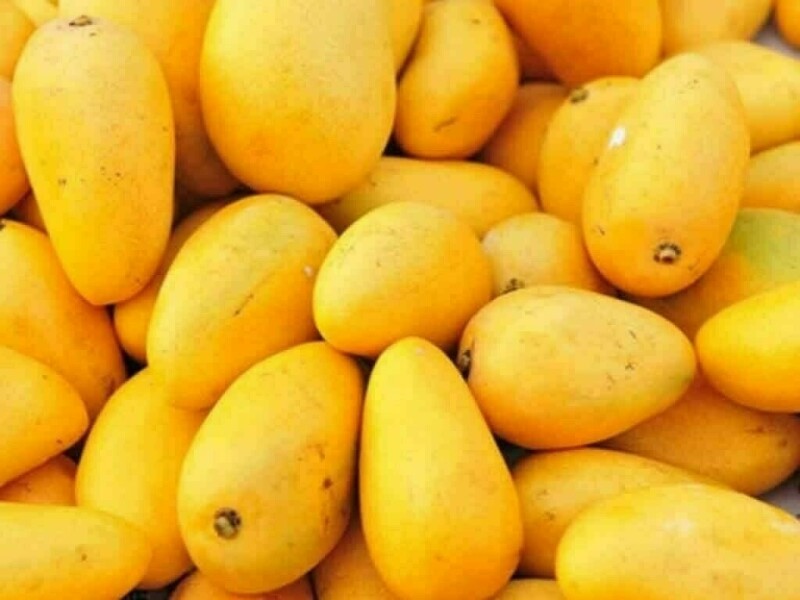
KARACHI: The government needs to adopt modern techniques and technologies to protect mangoes, said progressive farmers and food technologists while talking to media.
Nabi Bux Sathio, Senior Vice President at the Sindh Chamber of Agriculture (SCA), said fewer mangoes grew this year, compared to last year, due to several factors.
“Firstly, nearly 15-20% of the fruit fell from trees prematurely due to dust and thunderstorms. Secondly, there was an acute water shortage at the time of fruiting.
“Both climate change and water scarcity took a heavy toll on the fruit yield and size,” said Sathio.
He said that the government has set no target for mangoes as it is categorized neither as a major nor a minor crop, but as a fruit.
In Sindh, mango orchards cover nearly 100,000 acres. Traditionally, the top five mango-producing districts in the province are Mirpurkhas, Tando Allahyar, Matiari, Khairpur and Tando Jam of Hyderabad district, where 90% of Sindh’s mangoes are cultivated.
Meanwhile, 70% of mangoes in Punjab are grown in Multan, with the remaining 30% produced in Bahawalpur and other areas.
In terms of overall production, Sindh accounts for over 60% of the country’s output. The rest, especially Chaunsa, are grown in Punjab.
Sindh is known for varieties such as Sindhri, Chaunsa, Anwar Ratol, Langra, Daseri, Baingan Phalli, Gulab Khas and others.
Pakistan set to launch $100m mango-export drive on 25th
Mango began to reach markets from May 1 to July 31. After July, cold storage mangoes or varieties from Multan become available.
Speaking to media, Sathio urged authorities, including the Indus River System Authority (IRSA), Sindh Irrigation Department and others, to ensure 100% water supply to orchards during the season.
“There is a one-and-half-month harvest window, and farmers wait nearly 10 months to earn a decent living. The fruit takes 90 to 100 days to mature, during which four water cycles are required to ensure proper fruiting, sweetness, weight and size,” Sathio said.
Local mangoes are high in demand internationally. Mangoes from Sindh are mostly exported, while mangoes from Punjab are utilized in juices, with only 2-3% being exported.
However, when it comes to mango export, it is not just about picking ripe fruit, ’‘it’s a science“, said Sindh Agriculture University (SAU) Institute of Sciences and Technology Associate Professor Dr Aasia Akbar Panhwar.
“In Pakistan, we have seen how simple post-harvest mistakes lead to high rejection rates at international ports,” she said.
She informed that the institute has initiated training farmers on proper harvesting techniques.
“Hot water treatment (HWT) became essential. This step kills fruit fly larvae and meets the phytosanitary standards of countries like Japan and the USA.
“We also introduced mechanical brushing to remove field residues and controlled de-sapping to keep mangoes blemish-free,” she said.
Equally important was quality packaging that maintains humidity, minimises damage, and promotes traceability.
“These interventions, though simple, made a profound difference. Exporters who adopted them saw fewer rejections and better prices,” she said.
Moreover, the government should play a proactive role in establishing centralized mango processing and treatment facilities, particularly in major mango-producing regions such as Mirpurkhas, Tando Jam Multan, Rahim Yar Khan, Bahawalpur and DI Khan.
However, any smallholder farmers in these areas lack access to essential post-harvest infrastructure, including HWT units, mechanized grading and sorting lines, and export-compliant packaging systems.
Government-led investment in such facilities would ensure compliance with international phytosanitary standards, reduce post-harvest losses, and significantly improve the marketability of Pakistani mangoes abroad.
This would not only enhance export volumes but also increase farmers’ income and strengthen Pakistan’s position in the global fruit market.
Moreover, these plants can function as training and demonstration hubs, promoting awareness and adoption of good agricultural and post-harvest practices among growers, packers, and exporters, thereby building a more resilient and value-driven mango supply chain.
Protection of mangoes:
Mangoes can be protected through integrated pest management (IPM), timely harvesting, and post-harvest treatments.
Pre-harvest protection includes bagging of fruits, the use of pheromone traps, and biological control to minimize insect damage.
Meanwhile, post-harvest, fruits should be handled carefully to avoid bruising, and treated with hot water or fungicides to prevent decay.
Cold chain management, hygienic packing, and transportation under controlled temperatures further protect quality. Awareness and training of growers on best practices and monitoring systems also play a vital role in reducing losses and improving fruit safety and export potential.
What are Phytosanitary protocols?
Phytosanitary protocols are scientific measures implemented to prevent the spread of pests and diseases essential to international trade.
For mango exports, these protocols include HWT, vapour heat treatment, pest-free area certification, and proper documentation and traceability. They are enforced under the International Plant Protection Convention (IPPC) and vary by importing country.
Compliance ensures that exported mangoes are free from quarantine pests like fruit flies and fungal pathogens. Adherence to these standards minimizes rejection risks, maintains the importing country’s biosecurity, and safeguards the exporting country’s market reputation and access.
 American Dollar Exchange Rate