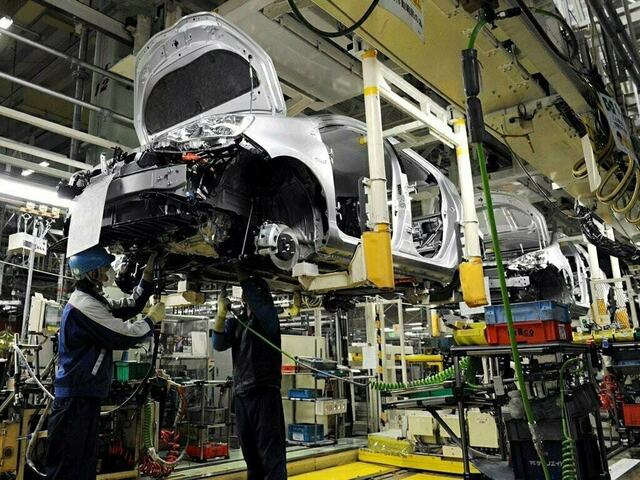
KARACHI: Local auto parts makers have sought support from the government to follow the Thailand and Vietnam models for growth and maximum exploitation of export potential.
“We are facing several issues that are hindering our growth. For example, raw material dependency and cost penalty, low domestic volumes, uncompetitive utilities, security and perception barriers, absence of export incentives and infrastructure, and the parallel crisis (Flattening of Cascading Tariffs),” said Shehryar Qadir, Senior Vice Chairman Paapam while talking to a group of journalists.
He added that Thailand and Vietnam have become global automotive export hubs by taking few measures that include Protection and NTBs (Shielding local industry during infancy to achieve minimum scale), Structured FDI (Attracting Tier 1/Tier 2 suppliers via JVs, industrial parks & technology transfer mandates), and Export-Linked Incentives (Rebates and PLI-style schemes rewarding firms for meeting localization and export targets).
One of the main issues local auto parts manufacturers are facing is unstable policies, and they have so far failed to make this industry grow and establish itself to compete at a global level, said Shehryar.
He explained that the IDP 2007–12 forecasted 500,000 units by 2012, yet midway through its implementation, duty structures were altered and planned initiatives like technology funds and cluster development were shelved.
Similarly, he added, the four years from 2012–2016 offered no policy framework at all — an investment vacuum that froze expansion plans for vendors.
Moreover, he added, the ADP 2016–21 then swung in the opposite direction, introducing aggressive incentives for new entrants, including a 50% duty concession on already localized parts.
“Rather than encouraging competition and localisation, this policy rewarded import-heavy assembly and eroded the market share of existing vendors who had already invested in local tooling,” reasoned Shehryar.
The current AIDEP 2021–26, he added, repeats similar pledges for exports and parts development, but mid-policy fiscal changes and selective enforcement have again left suppliers in a perpetual state of uncertainty.
Besides, he added, used car imports are a very big challenge to local auto parts manufacturers in addition to policy issues, as these vehicles have captured almost 25% the total market with over 40,000 units.
“This happened due to low fixed duties applicable on used vehicles below 1300cc and permission to import 5-year-old vans, making used vehicles the second biggest player in the Pakistan market volume after locally produced Suzuki vehicles and have a bigger share than locally produced Toyota, Honda, Hyundai, Kia, Haval, MG or Changan,” said Shehryar.
He added that used car imports are a parking lot of black money, as all transactions of import and sale of used vehicles stay undocumented, while the remittance for import is sent by Hawala channel, and sale to local buyers is made against cash.
“This activity seriously damages completely documented local manufacturers who produce and sell thousands of auto parts to local auto assemblers,” concluded Shehryar Qadir, Senior Vice Chairman Paapam.
Copyright media, 2025
 American Dollar Exchange Rate