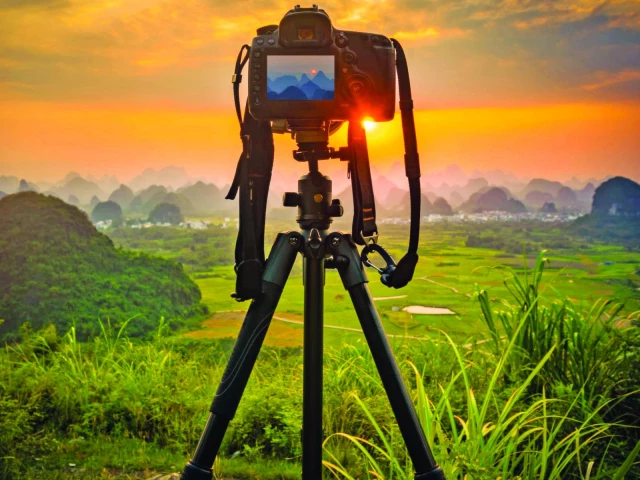
World Photography Day reveals how the camera immortalises and sometimes haunts lives of actors
Every 19th August, World Photography Day is observed across the globe — a celebration of the art, science, and history of the photograph that honours all aspects of the medium.
Nowhere is the power of photography more vividly felt than in the world of show business. From Hollywood glamour to Lollywood vibrancy, from red carpets to candid paparazzi shots, photography has been the silent partner of cinema, shaping how stars are remembered, adored, and sometimes scandalised.
The day invites a simple reckoning in showbusiness: films move, but reputations sit still. A single frame on a red carpet, a campaign, or a paparazzi snap can define how an actor is remembered long after the box office receipts fade.
The old studios knew the value of a meticulously crafted portrait. That logic hasn’t vanished; it’s merely migrated to platforms and phones. In show business, glamour is real, but so is the collateral. It remains a business built on images — carefully made, instantly shared, and, at times, painfully weaponised.
In the early decades of Hollywood, the likes of Greta Garbo and Humphrey Bogart were sculpted into icons not just by the films they starred in but by the carefully staged portraits circulated by studios. Those black-and-white prints — Garbo’s enigmatic gaze, Bogart’s cigarette-tinged cool — set the template for celebrity culture.
As curator and writer Dr Susan Bright notes of photography’s recent history: “The smartphone and social media are the most significant changes to the medium over the last 20 years.”
The observation is blunt: technology changed the circulation, not the stakes. The image still does the heavy lifting-selling a premiere, cementing a persona, telegraphing a comeback. In 2025, World Photography Day lands in an ecosystem where a look can travel the world before a publicist hits “approved.”
No one understood the power of a single frame better than Richard Avedon, who spent decades photographing actors between fashion and cinema. His verdict was unsparing: “A portrait is not a likeness — it is — an opinion.”
The contemporary heir to that mindset is Annie Leibovitz, whose celebrity portraiture has set the tone for magazine culture for 40 years. “In portraiture, you have so much leeway — You can tell a story.”
Red carpets
If premieres are publicity, the red carpet is performance art — a theatre of photography. Stars arrive in couture gowns and sharp tuxedos not just for those in attendance but for the millions who will scroll through images online within minutes.
The ritual is as old as the Oscars themselves, but in the digital age, it has exploded into a 24/7 spectacle. Image architect Law Roach, who helped turn carpet strategy into pop-culture sport, frames a look as a message.
In discussing a recent star-making editorial, he cast the styling as a deliberate statement — an answer to critics, built visually, look by look. The subtext is clear: wardrobe and photography do the storytelling together.
That symbiosis explains why a carpet image — more than a soundbite — can spin off into memes, mood boards and trend pieces within minutes. Festivals and award shows know it; so do streamers selling shows through character-driven fashion beats.
Pakistan’s lens
 American Dollar Exchange Rate