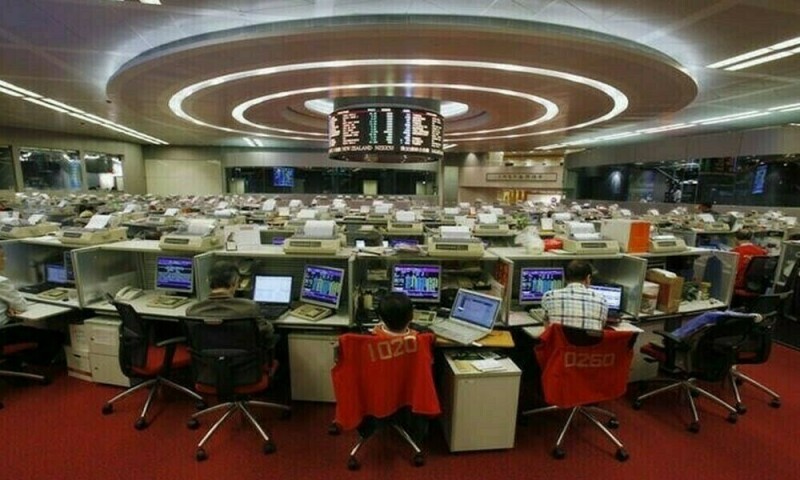
HONG KONG/SINGAPORE: Chinese stocks tumbled on Thursday as investors took profit on surging tech shares after media reports of possible regulatory curbs on speculation, and after a politically significant military parade in Beijing ended.
Sentiment was also soured by a tumble in tech bellwether Cambricon amid worries about fund outflows in an upcoming index rebalancing.
The Shanghai Composite Index, which hit 10-year highs last week, tanked nearly 2% in the morning session, poised for its worst day in nearly five months.
The blue-chip CSI300 benchmark slumped 2.5%, while Hong Kong’s Hang Seng Index dropped more than 1%.
China’s financial regulators are considering a number of cooling measures for the stock market, including removing some short-selling curbs, Bloomberg News reported.
The report gave investors a reason to sell after China’s stock market jumped 10% in August in heavy trading and record margin financing, raising concerns about overheating.
“From a technical perspective, there is a strong need for profit-taking, and today’s Bloomberg report has accelerated investor exits,” said Zhao Jian, head of Atlantis Finance Research Institute.
“Then from a financial stability perspective, we believe regulators don’t want such a rapid and drastic rise,” which could trigger significant market volatility, he said.
The end of China’s biggest military parade on Wednesday also added to the profit-taking. Investors had widely expected authorities to ensure market stability ahead of the event.
“Additionally, the A-share market had previously priced in substantial optimism around yesterday’s military parade,” said Kenny Ng, securities strategist at China Everbright Securities International.
“With the event concluded, related thematic stocks are now retreating, contributing further downward pressure.”
Tech selloff
Tech shares, a key pillar of China’s bull run, led the market decline on Thursday with AI chip giant Cambricon slumping 13%, on track for its biggest daily loss since January.
A doubling in Cambricon’s share price in August boosted the stock’s weighting in the STAR50 Index to 15%.
That exceeds the weighting cap of 10%, raising concerns of rebalancing by passive funds as the result of a planned weighting adjustment of the index on September 12.
An index tracking China’s communications stocks tumbled 8%, while the CSI artificial intelligence index dropped 7%.
Biotech, cloud computing and chip-making stocks are also among the biggest losers.
Shanghai’s tech-heavy STAR Market lost 5%, while Hong Kong’s Hang Seng Tech Index weakened 2%.
Although some believe China’s market rally could extend through October, “lots of speculative funds have already begun to take profits, suggesting caution,” UBS said in a note to clients.
“Without further supportive policies or industry catalysts, such as a new model launch from DeepSeek … the market may revert to a more rational tone and gradually cool off.”
 American Dollar Exchange Rate