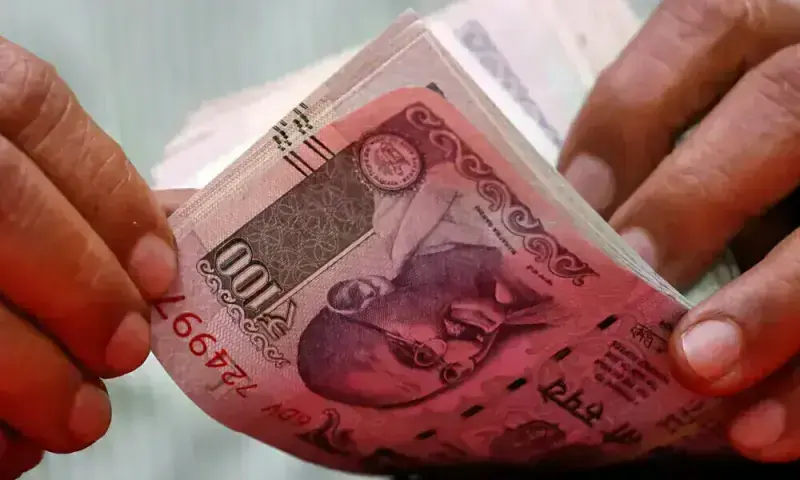
MUMBAI: Indian government bonds slipped on Friday, halting a two-day rally, after an uptick in inflation in August, driven by pricier food and a waning base effect, dampened expectations of another rate cut by the central bank.
The yield on the 10-year benchmark note ended at 6.4867%, against the previous close of 6.4666%. It rose 2 bps this week.
India’s consumer price inflation rose to 2.07% in August, in line with economists’ expectations, but higher than a revised 1.61% in July.
Another rate cut is more difficult as inflation has bottomed out, but the possibility of one cannot be ruled out, traders said.
The Reserve Bank of India, which aims to keep inflation in a 2%-6% tolerance band, has cut rates by 100 basis points so far this year but held them steady at its last meeting.
Beyond inflation, a demand-supply mismatch has been unsettling Indian bond traders.
Investors await details of India’s second-half borrowing, expected later this month, with many hoping that New Delhi will lower the supply of long-dated papers.
The weighted maturity of supply in sovereign and state bonds has increased from 13.4 years in fiscal year 2021 to 19.7 years year-to-date, strategists at Aditya Birla Sun Life AMC wrote in a note.
The spread between ultra-long bonds and the 10-year benchmark has also widened to 70–80 bps, translating into a 10%–12% higher borrowing cost for the government, they added.
Finance Minister Nirmala Sitharaman said in an interview earlier this month that rising bond yields are making borrowing unaffordable.
A tweak to the borrowing plan could spur further buying, traders said.
Rates
India’s overnight index swaps rose due to paying pressure as traders grew cautious due to a higher inflation print.
The one-year OIS rate rose 2 bps to 5.4750% and the two-year OIS rate settled 1.5 bps higher at 5.45%.
The liquid five-year OIS rate rose 1 bp to 5.6925%.

MUMBAI: Indian government bonds slipped on Friday, halting a two-day rally, after an uptick in inflation in August, driven by pricier food and a waning base effect, dampened expectations of another rate cut by the central bank.
The yield on the 10-year benchmark note ended at 6.4867%, against the previous close of 6.4666%. It rose 2 bps this week.
India’s consumer price inflation rose to 2.07% in August, in line with economists’ expectations, but higher than a revised 1.61% in July.
Another rate cut is more difficult as inflation has bottomed out, but the possibility of one cannot be ruled out, traders said.
The Reserve Bank of India, which aims to keep inflation in a 2%-6% tolerance band, has cut rates by 100 basis points so far this year but held them steady at its last meeting.
Beyond inflation, a demand-supply mismatch has been unsettling Indian bond traders.
Investors await details of India’s second-half borrowing, expected later this month, with many hoping that New Delhi will lower the supply of long-dated papers.
The weighted maturity of supply in sovereign and state bonds has increased from 13.4 years in fiscal year 2021 to 19.7 years year-to-date, strategists at Aditya Birla Sun Life AMC wrote in a note.
The spread between ultra-long bonds and the 10-year benchmark has also widened to 70–80 bps, translating into a 10%–12% higher borrowing cost for the government, they added.
Finance Minister Nirmala Sitharaman said in an interview earlier this month that rising bond yields are making borrowing unaffordable.
A tweak to the borrowing plan could spur further buying, traders said.
Rates
India’s overnight index swaps rose due to paying pressure as traders grew cautious due to a higher inflation print.
The one-year OIS rate rose 2 bps to 5.4750% and the two-year OIS rate settled 1.5 bps higher at 5.45%.
The liquid five-year OIS rate rose 1 bp to 5.6925%.







 American Dollar Exchange Rate