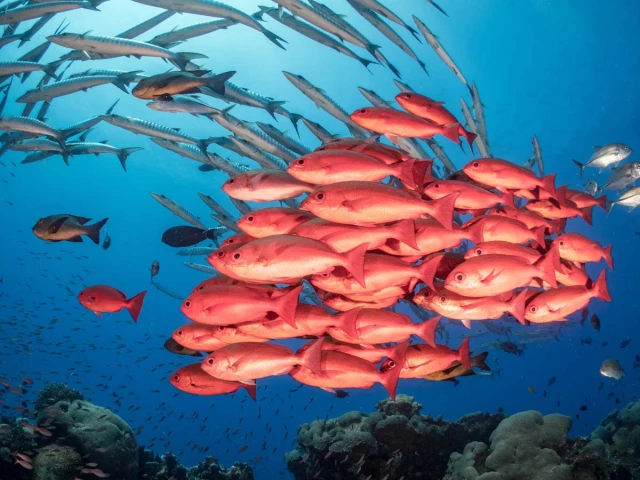
Coral loss, toxic waste and unregulated trawling may wipe out local marine life along the coast

On Karachi’s shoreline, fishermen return with empty nets. Where once the sea promised abundance, now it offers silence. Villages that lived off daily catches speak of kitchens gone quiet, of children who have never tasted the fish their parents grew up eating. The decline is not seasonal, nor is it subtle, it is collapse unfolding in real time.
“Destruction of marine habitats and overfishing by bottom trawlers are causing marine life to decline. 980 million gallons of raw sewage, medical, and industrial waste flow just from Lyari without filtration. Karachi city is the main polluter of our coastlines,” said Songul Jamal, Founder and CEO of Marine Conservation Pakistan. “The seawater is black now, that means the ocean is dead,” she said, noting that even mangroves – critical habitats for fish – can no longer thrive.
Other specialists echo her alarm. “Overfishing, use of illegal fishing gear, water pollution from industrial and agricultural waste, habitat destruction, climate change, and poor enforcement of fishing regulations are the main reasons,” said Prof. Dr. Noor Khan of the Institute of Zoology at Punjab University. “Over and indiscriminate fishing, pollution, invasive species and climate change destroy or dry up living habitats and breeding places of fishes,” added Dr. Muhammad Ashraf, Dean of Fisheries and Wildlife at UVAS Lahore.
The practice that draws the most concern is bottom trawling. “These ships are among the most destructive practices. Their metal boards grind against the ocean floor, sweeping away or crushing corals, which are vital marine habitats,” said Shabib Asghar, Director of Marine Conservation Pakistan. “The large nets create massive bycatch. Fish and other animals not being targeted get trapped, die, and are then thrown back.”
The decline spans across species. “All species of everything, including microorganisms, flora, absolutely everything, even shells are mass washing out,” said Jamal. Dr. Khan identified Mahseer, Indian Shad, Hilsa, Pomfret, Groupers, and Snappers as most at risk. Ashraf fears that only a handful will endure. “I think all the species of fish are at risk of disappearing. Only species like the common carp, Bagarius, Mulle, Saul can survive for some time,” he said.
Coral reefs are one of the biggest casualties. “Corals support almost 25 percent of marine life because they serve as both a food source and a home. If corals are damaged or diseased, fish either migrate or die, leading to a collapse in the local ecosystem,” said Asghar.
Fishing communities are already living with the scarcity. “If you go to any fisherman village you won’t smell any fish cooking. If one house fries a fish, the whole village talks about it,” Jamal said. For Dr. Khan, the loss is ecological as well as economic. “Overfishing is one of the major causes of decline in biodiversity of many local fish species. Small fish are often caught before they can reproduce,” he explained. Ashraf described the imbalance as a collapse of order. “When there is no balance in the fish population, diversity and availability will be disturbed.”
Pollution only compounds these pressures. “In just the last three years, algae blooming has reached six meters in depth. In 2020 it was at two,” Jamal said. She also warned of ghost nets that continue to trap fish for centuries. “Water pollution and untreated industrial waste are the main factors severely damaging aquatic ecosystems,” said Khan. Ashraf added, “Pollution not only affects fish health, growth, and breeding potential, it seriously affects food production in natural waters.”
Karachi’s waterways are a particular source. “The sewage flowing through Lyari, Malir and DHA nalas enters the ocean with high ammonia content. This causes algal blooms that block sunlight and reduce oxygen, killing marine life in large numbers,” said Asghar. Even discarded nets, he added, “continue to trap fish and other marine animals long after they are abandoned.”
Climate change has magnified the problem. “Yes, climate change and rising sea temperatures have noticeably impacted aquatic life,” said Khan. Ashraf explained the ripple effect: “Rising temperatures cause eutrophication of nutrient-rich waters that deplete oxygen and produce toxins. Breeding cycles, hormonal balance, and seasonal patterns are all disrupted.”
Freshwater shortages make the situation harsher still. “Reduced freshwater flow into the sea changes the chemistry of the water. Freshwater lowers ocean acidity and supports fish breeding. A lack of clean freshwater flow has made the conditions much harsher,” said Asghar.
Introduced and farmed species add to the complexity. “Introduced or farmed fish can cause serious threats by competing for food and habitat and spreading diseases and parasites,” said Khan. Ashraf, however, pointed to their benefits: “Introduced species have disturbed our fauna but I think it is not a major threat. Some imported species have really added a lot,” he said, naming carp and tilapia.
What unites the crisis, experts argue, is weak regulation. “Pakistan has a flora and fauna act, but that’s just words on paper. Currently Pakistan is using 120% of its ocean with 0% preservation,” said Jamal. “Pakistan has laws like the Fisheries Acts, Environmental Protection Acts, Indus Water Treaty (1960) and Water Apportionment Accord (1991), however enforcement is weak,” said Khan. Ashraf agreed: “The fisheries ordinance does exist, it is the authority on fishing procedures, but unfortunately nobody follows it.”
Community voices, meanwhile, are left out of policy. “Policies are often made without any consultation with local communities, the very people whose livelihoods depend on the sea. Ignoring their voices only makes conservation harder,” said Asghar.
Still, the path forward is not closed. “Awareness, support in innovative practices, providing marine rehabilitation courses for free divers, empowering them with knowledge and essential skills under water – that’s how we do it, and it is effective,” said Jamal. For Khan, the priority is implementation: “Seasonal bans, reduction of water pollution, restoration of habitats and education and public awareness campaigns are needed.” Ashraf was blunt: “As long as laws and regulations are not adhered to in their letter and spirit, to maintain balance and proper population of fish or any other aquatic life for a healthy ecosystem is impossible.”








 American Dollar Exchange Rate