No, accountability doesn’t redeem an abuser

Spoiler alert and Trigger Warning!
When a beloved series is a bow away from drawing its curtains, the audience must tackle the brewing clash between anticipation and fear – anticipation that their favourite show will end on a well-deserved high point versus fear that it might not. The truth of this manifested after the ending of Qarze Jaan, which triggered a debate online.
What began as a strong drama with a powerful story and great cast quickly fell apart, becoming a clear example of how not to handle sensitive topics like sexual assault.
For the silenced
Qarze Jaan follows many stories, some buried under the weight of domestic honour and others that are silenced when they dare to fly. It focuses on the subdued lives of Nashwa and her homebody mother after her father’s early death, an unforeseen consequence of patriarchy. It also follows the brutal making of an abuser, Ammar, who is guilty of many conscious crimes – an unfortunate yet expected consequence of patriarchy that is allowed to thrive.
Nashwa’s bursts of resistance inside the home that belongs to her despotic uncle and high-handed grandmother is but a flicker in her overall fire for justice. Her relentless pursuit of the law is presented in sharp contrast to her reckless cousin Ammar’s alcohol- drug-induced lifestyle.
Referring to an “alcohol- and drug-induced lifestyle” treats substance abuse as an instigator rather than the perpetrator. Even when personified, it remains only one grisly part of a much larger, more revolting whole. The distinction between the actual culprit and the inanimate accomplice is crucial – a nuance the drama fails to acknowledge.
Perpetrator turned victim
For Qarze Jaan, Ammar is not merely an abuser, but a product of his environment. In isolation, that is not a wrong approach. Nuance is the key ingredient in making a villain frightening, real enough to be deemed a danger to society. The cycle of abuse is vicious and tends to break open the most vulnerable of its sufferers. It is as the saying goes: hurt people hurt people.
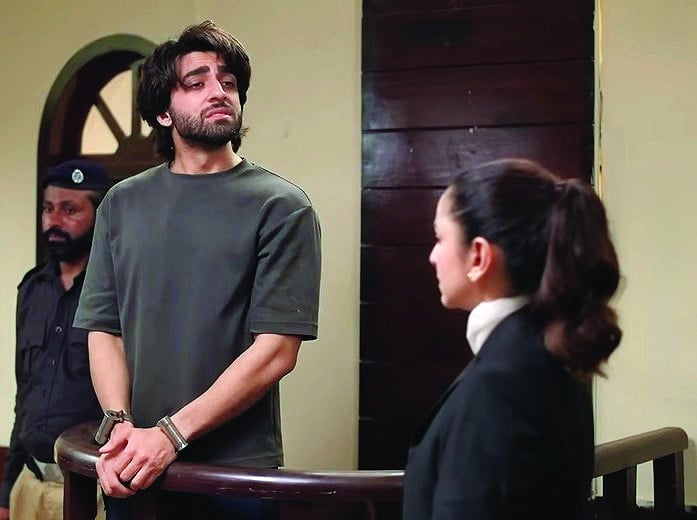
But there’s a stark difference between an earnest portrayal and losing the plot entirely. Giving the rapist a platform in a court of law and having him bleat about his tragic upbringing is definitely a choice. And, just to be clear, it is a poor one.
When the ending has your audience viewing the perpetrator as a “winner” and someone worth crying over, it does spare some room for reevaluation. While Nameer Khan’s performance as Ammar deserves praise for standing out amongst an array of brilliant performances, it does depart with much to be desired in the way of the character’s arc.
For a man written to be devoid of pity in the previous episodes, Ammar’s remorseful confession to his heinous crimes comes off as insincere. As he breaks down the many times his father put a veil over his crimes, he says, “Maybe all parents protect their children. But I’m sorry, father. Your approach was wrong. Your thinking was wrong.”
In this moment, Ammar is no longer a predator responsible for a rape, a murder, and the grief of many bereaved individuals, including his own sister. Instead, he has become the drama’s voice of reason, an innocent who has broken out of the daze that made him commit those deplorable crimes.
Here lies the fundamental problem: misplaced grace. The drama wants to tell you that this is not a shot at redemption, that Ammar is definitely going to serve his sentence, but not without placing the blame of his actions on someone else first.
Granted, the family’s patriarch, Bakhtiar, does indeed bear the traits depicted strongly in Ammar. Granted, enablers perpetuate systemic problems until it becomes difficult to separate them from culture. But Bakhtiar is the only character who remains loyal to his character arc, hence underscored as the one true villain of the show.







 American Dollar Exchange Rate