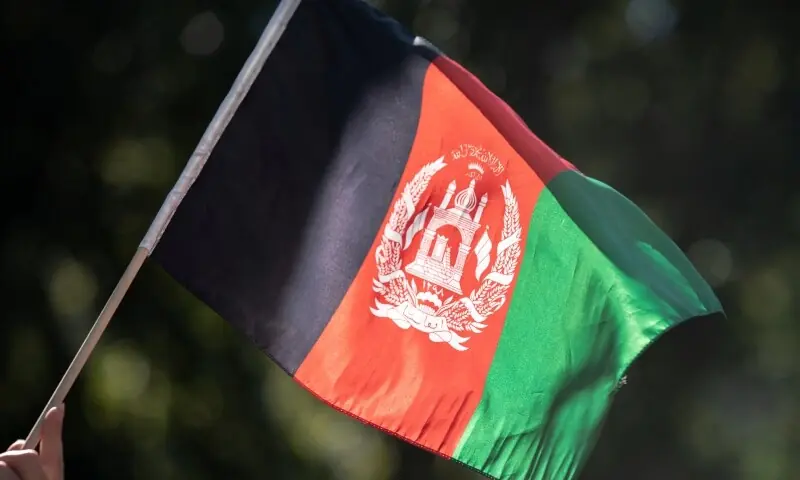

The Afghanistan Cricket Board (ACB) said late on Friday that it was pulling out of a T20I tri-nations series scheduled to be held in Pakistan next month after alleging that three cricketers were killed in a strike carried out by Islamabad.
While there was no official word from the government or military, security sources said Pakistan had again targeted terrorist hideouts in Afghanistan on Friday. Incidents were reported from the Angoor Adda region and across Afghanistan’s Urgun and Barmal districts of Paktika province, as security sources claimed that precision strikes were conducted against hideouts of the outlawed Hafiz Gul Bahadur group, reportedly killing dozens of fighters.
The attacks came on the heels of an audacious gun-and-bomb attack targeting a military installation in North Waziristan, and just hours after Islamabad and Kabul extended their two-day ceasefire.
In a post on social media platform X late Friday night, the ACB said three players — identified as Kabeer, Sibghatullah and Haroon — and “five other countrymen” from Urgun district were killed and seven others were injured in a strike.
It said the players had earlier travelled to Sharana to participate in a friendly cricket match.
“The ACB considers this a great loss for Afghanistan’s sports community, its athletes, and the cricketing family,” the cricketing board said. As a result, the ACB decided to withdraw from participating in the tri-nation series scheduled to be played in November.
Pakistan was set to host the series, which also included Sri Lanka, from November 17 to 29.
Afghanistan’s ace spinner Rashid Khan, in a post on X, said he welcomed the ACB’s decision to withdraw from the upcoming fixtures against Pakistan.
Pak Afghan tensions
Pakistan has witnessed a surge in terrorist attacks, especially in KP and Balochistan, predominantly targeting the police, law enforcement agencies’ personnel, and security forces. Attacks increased after the banned Tehreek-i-Taliban Pakistan broke a ceasefire agreement with the government in 2022.
Islamabad has been raising concerns over the presence TTP terrorists in Afghanistan and has repeatedly urged Kabul to take action to prevent these attacks. For its part, Kabul has batted aside accusations of support for militancy, alternating between vehement denials of Afghan soil being used to launch attacks across the border, assurances that have failed to materialise, and simply telling the Pakistani state to negotiate with the TTP.
Tensions have flared between the two countries over the last few days, with Kabul and Islamabad engaging in border skirmishes on October 11. According to the military, 23 Pakistani troops were martyred and 200 Taliban and affiliated terrorists killed at the border following an attack from the Afghan side.
Afghanistan claimed it carried out the attack as a “retaliatory” measure, accusing Islamabad of conducting air strikes in its territory earlier in the week. For its part, Islamabad has not confirmed whether it was behind the air strikes but maintained that Kabul must “stop harbouring the Tehreek-i-Taliban Pakistan on its soil”.
Subsequently, Afghan forces struck several Pakistani posts and the Pakistan Air Force (PAF) and artillery pounded Afghanistan’s posts, targeting hostile positions in the Afghan provinces of Helmand, Kandahar, Khost, Paktia, and Paktika.
On Tuesday night, fighting flared up again on between Pakistani forces and the Afghan Taliban in the Kurram district of Khyber Pakhtunkhwa. However, a temporary ceasefire was then announced. The Foreign Office (FO) said the ceasefire was implemented at the Taliban’s request and with mutual consent, and would last for 48 hours.
Prime Minister Shehbaz Sharif, however, made it clear on Thursday that he expected Kabul to make the first move if it was serious about resolving the issue of cross-border terrorism through talks.
“We decided the temporary 48-hour ceasefire [and] the message has been sent that if they want to fulfil our justified conditions through talks, then we are ready,” he said, adding that if the Taliban were serious, they would initiate steps to hold talks.
On Friday, with representatives from both sides expected to meet in Doha soon for talks mediated by the Qatari government, Pakistan again targeted terrorist hideouts in Afghanistan.
The attacks came on the heels of an audacious gun-and-bomb attack, targeting a military installation in North Waziristan, and just hours after Islamabad and Kabul extended the two-day ceasefire.
There was no statement from Pakistan’s military, but terrorists linked to the Hafiz Gul Bahadur group had claimed responsibility for the attack on Khaddi Fort in Mir Ali, where a suicide bomber rammed an explosive-laden vehicle into the main gate of a military camp before attempting to stage an incursion earlier in the day.
Meanwhile, in a telling statement posted to X (formerly Twitter), Defence Minister Khawaja Asif said on Friday that the relationship with Kabul would no longer be like it was in the past.
“There will no longer be protest notes or appeals for peace; no delegations will go to Kabul. Wherever the source of terrorism lies, it will have to pay a heavy price,” he wrote.




 American Dollar Exchange Rate