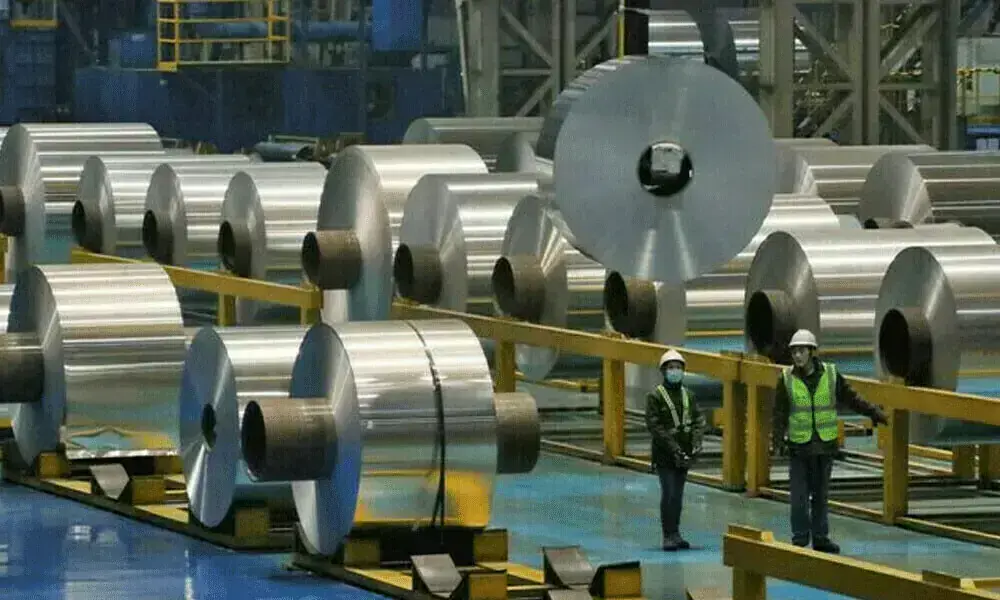

LONDON: Aluminium prices steadied on Friday as investors balanced the competing impacts of the Iran war and lower supply from disrupted operations in the Middle East against weaker demand from a spike in oil prices.
Benchmark three-month aluminium on the London Metal Exchange was up 0.5% at $3,269 a metric ton by 1030 GMT, having closed down 4.4% in the previous session after sliding as much as 8.4% as speculators scrambled to liquidate positions.
“The tone in base metals is cautious after yesterday’s session that left aluminium at the centre of attention,” said Neil Welsh, head of metals at broker Britannia Global Markets. Aluminium prices had rallied in recent weeks on fears of supply disruptions after the U.S. and Israel attacked Iran. The Gulf accounts for 8% of global production.
Aluminium Bahrain said on Thursday it is exporting metal via the Saudi port of Jeddah as the Strait of Hormuz remains effectively shut.
High oil prices, however, spur inflation, erode global economic
growth and dampen metals demand.
“That combination has traders balancing the risk of regional supply disruption against the risk that higher energy prices will slow manufacturing demand,” Welsh added.
Metal prices briefly got support on Friday when oil eased during Asian trading on Western efforts to secure safe passage through the Strait of Hormuz, but oil later recovered, eroding that buffer.
LME copper was slightly firmer in Asian trading, but later went into the red, giving up 0.3% to $12,115 a ton. It was headed for a 5.5% weekly loss, the biggest since April 2025.
The most active copper contract on the Shanghai Futures Exchange ended daytime trading 1.1% lower at 94,780 yuan ($13,751.18), down 6.1% for the week.
Among other metals, LME zinc rose 0.3% to $3,080 a ton and lead gained 0.6% to $1,899.50 while nickel shed 0.6% to $16,890 and tin dropped 2.4% to $42,490.




 American Dollar Exchange Rate