
ISLAMABAD: The Federation of Pakistan Chambers of Commerce and Industries (FPCCI), Friday, asked the government to defer new powers of the Federal Board of Revenue (FBR) officials to arrest those involved in tax frauds.
They also warned the FBR for taking “extreme steps” if the government did not fulfil their demands.
Responding to this, Federal Board of Revenue (FBR) Member Inland Revenue (Operations) Dr Hamid Ateeq Sarwar assured the business community that the arrest powers under Section 37A of the Sales Tax Act would only be used against those involved in fake/flying invoices and causing multi-billion-rupee losses to the national exchequer.
“There are 60,000 sales tax filers out of a total of 200,000 registered entities. There is no intention to arrest manufacturers or traders through this law of the land,” FBR’s Member Operation Dr Hamid AteeqSarwar assured the FPCCI forum here in the federal capital on Friday.
The representatives of the FPCCI from across the country were present on the occasion including Ghee/Cooking oil, Flour Mills Association, President Islamabad Chamber, Rawalpindi, online participants from Karachi Chamber, Lahore Chamber, small traders representative Ajmal Baloch, real estate agents and many others.
During the discussion between the FBR and the business community, the FPCCI leadership warned to observe strike on July 19 all over the country but after getting assurance from the tax machinery that the powers of the FBR would not be abused, they announced that the FPCCI would not go for any strike on July 19, 2025.
President Real Estate Federation Pakistan Sardar Tahir stated that the stamp duty was increased in Islamabad from 1 to 3 per cent by the chairman CDA unilaterally so the benefits of reduction in tax rate for buyer of property by 1.5 per cent had evaporated in the air with just one step. The Minister of State for Finance Bilal Azhar Kiyani stated that this issue would be conveyed to Minister for Finance and would be taken up with Minister for Interior to resolve it related to CDA.
Atif Ikram Sheikh, president FPCCI in his address asked the government to defer 37A under which the FBR possessed powers of arrest on tax frauds, otherwise, they would go for extreme steps. However, the Minister of State argued that the Finance Act 2025 was approved by the Parliament and offered the businessmen that he would be ready to hold meeting with them by every month to avoid misuse of power.
This act of the parliament cannot be done away with, however, abuse of power will not be allowed, he added.
He said that the power to arrest would be used against who plunged into Rs100 billion through fake and flying invoices in case of sales tax.
In his address, Hamid Ateeq Sarwar stated that the powers to arrest would not be used against manufacturers or traders but it would be used against fake/flying invoices. He said that there was no need of apprehension in the ongoing fiscal year for payment of Rs200,000 through banking channel under 21- S of the Income Tax because the return filers would have to show in their returns in the next fiscal year 2026-27 and would have to give response if selected in audit case.
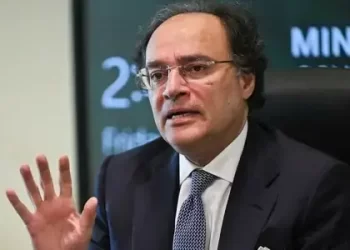
Speaking at a meeting organised by the Federation of Pakistan Chambers of Commerce and Industry (FPCCI), Minister of State Bilal Azhar Kayani said the government has achieved economic stability. Inflation has decreased from 38 per cent to single digits, with the inflation rate for the last fiscal year recorded at 4.5 per cent, providing significant relief to the public. He highlighted that the policy rate has been reduced from 22 per cent to 11 per cent, offering relief to the business community. These economic achievements, he noted, seemed impossible when Prime Minister Shehbaz Sharif took office amidst “default-like conditions”.
Minister Kayani stated that the federal budget, while adhering to the IMF programme, has provided relief to the people. Prime Minister Shehbaz Sharif is focused on fixing the country’s economic fundamentals through privatisation, right-sizing, economic reforms, and controlling deficits. Simultaneously, the prime minister is engaging in continuous consultations with industrialists, economists, and stakeholders to transform economic stability into sustainable economic growth.
Copyright media, 2025





 American Dollar Exchange Rate