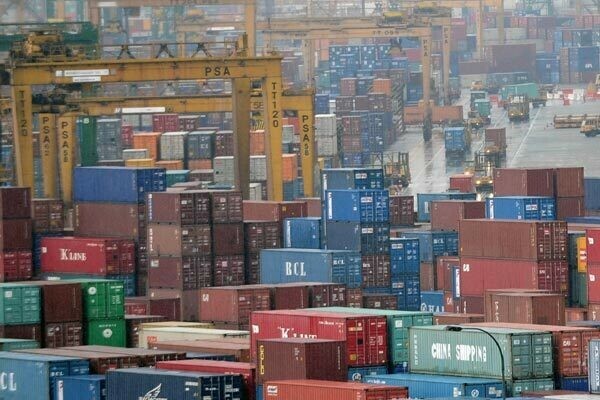

SINGAPORE: Asian buyers are reducing purchases of U.S. agricultural goods as Washington’s planned fees on China-linked vessels and sweeping import duties on key regional trading partners stoke uncertainty and dampen appetite for American products.
China, which retaliated with 34% duties on U.S. goods, is the largest importer of U.S. agricultural products, but other Asian countries including Japan, South Korea and Thailand also buy significant volumes of U.S. wheat, corn, and soybean meal.
President Donald Trump’s plan to revive U.S. shipbuilding using port fees of up to $1.5 million on China-linked ships has forced exporters to hunt for non-Chinese ships and, in turn, driven up freight costs, denting demand for U.S. farm goods.
“It makes the U.S. now an unattractive destination for over half of the world’s fleet,” said Kansas-based freight consultant Jay O’Neil.
Ship owners and operators are reluctant to provide quotes for U.S. ports for April, May and June due to the looming fees, he said.
The shipping challenges and trade war uncertainties are likely to weigh on benchmark Chicago soybean and wheat futures, which are trading close to multi-month lows, traders said.
“As of now, most importers are not taking the risk of importing from the U.S.,” said a Singapore-based trader at an international company which sells U.S. grains and oilseeds into Asia. “Shipping costs have gone up and there is so much uncertainty over the trade war.”
China, India should stand together in face of U.S. tariffs, says Chinese Embassy in India
U.S. tariffs on dozens of countries took effect on Wednesday, including massive 104% duties on Chinese goods, even as the president prepared for negotiations with some nations.
Scarce shipping
Asia buys about 35% of wheat and corn shipped worldwide. For soybeans, China takes more than 60% of the oilseed traded globally.
While other Asian grain importers are not expected to retaliate against U.S. tariffs, limited vessel availability and trade-war uncertainty are taking a toll on purchasing, traders said.
“We are trying to switch vessels for cargoes we had booked earlier to supply U.S. wheat to Southeast Asia. We are having to pay higher freight to get a non-Chinese boat. So for now it is a big no to U.S. grains,” a second Singapore-based trader said.
Traditional U.S. wheat buyers like Japan and South Korea are expected to continue purchasing American cargoes, however they may buy some corn and soybeans from alternative suppliers in South America and the Black Sea region.
“As of now, buying of U.S. products has virtually stopped. But looking ahead, we expect Japan and South Korea to keep taking U.S. wheat as they are committed to buying from the U.S.,” the second Singapore trader said.
It is difficult for buyers like Japan and South Korea to switch from U.S. wheat as it is used for direct human consumption, but they can shift to alternative shipments for feed grains such as corn and soybeans.
Most Southeast Asia grain importers have yet to book about half of their requirement for May, the second Singapore trader said, leaving them vulnerable to supply shortfalls.
Mike Steenhoek, executive director of the Soy Transportation Coalition in the United States, said a prominent U.S. exporter was unable to get bids from ocean vessel companies to ship soymeal because of the proposed fee on China-linked vessels.
“You’re already seeing impact.”





 American Dollar Exchange Rate