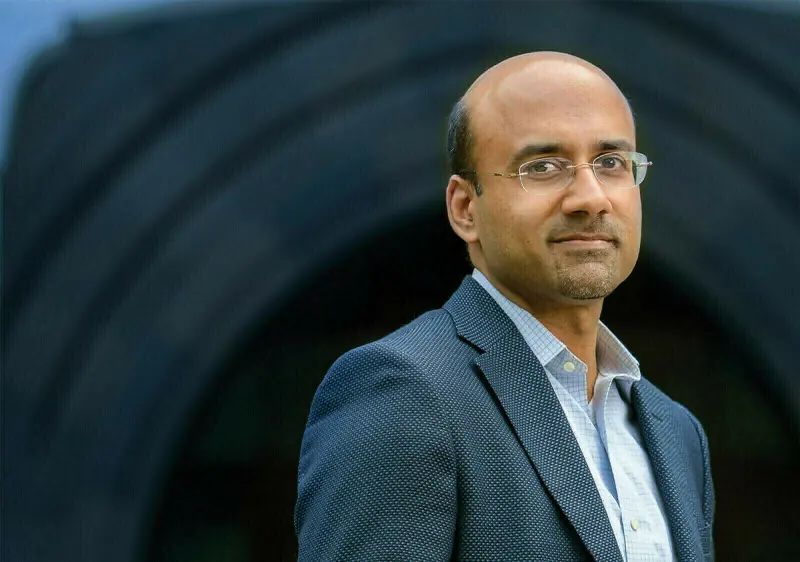

Atif Mian, a noted Pakistani-American economist and currently a professor of Economics at Princeton University, has said that Pakistan must adopt a new economic vision calling for sustained income growth under a “Five-for-Fifty” (5/50) framework.
The proposed 5/50 vision argues that Pakistan should target 5% annual per capita income growth for the next 50 years, enabling the “average Pakistani to earn as much as the average citizen of the world”, wrote Atif on his website atifmian.com on Tuesday.
“Five-for-fifty is an attainable goal, and Pakistan could do even better in best-case scenarios,” argues Atif, citing the example of South Korea and China, which once had income levels similar to Pakistan.
Atif believes that his Five-for-Fifty vision would be “transformative” for Pakistan.
“If Pakistan had managed 5/50 over the last half century, it would be one of the world’s top ten economies today, with a global standing comparable to France.
“Unfortunately, Pakistan’s economic performance over the last fifty years has fallen far short of the 5/50 vision. Worse, the trajectory has been deteriorating,” he said, with growth slowing from an already insufficient 3.1% per capita rate in the 1980s to near stagnation in recent years.
Atif said that to bring the 5/50 vision within reach, Pakistan needs a “regime change – not in political terms necessarily, but in strategic policy”.
Last two years worse in Pakistan’s economic history: Atif Mian
He said that an analysis of growth experiences worldwide reveals that countries typically fall into two distinct growth regimes.
“Some are stuck in a stagnation regime: they may enjoy the occasional burst of high growth, but it quickly mean-reverts, and they never catch up to the world average. Others manage to build institutions and policies that deliver a sustained high-growth regime: external shocks may slow them for a few years, but they soon return to a strong long-run path,” he said.
Atif said that Pakistan is stuck in a “stagnation regime” with several policy missteps leading to stagnation, including the IMF program.
“The ongoing IMF program was badly needed for liquidity support, but the program is poorly designed to deliver sustained growth. For example, the program jacked up taxes on electricity, making it among the most expensive in the world to plug fiscal holes,” argues Atif.
He noted that Pakistan’s policy establishment still misunderstands what investment is, “repeatedly mistaking inflows of borrowed dollars for growth-generating capital”.
“The latest example is the poorly designed SIFC, but earlier foreign investment deals were similarly ill-structured,” he said.
The economist further criticised that Pakistan lacks a serious, rational external-account policy. “It should have been clear decades ago that actively maintaining an overvalued exchange rate, while encouraging unproductive dollar-denominated sovereign borrowing, would end badly. But the nervous system was broken.”
“What Pakistan needs is a regime change in thinking – a decisive break from the stagnation regime of the last five decades,” said Atif.
However, a successful regime shift requires serious investment in the decision-making process: robust data infrastructure, domestic research institutions with independent analytical capacity, and competent technical professionals at the top with real delegated authority, said the economist.
“Above all, however, successful regime change requires courage – the courage to break with entrenched, regressive special interests, and the courage to think and act differently,” he concluded.






 American Dollar Exchange Rate