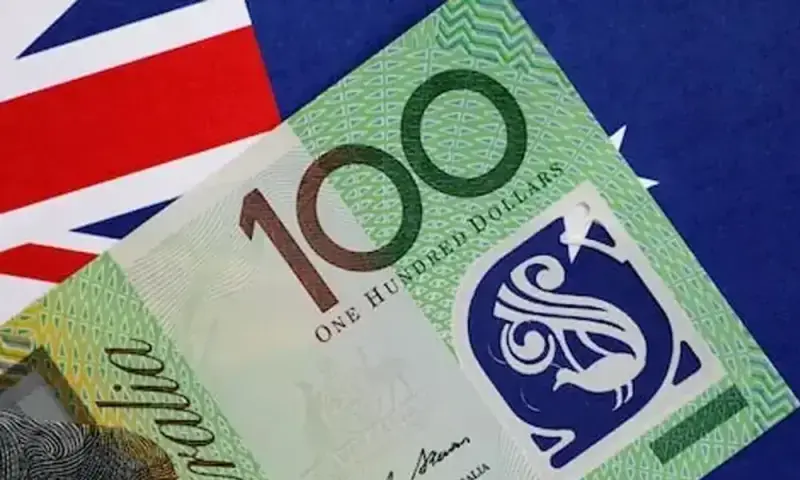

SYDNEY: The Australian and New Zealand dollars were poised on Friday for their best week in nine months as policy uncertainty hamstrung their US counterpart, while a high inflation reading at home further underpinned the kiwi.
In New Zealand, a 0.6% rise in consumer prices in the December quarter accelerated annual inflation to 3.1%, the highest since mid-2024 and above market forecasts of 3%.
It was also markedly above the Reserve Bank of New Zealand’s projection of 2.7%, cementing expectations that the next interest rate hike is likely, though not for several months. In an interview with Reuters, RBNZ Governor Anna Breman said there was still enough spare capacity in the economy to see inflation ease back toward 2%, and the central bank would act to ensure that happened. Markets nudged up the probability of a hike by July to 50%, from around 44%, with a quarter-point rise to 2.5% fully priced by October.
Two-year swaps touched a one-month high at 3.09% in reaction.
“Its likely the RBNZ will be bringing forward their forecasts of when rates will start to rise, but not to the extent where OCR increases in the first half of 2026 are on the cards,” said Satish Ranchhod, a senior economist at Westpac.
“Our forecast of a December increase look odds on at this stage, and market pricing for a hike in September looks understandable.”
The kiwi dollar was paused at $0.5910, after strengthening 1.4% in the previous session. It has gained 2.8% for the week and aims for bull targets at $0.6007 and $0.6120.
The Aussie stood at $0.6840, having surged 1.2% overnight to a 16-month top of $0.6845.
That left it 2.2% higher for the week and opened the way to a peak from 2024 at $0.6943.
The Aussie also scaled a 19-month high on the yen at 108.40, and a nine-month top on the euro at 0.5827.
Investors have also ramped up wagers for an early rate rise from the Reserve Bank of Australia following a surprisingly strong jobs report for December.
The market now implies a 60% chance of a quarter-point hike in the 3.60% cash rate when the RBA meets on February 3, double the probability at the start of the week.
Any tightening cycle is assumed to be shallow, with rates seen ending the year at 4.10%.




 American Dollar Exchange Rate