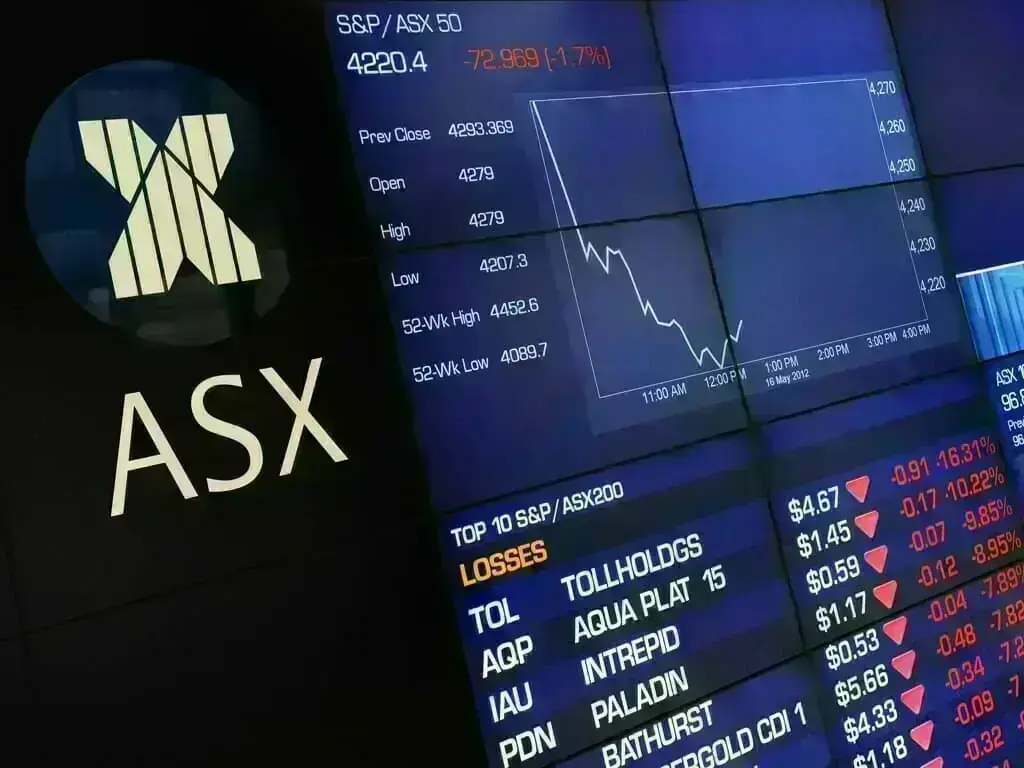
Australian shares ended at their highest in nearly four weeks on Tuesday, as investors covered short positions and picked up battered stocks but the benchmark index ended off highs amid caution around an escalation in the Middle East conflict.
Investors’ hopes of a resolution to the Iran war faded as Iran rejected a ceasefire and refused to reopen the Strait of Hormuz on the eve of U.S. President Donald Trump’s Tuesday night deadline to reach a deal, denting risk appetite.
“Markets are suspended between two extreme outcomes: an escalation path that risks inflaming the biggest energy disruption in history, or a single headline that could unleash a huge relief rally,” Westpac analysts wrote.
The S&P/ASX 200 index advanced 1.7% to settle at 8,728.80 points, its highest closing since March 11, after jumping as much as 2.6% earlier in the session. The market resumed trading after a four-day weekend.
Tony Sycamore, a market analyst at IG, attributed the early surge in the benchmark to short covering “as traders who went home short ahead of the break, either as a tactical trade or as a hedge against worsening Middle East tensions, covered on the open.”
The broader resources sector ended 2.7% higher, driven by heavyweight iron ore miners: BHP, Rio Tinto, and Fortescue, which rose between 2% and 3%.
Regardless, the index remains 10% below its pre-war levels.
Financials settled 2.2% higher with all the “Big Four” banks settling 1.7% to 2.5% in the green.
Tech stocks rose 4%, while energy, gold, and consumer discretionary stocks gained around 1.5% each.
New Zealand’s benchmark S&P/NZX 50 index rose 1.3% to close at 13,069.66 points. Air New Zealand jumped 4.6% after announcing fare hikes and flight cancellations across May and June.
A Reuters poll of 32 economists showed the Reserve Bank of New Zealand is forecast to keep its interest rates unchanged on Wednesday.

Australian shares ended at their highest in nearly four weeks on Tuesday, as investors covered short positions and picked up battered stocks but the benchmark index ended off highs amid caution around an escalation in the Middle East conflict.
Investors’ hopes of a resolution to the Iran war faded as Iran rejected a ceasefire and refused to reopen the Strait of Hormuz on the eve of U.S. President Donald Trump’s Tuesday night deadline to reach a deal, denting risk appetite.
“Markets are suspended between two extreme outcomes: an escalation path that risks inflaming the biggest energy disruption in history, or a single headline that could unleash a huge relief rally,” Westpac analysts wrote.
The S&P/ASX 200 index advanced 1.7% to settle at 8,728.80 points, its highest closing since March 11, after jumping as much as 2.6% earlier in the session. The market resumed trading after a four-day weekend.
Tony Sycamore, a market analyst at IG, attributed the early surge in the benchmark to short covering “as traders who went home short ahead of the break, either as a tactical trade or as a hedge against worsening Middle East tensions, covered on the open.”
The broader resources sector ended 2.7% higher, driven by heavyweight iron ore miners: BHP, Rio Tinto, and Fortescue, which rose between 2% and 3%.
Regardless, the index remains 10% below its pre-war levels.
Financials settled 2.2% higher with all the “Big Four” banks settling 1.7% to 2.5% in the green.
Tech stocks rose 4%, while energy, gold, and consumer discretionary stocks gained around 1.5% each.
New Zealand’s benchmark S&P/NZX 50 index rose 1.3% to close at 13,069.66 points. Air New Zealand jumped 4.6% after announcing fare hikes and flight cancellations across May and June.
A Reuters poll of 32 economists showed the Reserve Bank of New Zealand is forecast to keep its interest rates unchanged on Wednesday.







 American Dollar Exchange Rate