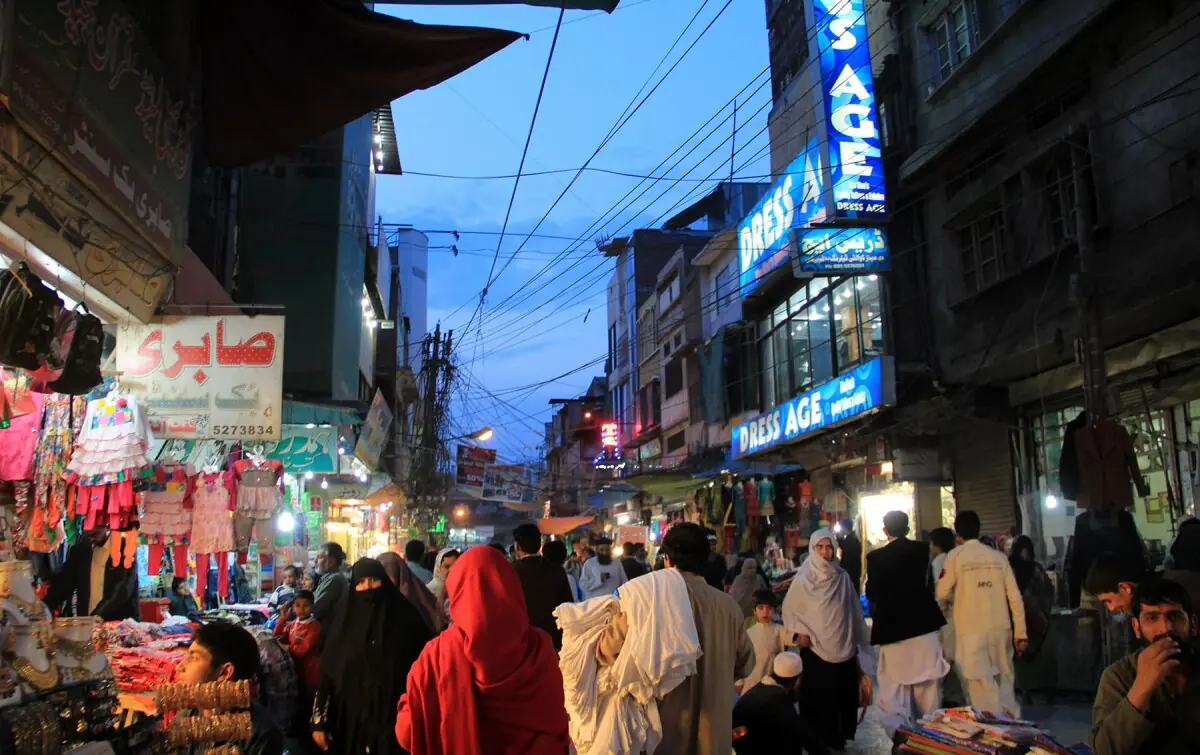

QUETTA/ PESHAWAR: Balochistan and Khyber Pakhtunkhwa governments announced energy conservation measures on Sunday, setting timings for the closure of markets, eateries and wedding halls.
According to a notification issued by the Balochistan Home Department, all markets and shopping centres are to be closed by 8pm. However, pharmacies, tandoors and bakeries have been exempted from the restriction.
The notification also stated that all events being held in wedding halls, banquet halls and hotels must end by 10pm, and that restaurants should also close by 10pm.
It said the provincial government had directed district administration and law enforcement agencies to ensure strict implementation of the orders and violators would face action under relevant laws.
Divisional commissioners, deputy commissioners and police officials have also been instructed to ensure immediate enforcement of the new directives.
Closure timings in KP
Similarly, a public notice issued by the office of the KP chief secretary said all markets, shopping plazas, commercial establishments and night-time sports activities in divisional headquarters should close by 9pm. Meanwhile, markets, shopping plazas and commercial establishments in other districts should close by 8pm, it added.
The notice further said that all restaurants, cafes and eateries should close by 10pm but home delivery and takeaway services could be provided beyond these hours.
Meanwhile, “all marriage halls, marquees, event halls, event lawns and public/ private events of a similar nature shall conclude by 10pm”, the notice stated.
It further said that “agriculture and construction activities, laboratories and emergency health services, tandoors engaged solely in the preparation and sale of roti/naan for immediate consumption, petrol pumps, in respect of only fuel dispensing only and public transport terminals, in respect of limited operational lighting only”, were exempted from the new restrictions.
The notice said medical stores and pharmacies were also exempted from these restrictions, but subject to a set of conditions.
Elaborating on these conditions, the notice said the exemption should apply only to the “primary licensed activity of the premises; medical stores/pharmacies shall be standalone, duly licenced, and primarily engaged in sale of medicines; mixed-use outlets, including premises combining pharmacy with general retail or other commercial activity, shall be treated as commercial establishments and shall not qualify for exemption; no additional or ancillary commercial activity shall be carried out under the cover of exemption; display of valid licence shall be mandatory on demand; any business converted, registered or modified after issuance of this notification for the purpose of seeking exemption shall not be entitled to exemption”.
For industrial and production activities, it added that all industrial units, manufacturing facilities, processing units, workshops and export-oriented enterprises should remain exempt, “subject to operations being genuine production activity and subject further to avoidance of excessive or non-essential lighting”.
Commercial, retail or showroom components attached to such units should comply with the prescribed closure timings, it added.
The notice said “decorative, facade and other non-essential lighting” on buildings, plazas, marquees, event lawns and commercial premises should also not be used to conserve energy.
It said that floodlights, spotlights and similar high-intensity lighting used for decorative or display purposes on buildings, commercial premises and event venues should also not be used, adding that excessive lighting in markets, shopping plazas, mixed-use commercial buildings and standalone establishments should be restricted to essential illumination only.
Moreover, the notice said that illuminated billboards, hoardings, digital display boards and LED screens should remain switched off after closure hours.
Air-conditioning, escalators and lifts in commercial buildings should not be used beyond business hours, except where required for exempted essential services, it said, adding that the use of generators for non-essential commercial activity after closure timings would not be permitted.
Regarding public sector compliance, the notice stated that all government offices should ensure strict energy conservation, including switching off lights, air-conditioning and equipment immediately when the officer/staff were not at the premises and after office hours.
“No after-hours office activity shall be carried out except where essential in the public interest or for emergency purposes. Non-essential illumination of public buildings shall be avoided,” it said.
It added that deputy commissioners should ensure the implementation of these measures in their respective districts. They may undertake inspection, verification of licences, verification of the nature of business, and such necessary enforcement action as may be required to ensure compliance, it said.
“These measures are temporary and have been taken in the larger public interest to reduce pressure on electricity, to avoid additional financial burden on citizens, and to contribute, through prudent use of resources, towards the wider national effort in the present circumstances,” the notice stated, adding that the new closure timings would be effective from April 6.
Balochistan traders oppose govt move
Central Anjuman-i-Tajiran Balochistan President Abdul Rahim Kakar rejected the government’s closure timings, calling them “anti-trader” and warning of protests if the decision was enforced.
Speaking at a joint press conference at the Quetta Press Club along with other trade leaders, he said traders would not close markets and shops at 8pm, insisting instead that markets should remain open until 10pm, while wedding halls, hotels and restaurants should operate until midnight.
He argued that the move resembled lockdown-style restrictions that harmed businesses during the Covid-19 period.
Kakar said Balochistan’s economy largely depended on trade as there were no major industries, and businesses were already struggling due to inflation, unemployment, insecurity, border closures and restrictions on border trade.
He claimed that rising fuel prices, increased utility bills and taxes had further damaged commercial activity, adding that border closures had left millions jobless.








 American Dollar Exchange Rate