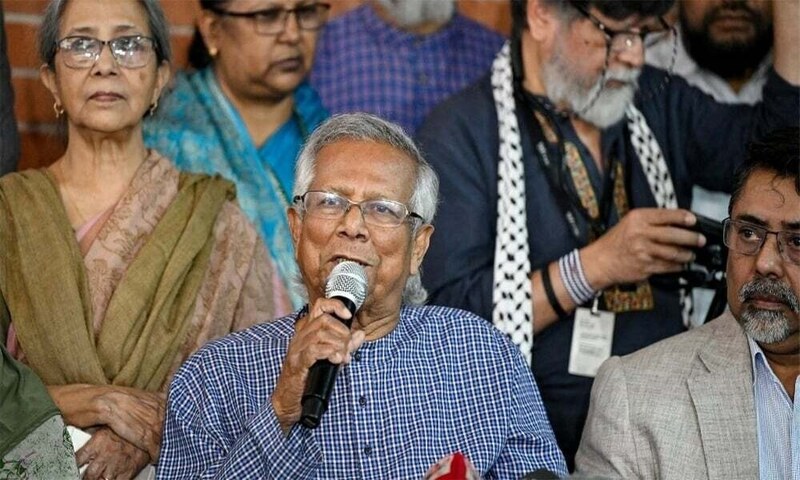

DHAKA: Bangladesh’s most powerful political parties signed a charter on Friday aimed at ensuring democratic reform after next year’s elections, following a mass uprising that toppled the previous government.
However, celebrations of the government led by Nobel Peace Prize winner Muhammad Yunus were muted after one party refused to sign, with police also firing tear gas to quash rock-throwing protesters ahead of the ceremony.
Yunus, 85, has championed the document as his legacy, saying he inherited a “completely broken down” system and that reforms are needed to prevent a return to authoritarian rule.
“This is the moment we are ushering in a new Bangladesh,” Yunus told the ceremony, held in front of parliament in Dhaka. “We have been reborn.”
The South Asian nation of 170 million people has been in political turmoil since Sheikh Hasina was ousted as prime minister by a student-led revolt in August 2024. The document, dubbed the “July Charter” after last year’s uprising, has sparked intense arguments between parties jostling for power ahead of polls slated for February.
Yunus, who has pledged to step down after elections, says it will strengthen checks and balances between the executive, judicial and legislative branches.
It includes proposals for a two-term limit for prime ministers and expanded presidential powers.
It also aims to enshrine the recognition of Bangladesh as a multi-ethnic and multi-religious nation. Leaders of the Bangladesh Nationalist Party (BNP), seen as among the election front-runners, as well as Jamaat-e-Islami, the Muslim-majority nation’s largest Islamist party, signed the charter.
However, the National Citizen Party (NCP), made up of many students who spearheaded the uprising that ended Hasina’s rule, boycotted the ceremony.


 American Dollar Exchange Rate