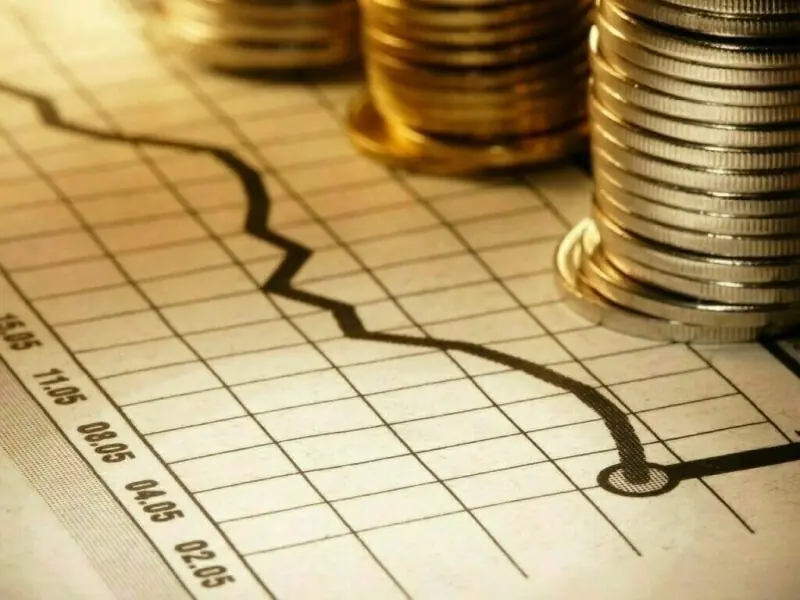

KARACHI: The business community has expressed dissatisfaction over minor reduction in policy rate and termed it like a drop in the ocean and urged the State Bank of Pakistan (SBP) to bring policy rate in single digit.
They were of the opinion that there is no relief for industry, trade or any other sector due to this minor cut and urged the government to review the decision immediately in the large interest of economic growth. They also termed the reduction as too little, too late for economic growth and expansion.
The monetary policy announced the policy rate reduction after keeping the status quo unchanged for the fourth consecutive time.
President Karachi Chamber of Commerce & Industry (KCCI), Muhammad Rehan Hanif, has expressed deep disappointment over the State Bank of Pakistan’s decision to reduce the policy interest rate by a mere 0.5 percent, stating that such a token adjustment falls far short of what is urgently required to revive Pakistan’s fragile economy and restore business confidence. He remarked that the marginal cut neither reflects prevailing economic realities nor offers meaningful relief to businesses that are already struggling under an exceptionally high cost of doing business. He emphasized that despite a visible decline in inflation, borrowing costs in Pakistan remain among the highest in the region, severely undermining industrial growth, exports, and employment generation.
President KCCI said, “The policy rate in Pakistan continues to hover at an unsustainably high level, whereas regional economies such as China, India, Bangladesh, Vietnam, Indonesia and Sri Lanka maintain single-digit interest rates, enabling their industries to access affordable financing, expand capacity, and remain competitive in global markets. In contrast, Pakistani businesses are being denied the same opportunity, placing them at a serious disadvantage.” President KCCI pointed out that industries in Pakistan are currently burdened with multiple cost pressures, including exorbitant energy tariffs, high fuel prices, excessive taxation, escalating logistics costs, volatile exchange rates, and rising compliance and regulatory expenses.
Under such circumstances, he stressed, the continuation of a high interest rate regime further suffocates productive economic activity and discourages both local and foreign investment.
Rehan Hanif noted that the government’s own objectives of industrial revival, export-led growth, job creation, and expansion of the tax base cannot be achieved unless credit becomes affordable. “When the cost of financing remains prohibitively high, businesses defer expansion plans, shut down marginal units, and reduce employment, ultimately leading to lower economic output and reduced government revenues”, he added.
President KCCI reaffirmed that the business community stands ready to support economic stabilization efforts but stressed that stability must go hand in hand with growth. “A cautious, incremental approach at this critical juncture risks prolonging economic stagnation. What Pakistan needs today is a bold and decisive cut in interest rates to unlock growth, protect jobs, and enhance competitiveness”, he concluded.
President of the Korangi Association of Trade and Industry (KATI), Muhammad Ikram Rajput, has expressed serious reservations over the State Bank of Pakistan’s Monetary Policy Committee (MPC) decision to reduce the policy rate by just 0.5 percentage points to 10.5 per cent, terming it contrary to the longstanding demands of the business community. He said the cut was far below expectations and insufficient to accelerate economic growth. He stressed that bringing the policy rate into single digits was essential to revive industrial activity and put the economy back on a sustainable growth path. He noted that the MPC had earlier kept the policy rate unchanged at 11 per cent for seven months since May 2025.
KATI President said the modest reduction was completely at odds with industrial expectations and would fail to provide any meaningful relief to industries already burdened by high production costs. Given the significant decline in inflation, he argued, a reduction of at least 200 to 300 basis points was warranted. He said industrialists had strongly urged that the policy rate be immediately brought to single digits to stimulate economic activity. He added that even at 10.5 per cent, Pakistan’s interest rate remained significantly higher than those in other regional countries, particularly its business competitors, severely undermining export competitiveness.
KATI President stated that elevated interest rates had made access to finance nearly impossible for small and medium-sized enterprises, which form the backbone of the national economy and employment generation. As a result of rising investment costs and production expenses, he warned, the export sector was under severe pressure, negatively impacting the country’s foreign exchange reserves.
Rajput cautioned that insufficient reduction in the policy rate would keep business activity sluggish, making it difficult to achieve economic growth targets. He urged the government and the State Bank to acknowledge ground realities and take bold and extraordinary steps by further slashing interest rates to steer the country out of economic crisis, promote industrial growth, and create employment opportunities.
Ahmed Azeem Alvi, President of the SITE Association of Industry (SAI) has expressed disappointment over the State Bank of Pakistan’s decision to reduce the policy rate by only 50 basis points, terming the move insufficient to provide any meaningful relief to the struggling industrial sector. He said that given the severity of the current economic challenges, such a marginal cut would do little to ease the pressure on businesses. He stressed that the government must adopt a clear and coherent strategy if it intends to keep domestic industries afloat.
Alvi said that local industries were already under immense strain, while imports had come to a standstill. At the same time, he added, persistently high interest rates had trapped both businesses and the public in a cycle of inflation and unemployment.
“People are losing jobs every day. The government must bring the policy rate down to single digits so that the economy can breathe and employment opportunities can grow,” he said.
Copyright media, 2025




 American Dollar Exchange Rate