Actors, writers and cricketers amplify voices of those left voiceless by disaster

The mountains of northern Pakistan, usually alive with the hum of travellers, shepherds, and summer winds, fell silent this week under the weight of a catastrophe of biblical proportion.
Relentless monsoon rains transformed rivers into torrents and slopes into landslides, drowning entire valleys in a deluge of mud and water. For the survivors, there is no normal day left to return to — only the wreckage of homes, belongings, and loved ones lost.
In just 48 hours, the National Disaster Management Authority (NDMA) confirmed that well over 350 people had died as floods and rain-induced landslides carved through the rugged terrain.
The toll in Khyber-Pakhtunkhwa (K-P) was particularly severe. Gilgit-Baltistan and Azad Jammu and Kashmir are also affected, but the number of casualties, officials warned, is still climbing as rescue teams struggle to reach remote pockets cut off by collapsed roads and bridges.
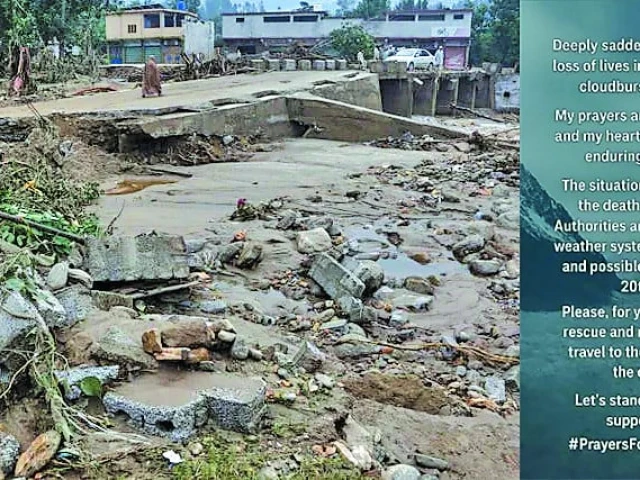
The Buner district, like Swat and Mansehra, has been left scarred — broken homes spilling possessions into muddy streets, families searching through rubble for what little can be salvaged.
A chorus of sorrow
An AFP photograph from Buner captured the mood of the moment: a man, expression hollow, standing among the fragments of what was once his house, sorting through his belongings in disbelief.
It is against this backdrop of devastation that voices from Pakistan’s cultural and sporting worlds rose in grief and solidarity. On social media, where millions follow their every word, celebrities and athletes offered prayers and appeals, turning their platforms into conduits of mourning.
Singer Asim Azhar struck a poetic note in his lament. “Today, our land weeps,” he wrote, encapsulating the raw grief that has swept the country. “The floods have taken homes, dreams, and precious lives in Pakistan. My heart aches for every mother, father, child, and soul affected.”
Azhar’s post did not stop at grief. It was also a plea. “In moments like these, we must become one, one nation, one heart, one hand reaching out to another. Please keep them in your prayers, and if you are able, extend your support to trusted relief efforts. Together, we can help heal what has been broken.”
His words captured not just the loss, but also the collective responsibility many feel in moments of national tragedy.
Model and actor Nadia Hussain, known for her candid voice, kept it simple yet powerful. Her post read like a whispered prayer: “Ya Allah! Please save our country from more disasters.”
Singer Umair Jaswal brought a note of caution alongside sympathy. “My prayers are with the departed souls, and my heart goes out to the families enduring unimaginable grief,” he said, urging citizens not to travel to northern areas in the coming days.
His advice was practical: fewer tourists and vehicles would allow emergency teams to move unhindered. “Let’s stand together in prayer, support, and caution.”
For author Fatima Bhutto, the devastation was not just an emotional matter but a political one. Referring to the “horrifying” scenes of destruction, she questioned the state of relief operations in flood-hit areas.







 American Dollar Exchange Rate