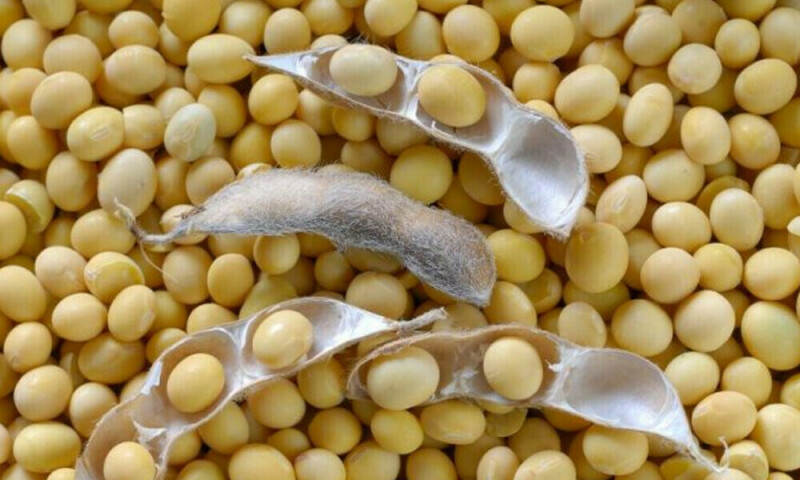

BEIJING: Chicago soybean futures eased on Friday due to weak demand and rising global competition from Latin American countries, amid caution ahead of the looming US-China talks this weekend and a US Department of Agriculture (USDA) report next week.
The most-active CBOT soybean contract fell 0.07% to $10.44 a bushel as of 0222 GMT and was set for the second straight week of losses.
Caution prevailed ahead of the US-China trade talks in Switzerland this weekend, as investors hoped for the easing of tensions that have hurt US soybean and grain exports.
“The market will be looking to US-China relations after the UK-US trade agreement. Can the two nations find a solution to get their trade ties back on track?” said Andrew Whitelaw of agricultural consultants Episode 3.
Adding to the bearish sentiment, Argentina’s Buenos Aires Grains Exchange raised its 2024–25 soybean harvest forecast to 50 million metric tons from 48.6 million on Thursday, citing improved yields.
Wheat gained 0.19% to $5.30 a bushel, supported by drought concerns in China’s major wheat-growing areas, which raised hopes for stronger import demand.
However, the contract was poised for a third straight weekly decline, as favourable weather in the US, Ukraine, and Russia curbed gains.
Forecasts of rain across parts of Ukraine and Russia should help ease crop concerns, Whitelaw said.
On Tuesday, China’s Henan province, often called the country’s wheat granary, issued a drought warning, as hot, dry winds threatened crops.
Henan accounts for roughly a third of China’s wheat output, with harvest typically occurring from late May through mid-June.
Pakistan makes large US soybean purchase as tensions with India rise
Although China was the world’s largest wheat importer in 2022 and 2023, its imports fell sharply last year. Corn rose 0.17% to $4.48-2/8 a bushel, but hovered near a six-week low.
While strong export demand lent support, favourable US weather and hopes for improved US-China trade relations tempered optimism. Traders are positioning ahead of the USDA’s report on Monday for the first supply and demand estimates for 2025–26.








 American Dollar Exchange Rate