
KARACHI: In a collaborative effort to strengthen Pakistan’s export sector, the Chief Collector of Customs (Export) Mohammad Sadiq reaffirmed the commitment of customs authorities to work closely with the Karachi Chamber of Commerce and Industry (KCCI) in promoting seamless trade operations.
Speaking at a meeting during his visit to KCCI, Chief Collector Sadiq emphasised the longstanding, respectful relationship between the customs department and KCCI and stressed the importance of collective responsibility in addressing challenges faced by exporters.
“Our meetings are not about assigning blame but about acknowledging that improvements must be a shared endeavour,” he stated, “Export is the lifeline of our economy, and for decades we have worked relentlessly to facilitate hassle-free processes for exporters both in Karachi and across the upcountry.”
The session was attended by Collector of Customs (Export) Irfan Javed, President KCCI Muhammad Jawed Bilwani, Senior Vice President Zia ul Arfeen, Vice President Faisal Khalil Ahmed, former President Iftikhar Ahmed Sheikh, and KCCI Managing Committee members.
Highlighting recent initiatives, Collector Customs (Export) Irfan Javed informed that a 24-hour help desk has been established at the Customs Headquarters, offering immediate support to exporters. Contact details are readily available, and a dedicated WhatsApp group, comprising the Chief Collector, senior officials, and exporters, ensures real-time issue resolution.
“We are committed to resolving concerns promptly, including coordination with the Drug Enforcement agencies to minimise redundant inspections,” he added.
Clarifying the rebate process, Irfan Javed explained that 90 percent of rebate payments are routed through the State Bank of Pakistan, with final approvals resting with the federal government.
President KCCI Jawed Bilwani emphasised that while remittances are valuable, sustainable economic strength must come from an export-driven strategy aimed at achieving a positive trade balance. “Exporters must be fully supported and unnecessary hurdles or harassment must be eradicated. At the same time, individuals engaging in malpractice must be identified and held accountable to preserve Pakistan’s reputation globally.”
President KCCI also shed light on key operational challenges faced by exporters, including excessive per-day charges, delays in examination procedures, and high logistics costs, especially concerning perishable goods.
He urged enhanced coordination between customs and cargo handlers to ensure swift clearances, thereby safeguarding product quality. He praised the formation of a quick-response WhatsApp group linking focal persons from each association, describing it as a “game-changer” for real-time resolution of exporters’ issues.
Addressing specific concerns, Bilwani cited incidents where export consignments, once cleared, were subjected to sudden inspections, causing delays and confusion. He called for the practice to end, insisting that post-clearance inspections undermine the exporters’ confidence and shipment timelines.
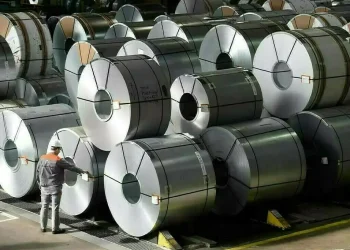
Turning attention to sector-specific concerns, Bilwani spoke about the iron and steel export sector, which, despite contributing $1.5 billion in exports, faces exclusion from the Export Facilitation Scheme (EFS) due to allegations of negative value addition. While stressing the need to tackle malpractice, he warned against penalising the entire sector for the actions of a few.
“Genuine exporters must not suffer. Accountability must be precise and fair.”
On the textile sector, which accounts for over 60% of Pakistan’s exports, Jawed Bilwani pointed out, liquidity challenges have long constrained growth.
The introduction of the EFS has eased these issues to a large extent by improving access to funds and boosting order volumes. However, refund processing still needs acceleration, as delays persist.
He also shared that multiple trade sectors, including leather, surgical goods, and sports goods, have requested an extension of the export period to 18 months under the EFS, a proposal now under policy-level review. Bilwani encouraged exporters to formally support this initiative through written representations.
In conclusion, both sides reaffirmed their commitment to strengthening Pakistan’s export ecosystem through greater collaboration, efficient facilitation, transparency, and collective problem-solving.

KARACHI: In a collaborative effort to strengthen Pakistan’s export sector, the Chief Collector of Customs (Export) Mohammad Sadiq reaffirmed the commitment of customs authorities to work closely with the Karachi Chamber of Commerce and Industry (KCCI) in promoting seamless trade operations.
Speaking at a meeting during his visit to KCCI, Chief Collector Sadiq emphasised the longstanding, respectful relationship between the customs department and KCCI and stressed the importance of collective responsibility in addressing challenges faced by exporters.
“Our meetings are not about assigning blame but about acknowledging that improvements must be a shared endeavour,” he stated, “Export is the lifeline of our economy, and for decades we have worked relentlessly to facilitate hassle-free processes for exporters both in Karachi and across the upcountry.”
The session was attended by Collector of Customs (Export) Irfan Javed, President KCCI Muhammad Jawed Bilwani, Senior Vice President Zia ul Arfeen, Vice President Faisal Khalil Ahmed, former President Iftikhar Ahmed Sheikh, and KCCI Managing Committee members.
Highlighting recent initiatives, Collector Customs (Export) Irfan Javed informed that a 24-hour help desk has been established at the Customs Headquarters, offering immediate support to exporters. Contact details are readily available, and a dedicated WhatsApp group, comprising the Chief Collector, senior officials, and exporters, ensures real-time issue resolution.
“We are committed to resolving concerns promptly, including coordination with the Drug Enforcement agencies to minimise redundant inspections,” he added.
Clarifying the rebate process, Irfan Javed explained that 90 percent of rebate payments are routed through the State Bank of Pakistan, with final approvals resting with the federal government.
President KCCI Jawed Bilwani emphasised that while remittances are valuable, sustainable economic strength must come from an export-driven strategy aimed at achieving a positive trade balance. “Exporters must be fully supported and unnecessary hurdles or harassment must be eradicated. At the same time, individuals engaging in malpractice must be identified and held accountable to preserve Pakistan’s reputation globally.”
President KCCI also shed light on key operational challenges faced by exporters, including excessive per-day charges, delays in examination procedures, and high logistics costs, especially concerning perishable goods.
He urged enhanced coordination between customs and cargo handlers to ensure swift clearances, thereby safeguarding product quality. He praised the formation of a quick-response WhatsApp group linking focal persons from each association, describing it as a “game-changer” for real-time resolution of exporters’ issues.
Addressing specific concerns, Bilwani cited incidents where export consignments, once cleared, were subjected to sudden inspections, causing delays and confusion. He called for the practice to end, insisting that post-clearance inspections undermine the exporters’ confidence and shipment timelines.
Turning attention to sector-specific concerns, Bilwani spoke about the iron and steel export sector, which, despite contributing $1.5 billion in exports, faces exclusion from the Export Facilitation Scheme (EFS) due to allegations of negative value addition. While stressing the need to tackle malpractice, he warned against penalising the entire sector for the actions of a few.
“Genuine exporters must not suffer. Accountability must be precise and fair.”
On the textile sector, which accounts for over 60% of Pakistan’s exports, Jawed Bilwani pointed out, liquidity challenges have long constrained growth.
The introduction of the EFS has eased these issues to a large extent by improving access to funds and boosting order volumes. However, refund processing still needs acceleration, as delays persist.
He also shared that multiple trade sectors, including leather, surgical goods, and sports goods, have requested an extension of the export period to 18 months under the EFS, a proposal now under policy-level review. Bilwani encouraged exporters to formally support this initiative through written representations.
In conclusion, both sides reaffirmed their commitment to strengthening Pakistan’s export ecosystem through greater collaboration, efficient facilitation, transparency, and collective problem-solving.


 American Dollar Exchange Rate