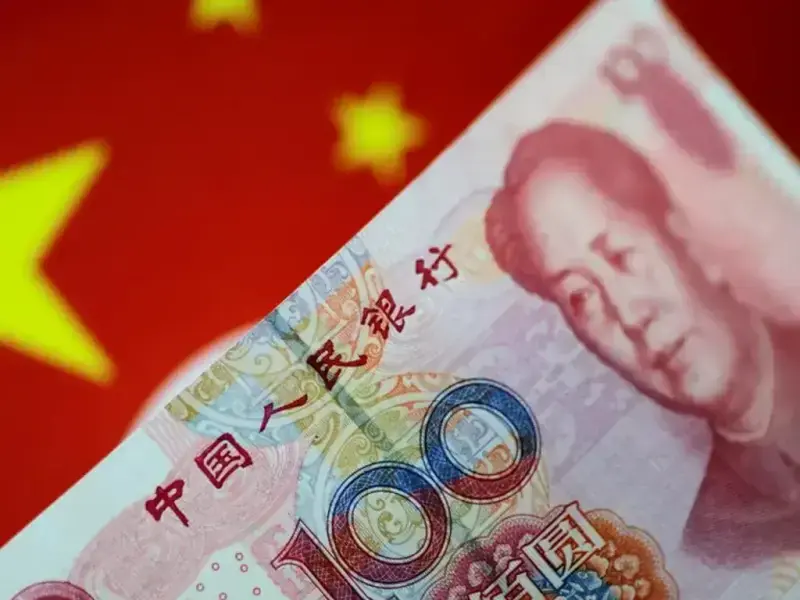

SHANGHAI: China’s yuan extended gains into the new year on Monday, touching a near 32-month high against the dollar, as the central bank maintained measured appreciation while seasonal demand for the Chinese currency remained robust.
The yuan strengthened 4.5% against the greenback last year, snapping three straight years of declines to post the biggest annual rise since 2020.
Analysts attributed the gains to a broadly weaker US dollar and heavy foreign exchange settlement by the country’s exporters toward the year-end.
A steadily firmer official guidance also lent support for the yuan, they said.
“The People’s Bank of China (PBOC) has been guiding a steady and cautious appreciation of the yuan against the US dollar since May,” said Tommy Wu, senior economist at Commerzbank.
“But at the same time, the central bank has also been restraining the extent of the appreciation.”
On Monday, the PBOC set the midpoint rate at 7.0230 per dollar, its strongest since September 2024 but 278 pips weaker than a Reuters’ estimate of 6.9952.
The spot yuan is allowed to trade a maximum of 2% either side of the fixed midpoint each day.
The central bank has been gradually raising the midpoint but not to levels as strong as markets projected since late November. Traders and analysts believe the weaker-than-expected fixing is to keep the currency stable and fend off risks.
“This approach helps prevent markets from rushing to offload US dollars in a disorderly manner, thereby avoiding abrupt price fluctuations and ensuring orderly market dynamics,” said Christopher Wong, FX strategist at OCBC Bank.
In the spot market, the onshore yuan rose to a high of 6.9802 per dollar at one point, the strongest since May 17, 2023, before changing hands at 6.9829 as of 0345 GMT.
Its offshore counterpart last fetched 6.9780 per dollar as of 0345 GMT.
Currency traders cited persistent demand for the yuan from exporters settling foreign exchange for payments such as year-end bonuses ahead of the Lunar New Year in mid-February.
Meanwhile, major state-owned banks were seen buying dollars in the onshore spot market to slow the pace of the yuan’s gains in early trade, people with knowledge of the matter said.
The Lunar New Year, the biggest holiday in China, falls in mid-February in 2026.
The authorities vowed to prevent the yuan from “overshooting,” but it was unlikely to halt its appreciation, said Wee Khoon Chong, APAC macro strategist at BNY, noting that the currency was supported by foreign capital inflows and a recovery in economic growth.
The benchmark Shanghai Composite Index advanced more than 1% on Monday to its firmest since November, after booking the best year since 2019 last year.






 American Dollar Exchange Rate