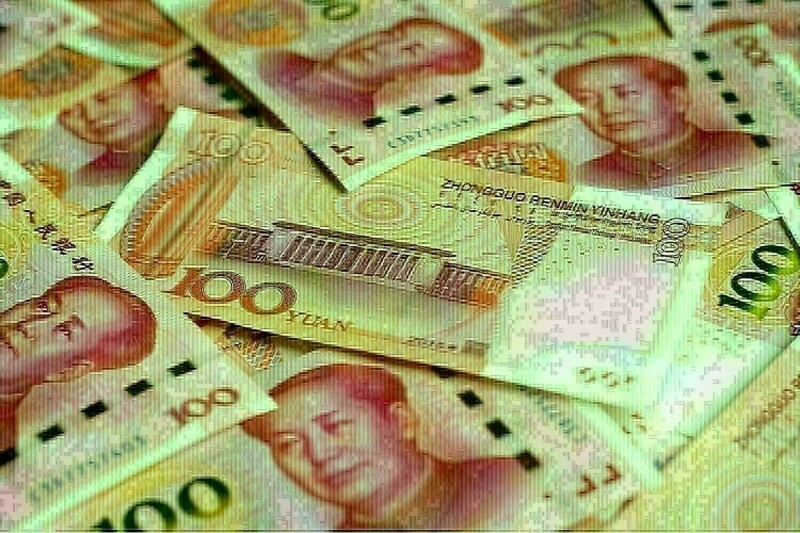

SHANGHAI: China’s yuan jumped to the strongest in eight months against the dollar on Thursday, reflecting growing confidence in the world’s second-biggest economy as local stock and commodity prices rally while bond yields jump.
The currency’s strength, which was partly guided by China’s central bank, also comes days ahead of a new round of economic and trade talks between China and U.S. officials.
Beijing has been sending conciliatory messages in the lead-up to next week’s talks in Stockholm, while U.S. Treasury Secretary Scott Bessent has described trade with China as “in a good place.”
Both the onshore and offshore yuan rose to levels last seen in early November, erasing most of the losses incurred since U.S. President Donald Trump’s election win.
Prior to the market opening, the People’s Bank of China(PBOC) set the midpoint rate at 7.1385 per dollar, its strongest since November 6 and 118 pips firmer than a Reuters estimate of 7.1503.
The spot yuan is allowed to trade 2% either side of the fixed midpoint each day.
The PBOC’s firmer-than-expected yuan midpoint guidance was “mainly meant to balance domestic demand and external conditions,” said Xing Zhaopeng, senior China strategist at ANZ.
Xing said the broad economy is facing deepening deflationary pressure and lingering tariff uncertainties from the United States.
“Yuan appreciation is conducive to increasing the allocation of yuan-denominated assets and the wealth effect should help expand domestic demand … And that will boost market confidence and helps pull (China) out of deflation,” he said.
The stronger-than-expected PBOC fixing lifted the spot market. The onshore yuan rose to a high of 7.1478 per dollar, the strongest since November 8, before last fetching 7.1532 as of 0242 GMT.
Its offshore counterpart followed the strengthening trend to rise past the 7.15 per dollar level for first time since November. It last traded at 7.1503 as of 0242 GMT.
China was initially singled out with tariffs exceeding 100% and has until August 12 to reach an agreement with the White House to keep Trump from reinstating additional import curbs imposed during tit-for-tat tariff exchanges in April and May.






 American Dollar Exchange Rate