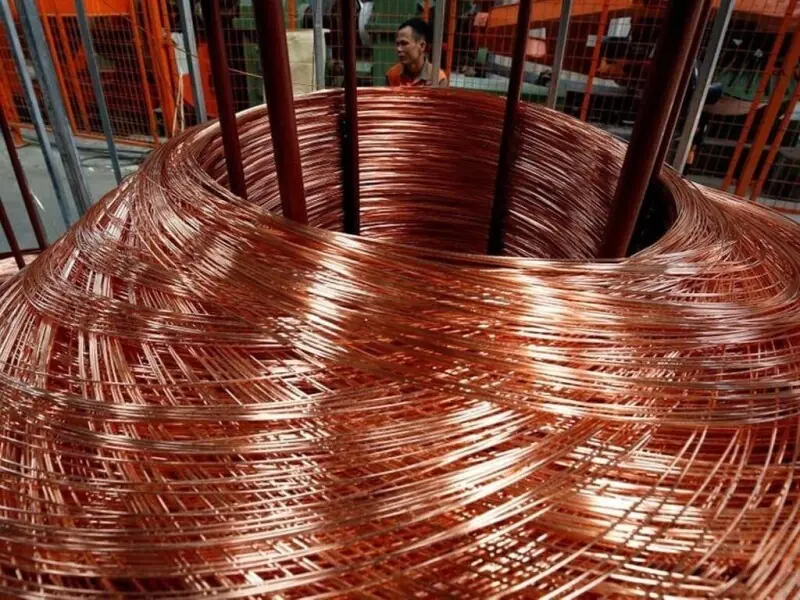

LONDON: Copper prices climbed to their highest level in more than a week on Tuesday, supported by ongoing outflows to U.S. inventories, though weaker demand prospects from top metals consumer China capped the gains.
Benchmark copper on the London Metal Exchange was up 0.8% at $10,855 a metric ton in official open-outcry trading after hitting $10,949, its highest since November 13.
Copper stocks in the LME-registered warehouses are down 42% so far this year amid outflows to the Comex copper stocks which keep on rising after hitting a record high in recent days.
This activity saw the premium for the LME cash copper contract over the three-month forward -3 rising to $25 a ton on Monday, its highest since mid-October. The premium was last at $23 on Tuesday.
“There’s an ongoing squeeze driven by outflows to Comex copper stocks as people are worried over potential U.S. import tariffs,” said Dan Smith, managing director of Commodity Market Analytics. “This is creating an artificial tightness, prompting LME copper to do its own thing currently.”
Meanwhile, weak January-October fixed-asset investment data in China points to broader economic softness, which could add pressure on industrial metal prices in the coming month, Smith added.
The Yangshan premium an indicator of Chinese appetite for copper imports, fell 6% on Tuesday and returned to $32, its four-month low hit a week ago.
On the technical front, LME benchmark copper broke above the resistance coming from the 21-day moving average, which now supports it at $10,833.
The metal, used in power and construction, hit a record high of $11,200 a ton less than a month ago due to worries about tighter copper supply from the Grasberg mine in Indonesia this and next year.
In other LME metals, aluminium and zinc were steady in official activity at $2,813 a ton and $3,000, respectively. Lead was also unchanged at $1,984.5, while nickel gained 1.2% to $14,870.
Tin added 1.1% to $37,800 after touching $37,860 for its highest since April 2. Tin has been supported by ongoing concerns about tighter supply from Myanmar, DRC and Indonesia, said a tin trader.




 American Dollar Exchange Rate