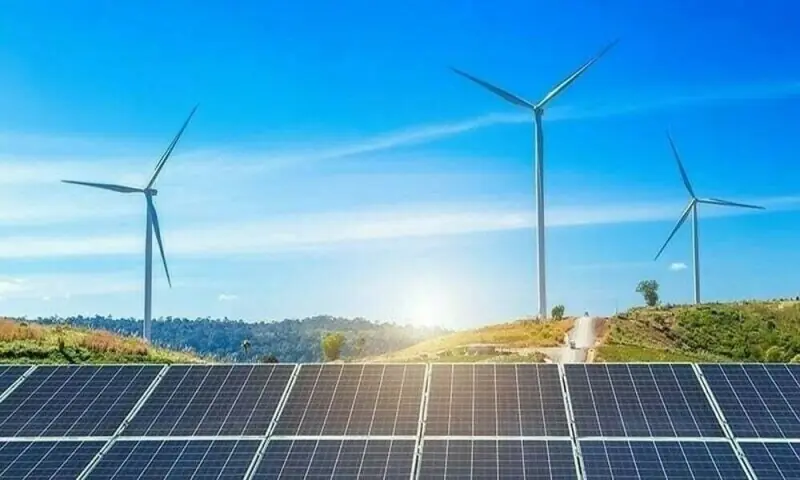

HAMBURG/BERLIN/LONDON: Britain, Germany, Denmark and other European countries signed a clean energy pact at a summit in Hamburg on Monday, pledging to deliver 100 gigawatts (GW) of offshore wind power capacity through large-scale joint projects.
The agreement, which contrasts sharply with US President Donald Trump’s opposition to green energy, signals that Western and Northern European governments remain committed to wind power as a way to boost the region’s energy security.
Speaking at the World Economic Forum in Davos last week, Trump amplified his criticism of European countries’ shift to low-carbon energy, saying countries that rely on wind turbines lose money.
“We are standing up for our national interest by driving for clean energy, which can get the UK off the fossil fuel rollercoaster and give us energy sovereignty and abundance,” Britain’s Energy Minister Ed Miliband said in a statement. Ending dependence on Russian energy, in particular, has been among Europe’s top goals.
European Union member states on Monday gave final approval to imposing a ban on Russian gas imports by late 2027, making the break from their former top supplier legally binding, nearly four years after Moscow’s full-scale invasion of Ukraine.
A new imbalance, however, is clouding the push for energy sovereignty. The EU sourced 27% of total gas and LNG imports from the United States in 2025. New LNG contracts mean this figure could rise to 40% by 2030, according to the Institute for Energy Economics and Financial Analysis.
The commitment to boost cross-border collaboration is part of a goal agreed by North Sea countries in 2023 to have 300 GW of offshore wind capacity by 2050.
Industry lobby group WindEurope said that under the agreement its member companies pledged to cut costs, to create 91,000 jobs, and to generate 1 trillion euros ($1.2 trillion) of economic activity.
Adding 100 GW at sea would transform Europe’s power market because the region currently has 258 GW installed wind capacity, both on- and offshore, providing 19% of the electricity consumed in Europe, according to WindEurope data.
This could benefit makers of grid technology such as Siemens Energy and GE Vernova, project developers including RWE and Orsted as well as wind turbine manufacturers such as Vestas.
Grid operators National Grid and TenneT Germany said they will partner to develop a power link connecting British and German offshore wind farms in the North Sea to supply both countries.



 American Dollar Exchange Rate