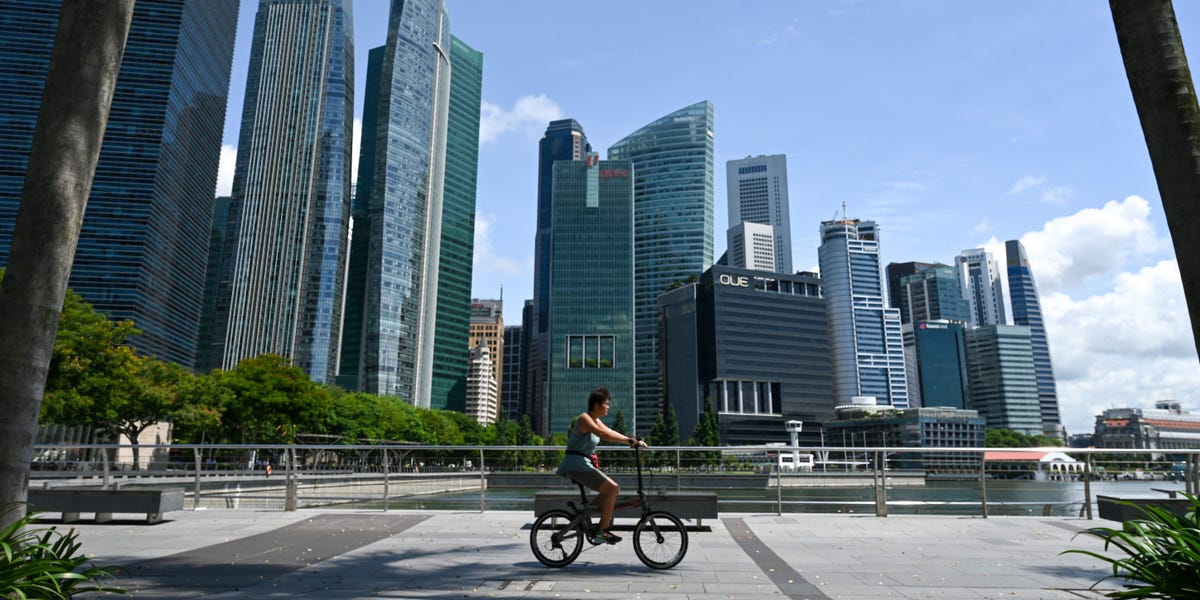
ROSLAN RAHMAN/AFP via Getty Images
- Julius Baer's 2025 Family Barometer shows family offices are booming
- Singapore's single-family offices surged tenfold, topping 2,000 by the end of 2024, it said.
- Private markets now make up 35% of ultrawealthy portfolios, driven by next-gen heirs.
For the world's richest families, wealth management is no longer just about making money — it's about survival.

According to Julius Baer's new Family Barometer 2025, produced in collaboration with PwC Switzerland, family offices — once seen as quiet administrative centers — have become command hubs for navigating a world of geopolitical tension, digital risk, and generational transition.
Family offices are essentially private companies that manage all aspects of a wealthy family's finances — from investments and real estate to philanthropy, taxes, and even education — allowing them to control their money like a business.
The report, based on a global survey of 2,485 experts conducted in October, draws insights from wealth managers, tax advisors, family-office executives, and consultants across Europe, Asia, the Middle East, and Latin America.
The richest families, it found, are preserving capital and building systems to protect their power for decades to come.
The rise of the family office
The report finds that only about 40% of ultrawealthy families worldwide have a family office, but that share is growing fast — especially in Asia.
Singapore and Hong Kong have become epicenters, with Singapore alone hosting more than 2,000 single-family offices by the end of 2024, a tenfold jump in just a few years, according to the report.

ROSLAN RAHMAN/AFP via Getty Images
Cost and complexity remain major barriers to starting family offices, yet families are finding ways around them.
A growing share is adopting hybrid setups that outsource philanthropy, cybersecurity, or legal compliance while keeping investment and governance decisions in-house.
Setting up a family office "largely depends on the family's specific circumstances," said María Eugenia Mosquera, Julius Baer's head of family-office services, citing factors such as wealth, complexity, and the needs of family members.
She said it requires "thorough assessment and analysis" and an objective approach to ensure the structure is appropriate.
From wealth to legacy
For the first time, "building family legacy" ranks among the top three priorities for the global elite.
Families are drafting constitutions and mission statements, codifying values that can outlast founders and unify far-flung heirs.
Nowhere is that more evident than in Asia, where second—and third-generation entrepreneurs are turning family offices into institution-style platforms.
"We're seeing families move beyond simply managing wealth — they're looking for institutional-style platforms that can support them across borders, across generations," said Christos Anagnostopoulos, Julius Baer's head of family-office advisory in Asia.
Private markets are the new power play
Private markets have become the favored playground of the superrich.
According to the report, allocations to private markets — including real estate, private equity, venture capital, infrastructure, and private credit — now account "in some cases for 35% or more of their overall portfolios."
"These aren't assets you can trade at the click of a button — and that's precisely part of the appeal," said Giuseppe De Filippo, Julius Baer's head of private-capital markets.
"For families who can take the long view, illiquidity isn't a drawback; it's a feature. It opens the door to distinctive opportunities and what we call the 'illiquidity premium' — the additional return that comes from committing capital with patience and conviction."
As family offices grow in popularity, they will continue to evolve, Julius Baer said.
What began as back-office bookkeeping has morphed into the ultimate power structure of the 21st century.
The superrich are no longer just managing money — they're managing time, ensuring their wealth, values, and influence survive whatever the next generation, or global crisis, brings.






 American Dollar Exchange Rate