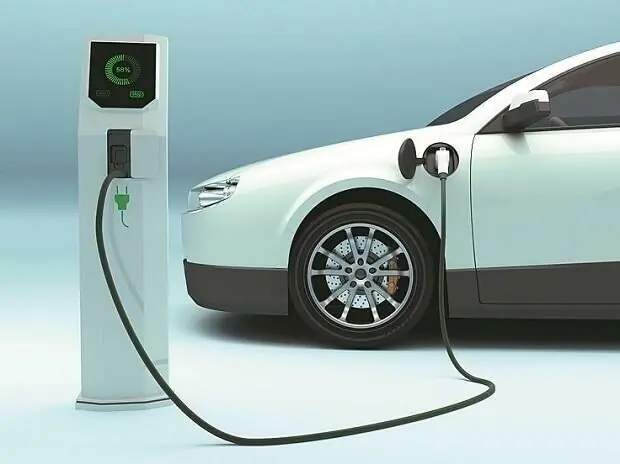

Pakistan’s fuel economy has been jolted by one of the sharpest oil price shocks in recent years, exposing the country’s vulnerability to global energy disruptions and reviving debate over the role of alternative vehicle technologies.
Last week, the federal government raised petrol and diesel prices by Rs55 per litre, pushing petrol to around Rs321 per litre, the largest single increase in recent years. The move followed a surge in global oil prices triggered by escalating conflict in the Middle East and disruptions to supply routes passing through the strategic Strait of Hormuz.
For Pakistan, an economy heavily dependent on imported energy, the consequences are immediate and far-reaching. Fuel costs directly affect transportation, logistics, agriculture, and manufacturing, creating ripple effects across inflation and household budgets.
But the latest crisis is also highlighting a stark contrast between traditional gasoline vehicles and newer electrified powertrains—particularly Range Extended Electric Vehicles (REEVS) and plug-in hybrid electric vehicles (PHEVs).
Also read: Sazgar enters NEV segment with Tank-500 HEV, PHEV
Millions of Pakistani motorists rely entirely on petrol or diesel vehicles, leaving them fully exposed to global oil volatility.
Meanwhile, a typical mid-size petrol SUV averaging 10–12 km per litre now costs dramatically more to operate. With petrol crossing Rs320 per litre, the running cost can exceed Rs25–30 per kilometre, placing additional strain on middle-class households and commercial users such as ride-hailing drivers.
Pakistan spends billions of dollars annually on petroleum imports, making oil price spikes a direct pressure point for foreign exchange reserves and macroeconomic stability.
REEVs and PHEVs, however, operate differently.
Unlike conventional hybrids that rely solely on petrol engines supported by small batteries, PHEVs allow drivers to run significant distances purely on electricity before switching to fuel, according to Syed Asif Ahmed, Director Sales and Marketing at Chery Master Pakistan.
In daily urban driving, particularly in cities like Karachi, Lahore, and Islamabad—many REEVs and PHEVs could cover 50–170 kilometres on electricity alone, effectively insulating owners from sudden fuel price spikes for most routine trips, Asif added.
Charging costs remain significantly lower than petrol. Even at current electricity tariffs, running a vehicle electrically can cost a fraction of petrol-based driving, acccording to another executive of an automobile company.
Crucially, PHEVs and REEVs also avoid one of the main concerns associated with fully electric vehicles: range anxiety and charging infrastructure limitations.
When the battery is depleted, the vehicle seamlessly switches to hybrid mode, allowing effecient long-distance travel.
This dual-energy flexibility is increasingly viewed as a transitional technology for markets like Pakistan, where charging networks are still developing.
Pakistan’s auto policy over the past decade has deliberately encouraged new technologies and entrants to diversify the market. Hybrid vehicles were previously supported through tax incentives aimed at reducing fuel consumption and lowering the country’s oil import bill.
Also read: CCP proposes consumer protection clauses in auto policy
However, industry stakeholders warn that any significant increase in taxation on REEVs and PHEVs could undermine these gains.
At a time when fuel volatility is once again exposing the risks of heavy dependence on imported oil, discouraging fuel-efficient technologies may prove counter-productive.
Auto analyst Muhammad Sabir Shaikh said after substantial surges of the fuel prices, there was a huge shortage of electric cars and motorbikes in the local market, while hybrid vehicles had also gained momentum within four days.
He said people were switching over to PHEV and REEVs for saving fuel costs as electric and hybrid vehicles save 80% and 50% expenses in comparison with fuel-drive vehicles.
Auto analysts argue that encouraging electrified mobility—particularly technologies suited to Pakistan’s current infrastructure—could help cushion consumers against global oil shocks while gradually reducing pressure on the national energy import bill.
For now, the latest fuel crisis serves as a reminder of a fundamental economic reality: when oil prices surge, countries dependent on petrol vehicles absorb the shock immediately. Technologies that reduce that dependence may not just be an environmental choice, but an economic one.





 American Dollar Exchange Rate