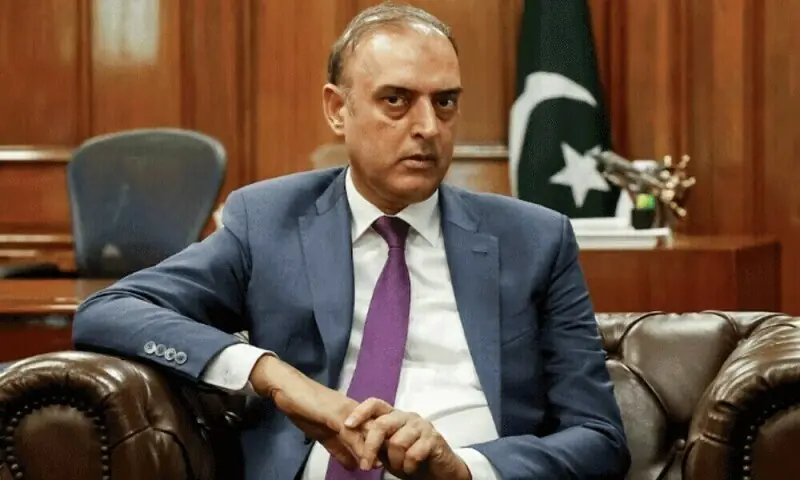

Further policy rate cuts by the State Bank of Pakistan (SBP) will be determined by the economic fallout from recent floods and the outcome of the ongoing International Monetary Fund (IMF) review, said Governor SBP Jameel Ahmad in an interview with Bloomberg.
The development came as the central bank maintains a cautious stance on monetary policy amid renewed inflation risks.
As per the report, Ahmad said “inflation may temporarily exceed the upper bound of the 5%-7% medium-term target range in early 2026 but on average will be within the goal in the current and next fiscal years”.
The central bank chief’s comments come ahead of the Monetary Policy Committee (MPC) meeting, which is scheduled to meet on October 27, while an IMF team is in Pakistan for a second review of its $7 billion loan program.
In its last meeting, the MPC decided to keep the policy rate unchanged at 11%, citing the adverse impact of recent floods on the near-term macroeconomic outlook.
The monsoon floods have caused large-scale devastation in Pakistan, with damages running into billions of dollars and raising risks of higher inflation, external account pressures, and fiscal stress.
Meanwhile, the governor, in his interview with Bloomberg, said the central bank’s tight monetary policy has been instrumental in bringing inflation under control and remains effective going ahead.
“The policy rate is positive — substantially positive — and this type of tight stance has contributed in controlling the inflation,” he said, adding that monetary and fiscal coordination is showing “good progress.”
Talking about the IMF programme, the SBP Governor shared that the loan programme is “progressing well”, sharing that the central bank has outperformed its targets on foreign reserves.
As per the report, SBP has increased its reserves by purchasing about $20 billion from the interbank market over the past three years, reversing its earlier role as a net seller. “This was a very well thought-out strategic move,” Ahmad said. “If we had not done that, our situation would have been quite different.”
“The same strategy has helped make sure that the forex kitty is not impacted by the recent $500 million Eurobond payment,” he added.
Talking about the recently announced Pakistan-US deal, with Pakistan securing a 19% tariff rate on exports to the US, the SBP Governor said that leading exporters of textiles are seeing “increased inquiries” for orders.
“Obviously, it’ll take a little bit more time to translate them into confirmed bookings, but the level of interest from importers is a good indication to reinforce the idea that this will have a positive impact.”
The Pakistani government is also moving to legalise cryptocurrency, with a new regulatory framework to ensure strict vetting and oversight of market entrants.
Ahmad told Bloomberg that the new framework will help mitigate risks tied to virtual assets by ensuring that all entrants undergo strict vetting and oversight.
“This is a strategic move from the government side, and soon I think new players will come in,” he said. “We have ensured that it should not pose any risks from the central bank’s perspective.”







 American Dollar Exchange Rate